



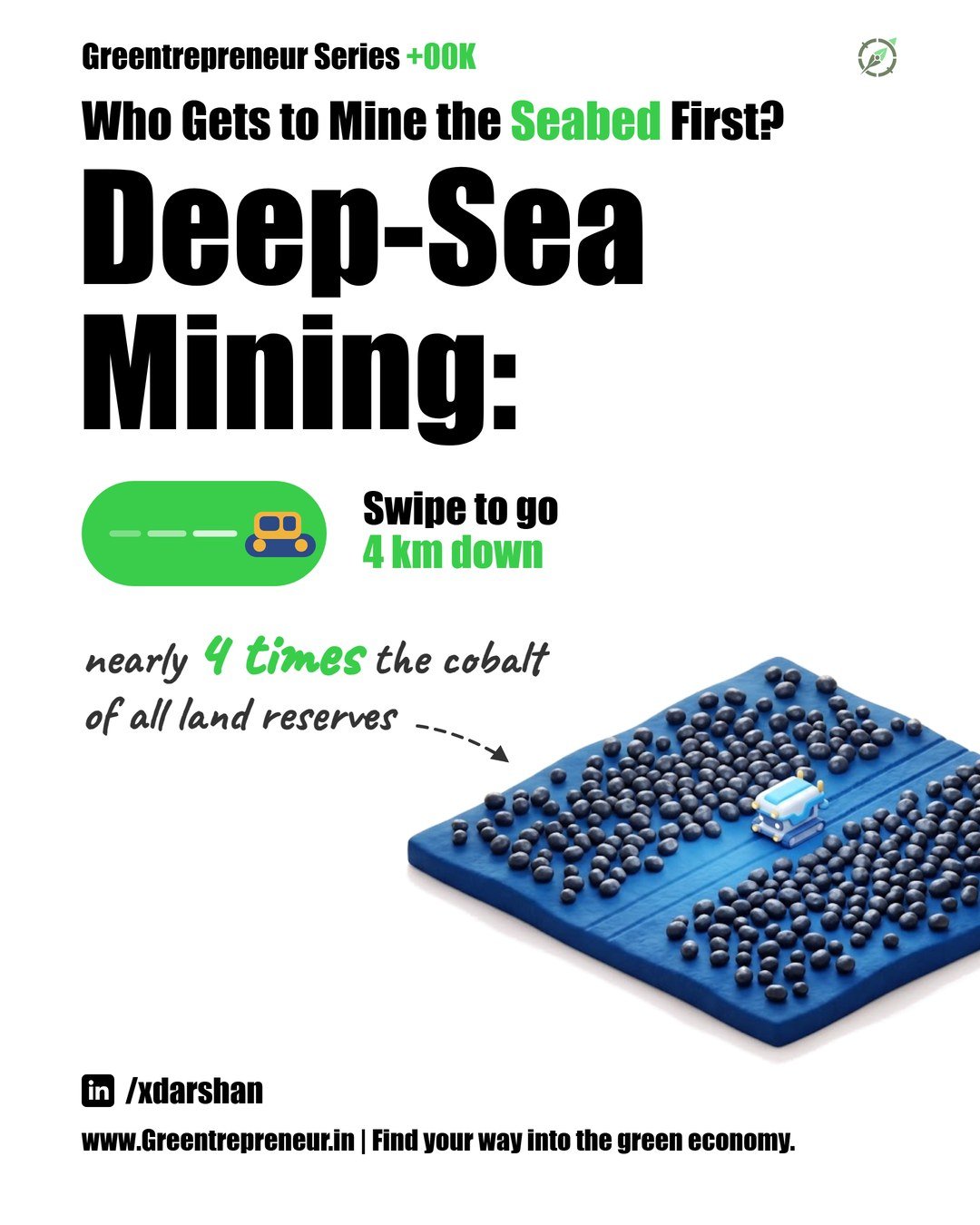
Nearly 4 times the world's cobalt sits on the Pacific floor. Should we dig it up?
A US company wants a permit. The UN has no rulebook. The one big test so far left a third fewer animals in its tracks.
On 24 July 2026, the UN body that governs the deep seabed ended another meeting. It had not agreed a mining code. Again.
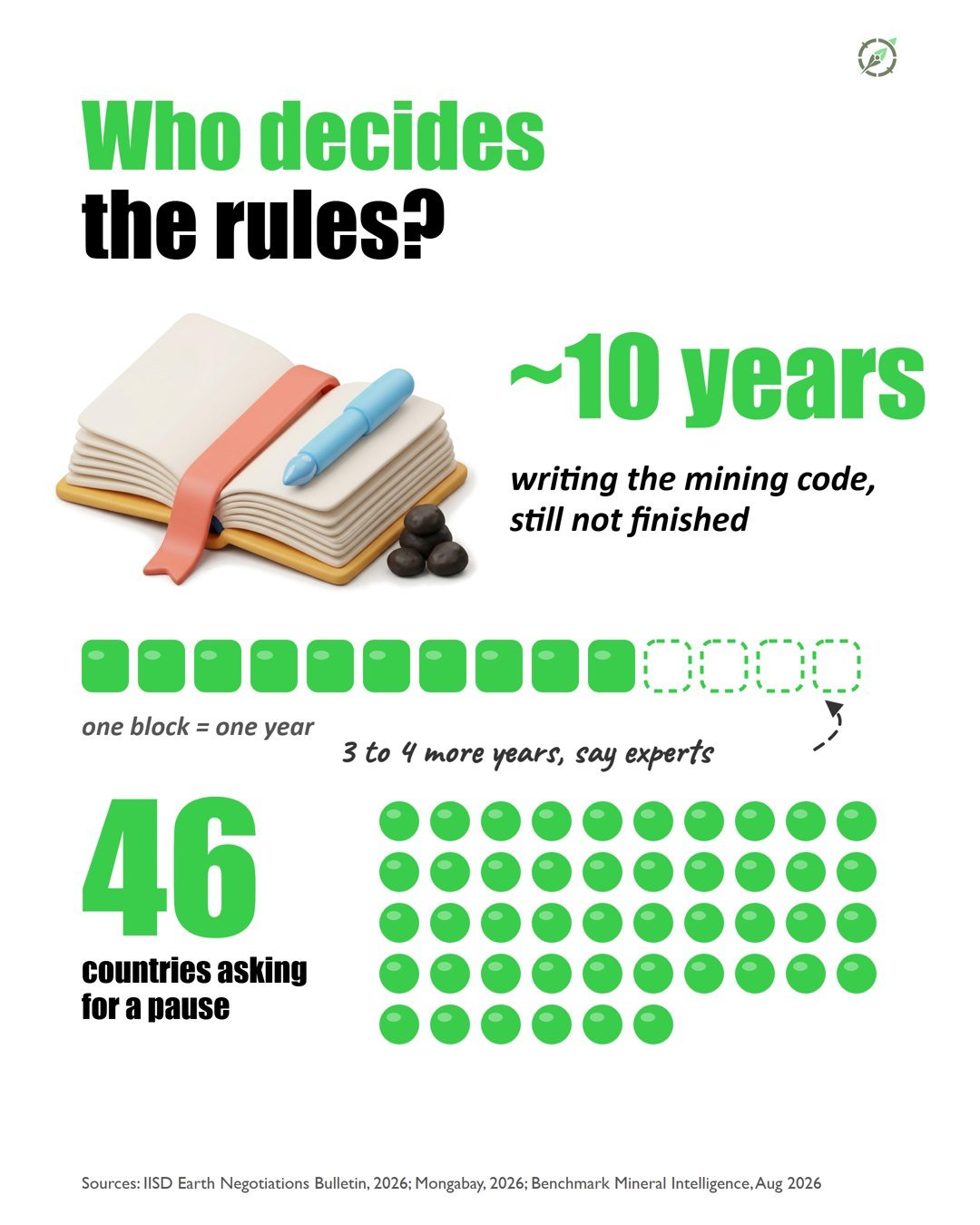
That body is the International Seabed Authority (ISA). It has been writing the code for about 10 years.
Meanwhile, a company has gone to the United States and asked for a permit there instead. So the race is on. The rulebook is not.
Key numbers
Sources: ISA Technical Study 6 (2010); USGS Mineral Commodity Summaries (2026); The Metals Company (2026); PMC trial study (2025); Rabone et al., Current Biology (2023); Mongabay (Aug 2026).
What is lying on the seabed?
Batteries for cars and power grids use nickel, cobalt and manganese. That is why this story belongs in a climate series. The metals we want for clean energy may lie at the bottom of the ocean.
Between Hawaii and Mexico, the Pacific floor holds a stretch called the Clarion-Clipperton Zone. The seabed there is 4,000 to 6,000 metres down. It is covered in metal-rich rocks called nodules.
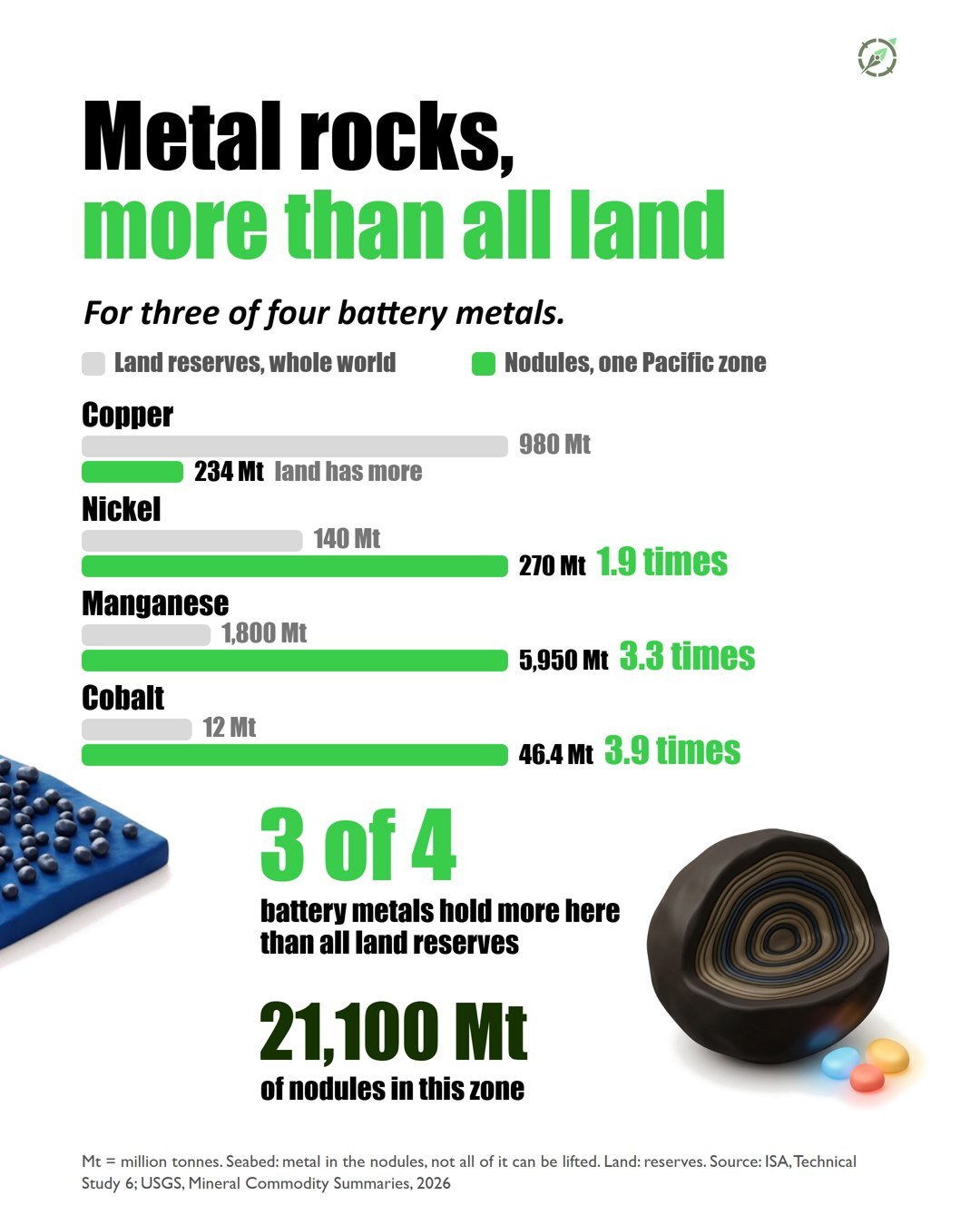
One ISA study puts the nodules in this zone at 21,100 million tonnes. Inside them sits 46.4 million tonnes of cobalt. All the cobalt in the world's land reserves is about 12 million tonnes.
That is nearly 4 times as much. Nickel is 1.9 times and manganese is 3.3 times. Copper goes the other way: land holds more.
A fair warning. The seabed number is metal that sits in the rocks. The land number is reserves, the part we can dig today at a profit. They are not the same measure, and not all of the seabed metal could be lifted.
Even so, the gap shows why companies want to go down there.
The metal is on the seabed. The rulebook is not.
Who is racing to dig first?
There are two routes to a licence, and they move at different speeds.
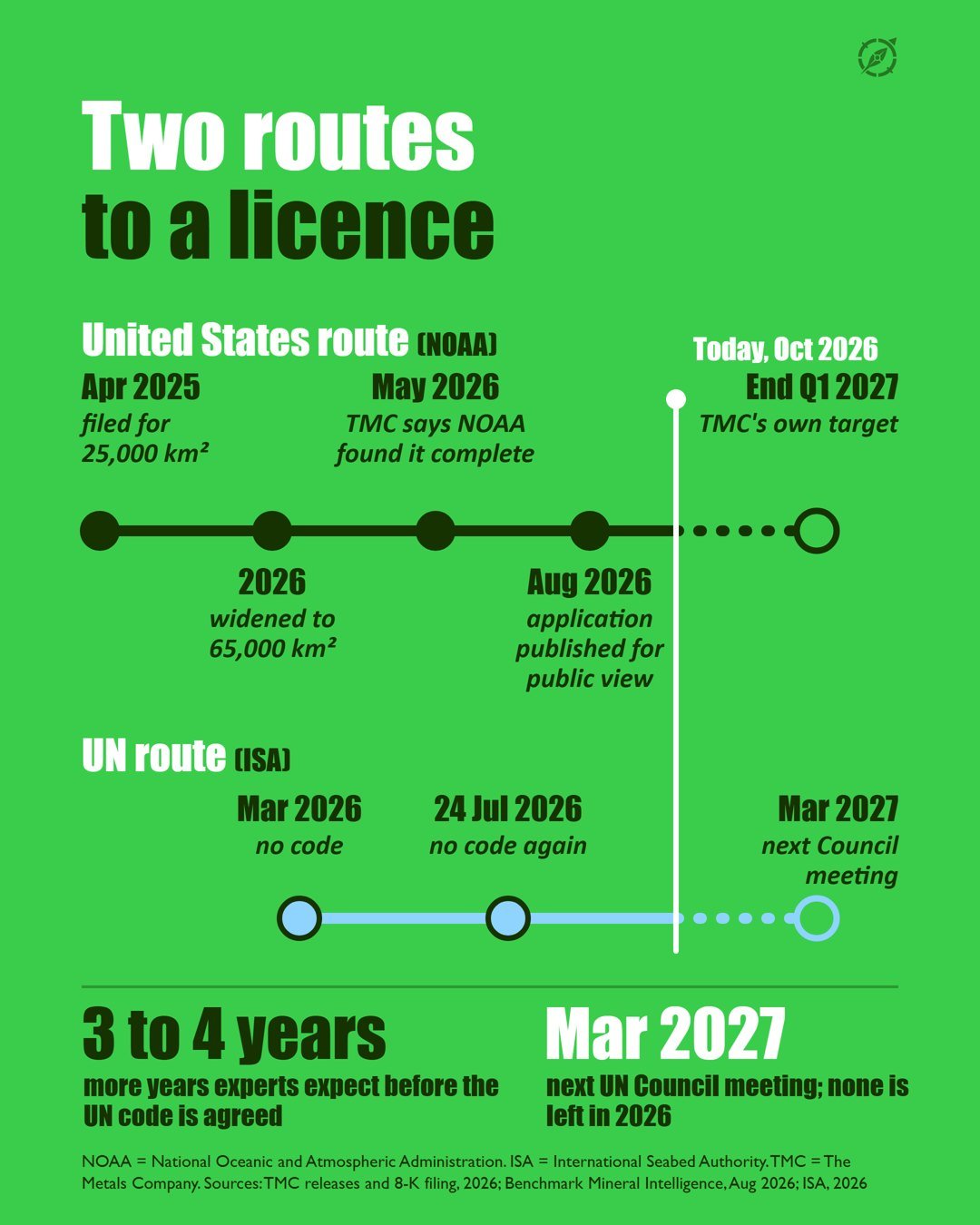
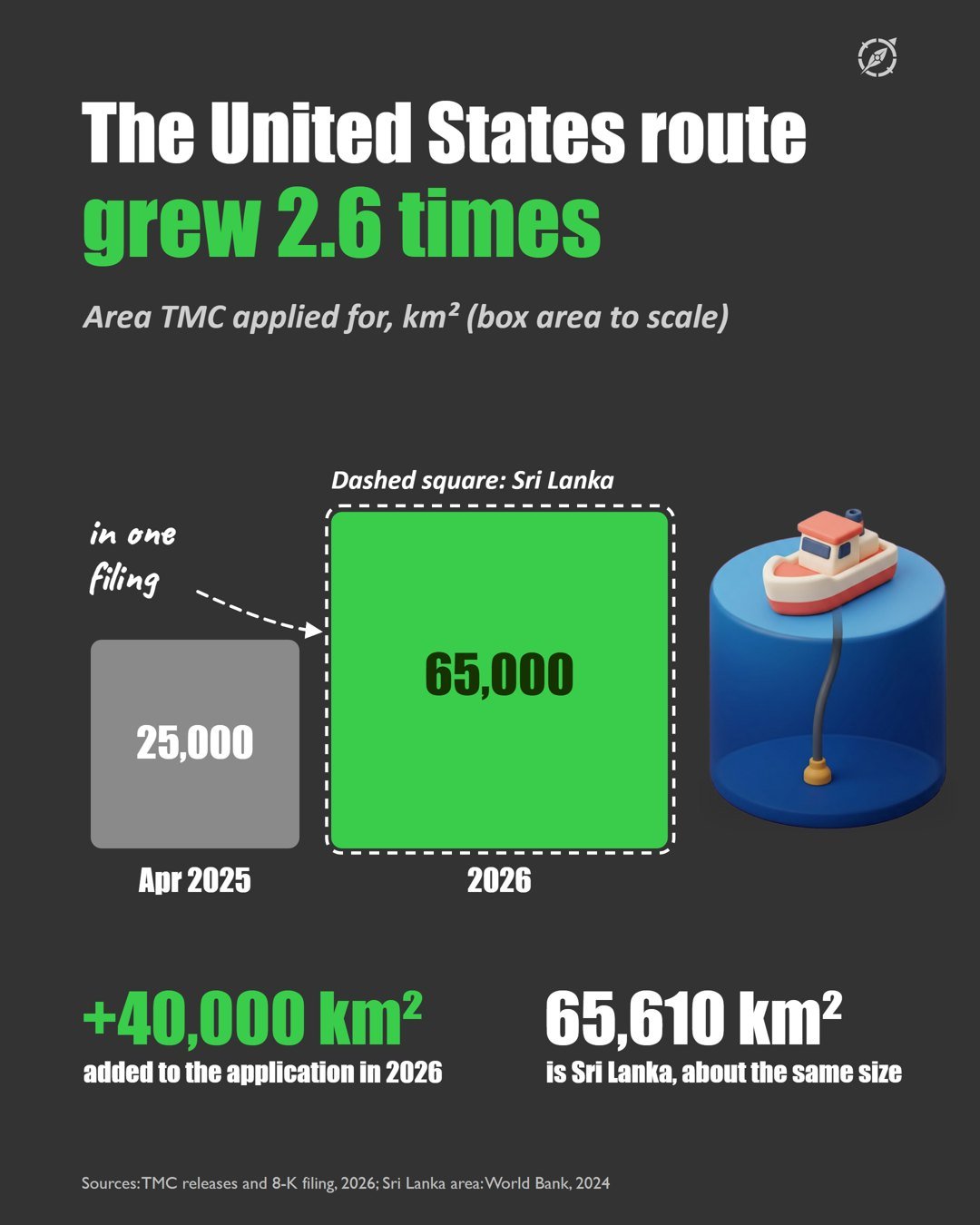
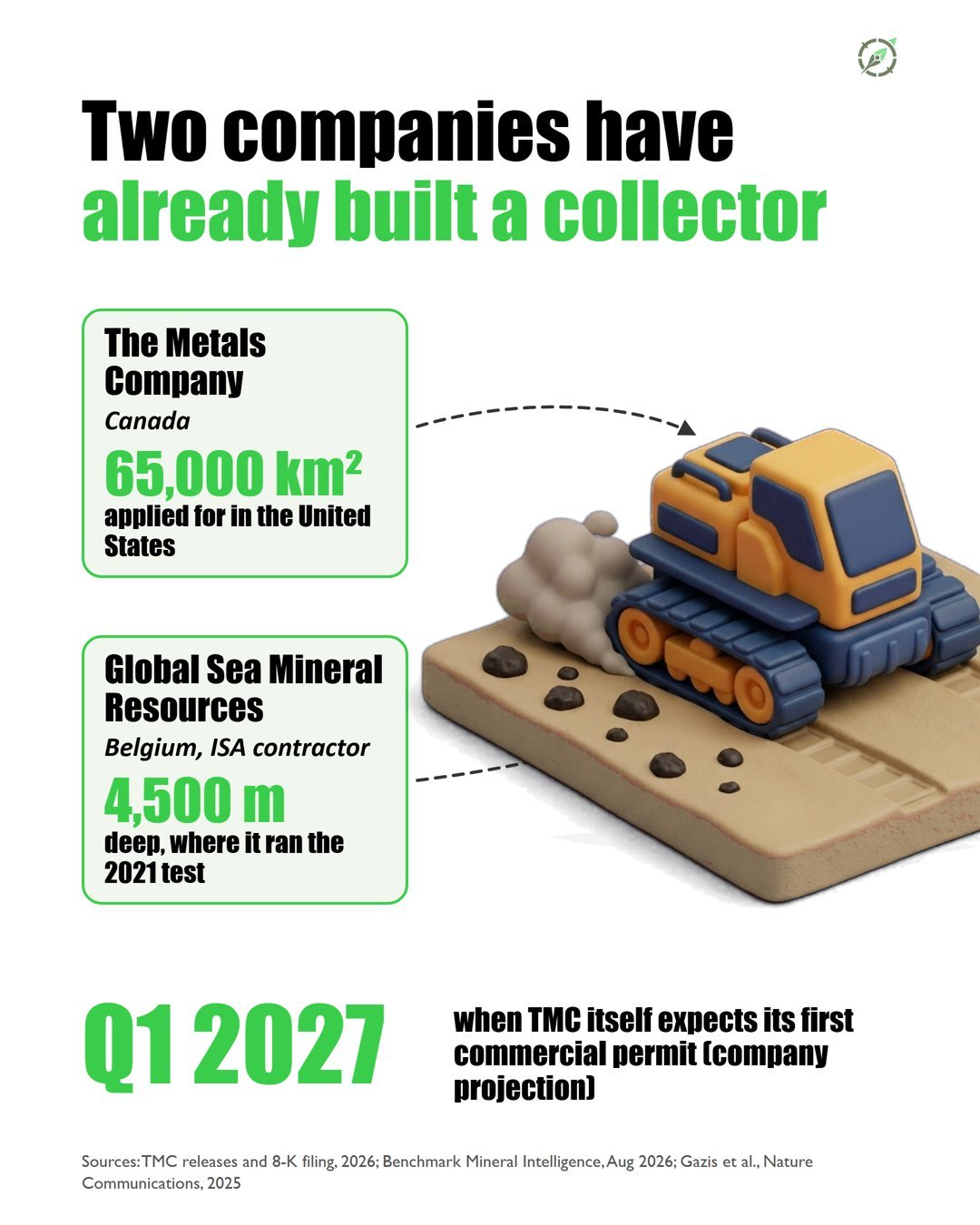
Route one is the United States. The Metals Company (TMC), a Canadian firm, applied to the US agency NOAA in April 2025. The area was 25,000 km².
In 2026 TMC filed a consolidated application for 65,000 km². That is 2.6 times bigger, and about the size of Sri Lanka.
On 1 May 2026, TMC said NOAA had found the application complete. Only TMC says this so far. I found no NOAA release.
TMC hopes to finish the process by the end of Q1 2027. That is the company's own target, not a promise.
Route two is the UN. The ISA has no mining code, so it cannot license a mine under its own rules.
Its March 2026 meeting ended without a deal. On 24 July the Council closed again without adopting the code. Experts told Benchmark Mineral Intelligence to expect 3 to 4 more years.
Two companies have already built a collector. TMC is one. The other is Global Sea Mineral Resources, a Belgian firm with an ISA exploration contract. Its collector ran a test in 2021.
What did that test do to the seabed?
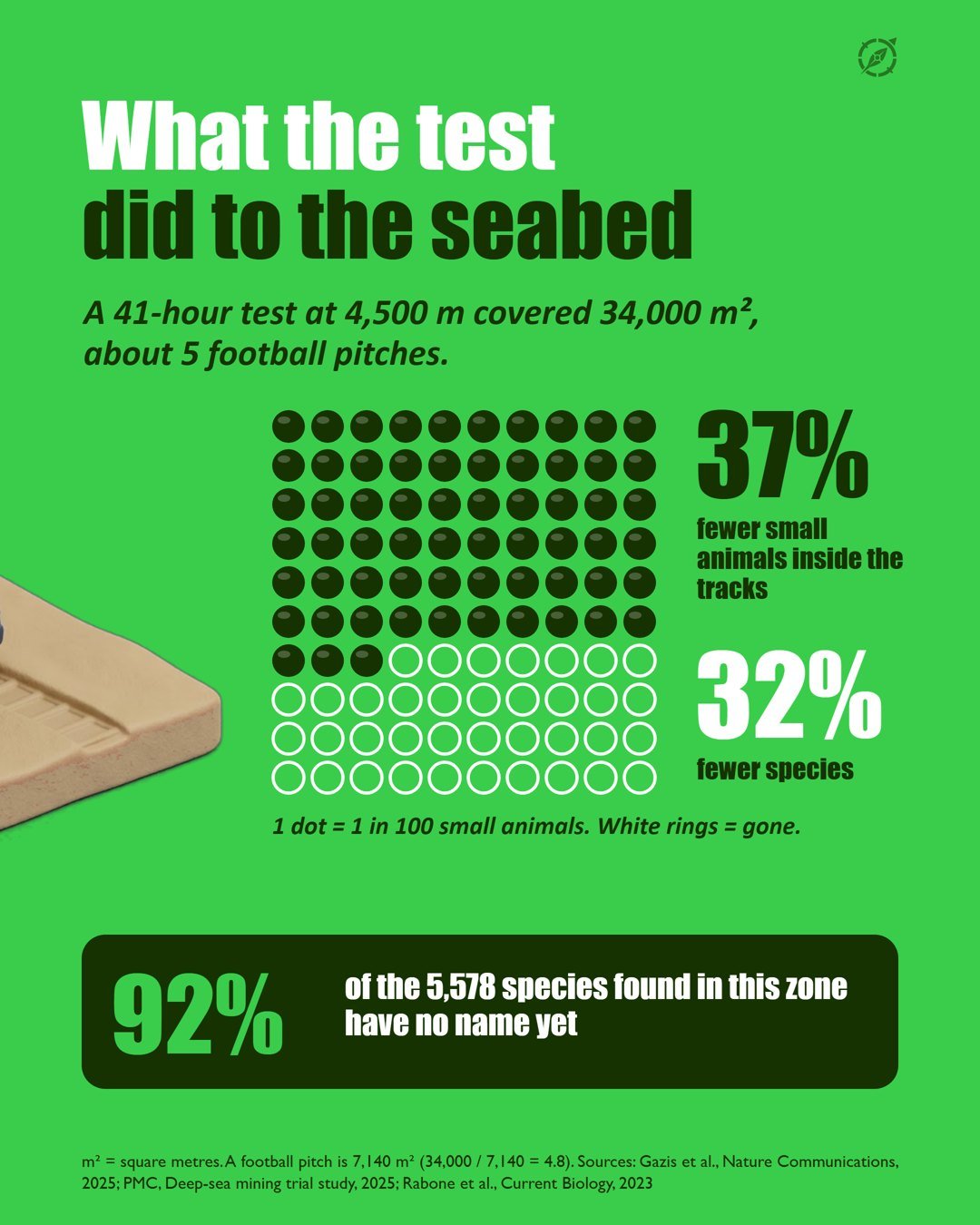
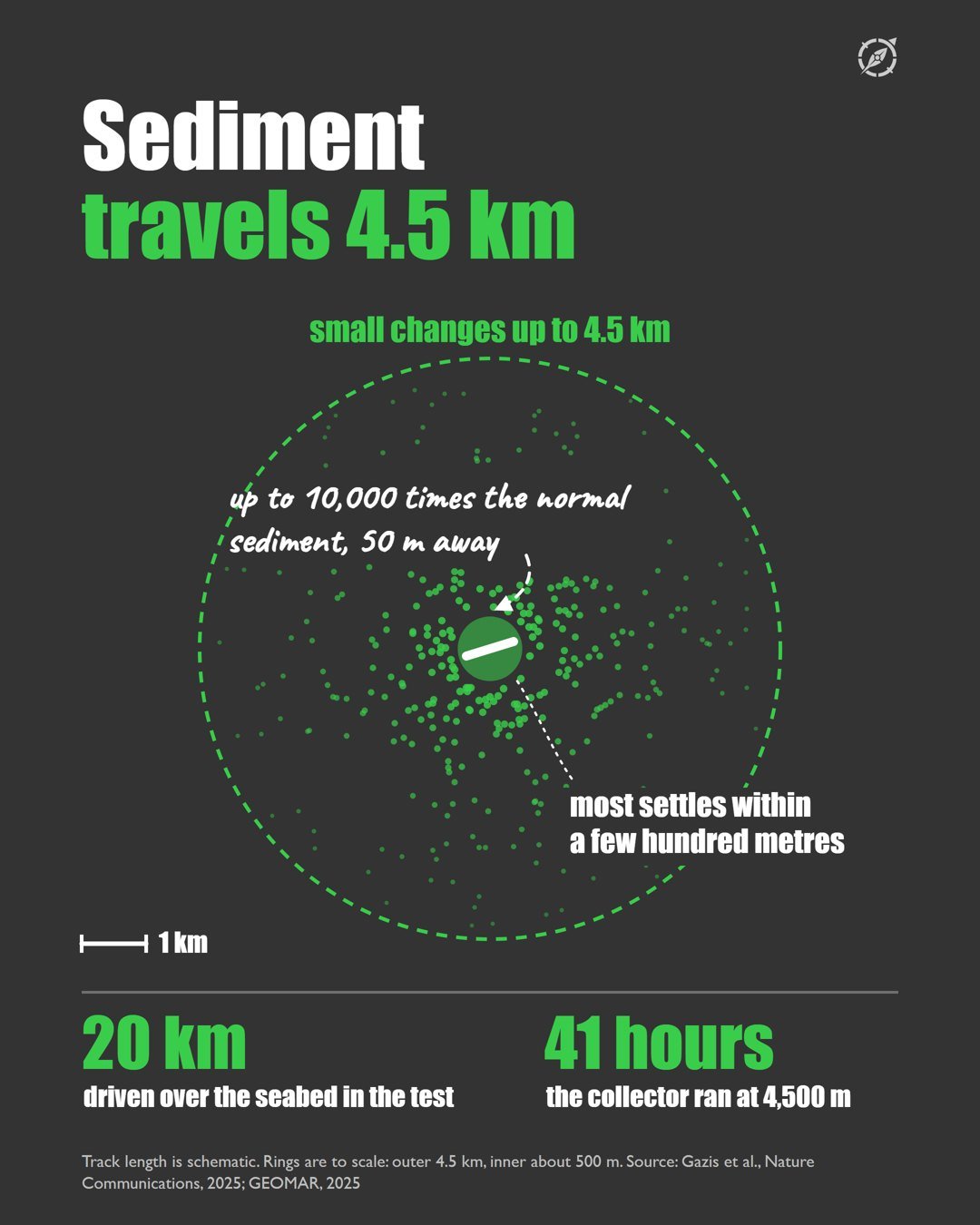
That test is the best evidence we have. In April 2021, the collector ran for 41 hours at 4,500 metres. It drove about 20 km and covered about 34,000 m² of seabed. That is close to 5 football pitches.
Scientists then counted the small animals that live in the mud. Inside the tracks there were 37% fewer of them. There were also 32% fewer species.
Then there is the mud. The collector stirred up sediment.
Most of it settled within a few hundred metres. But small changes still showed up as far as 4.5 km away. Fifty metres from the lanes, sediment reached up to 10,000 times the normal level.
Is that a lot? The authors say the test area was small next to a real mine. A real mine would cover much more seabed. So the test shows the direction of the damage, not its final size.
And we barely know who lives down there. A 2023 census found 5,578 species in this zone. Of those, 5,142 have no name yet. That is about 92%.
Why does that matter? You cannot protect what you cannot name. A mine could remove species before anyone has described them.
That is a worry, not a measured result. But I think it is a fair reason to study first.
The story in 10 slides

Who decides, and what happens next?
Nobody has a final answer yet. 46 countries have asked for a pause until the rules exist. Mauritius, Mozambique and Congo joined in July, according to Mongabay.
I would watch two dates. March 2027 is the next ISA Council meeting. TMC expects its US process to finish by the end of Q1 2027. If both happen on time, the US route will be ahead of the UN code by years.
Where the quieter opportunity sits
- Recycle. Battery recyclers can shrink how much metal we need from the seabed in the first place.
- Recover metals. Metal-recovery startups can cut that need in the same way.
- Watch March 2027. That is the next ISA Council meeting, where the rules may move.
- Watch the US route. TMC expects its US process to finish by the end of Q1 2027.
The seabed is not the only source of battery metals. I think the quieter opportunity sits in recovering the metals we already have, and that work does not need to wait for any UN code.
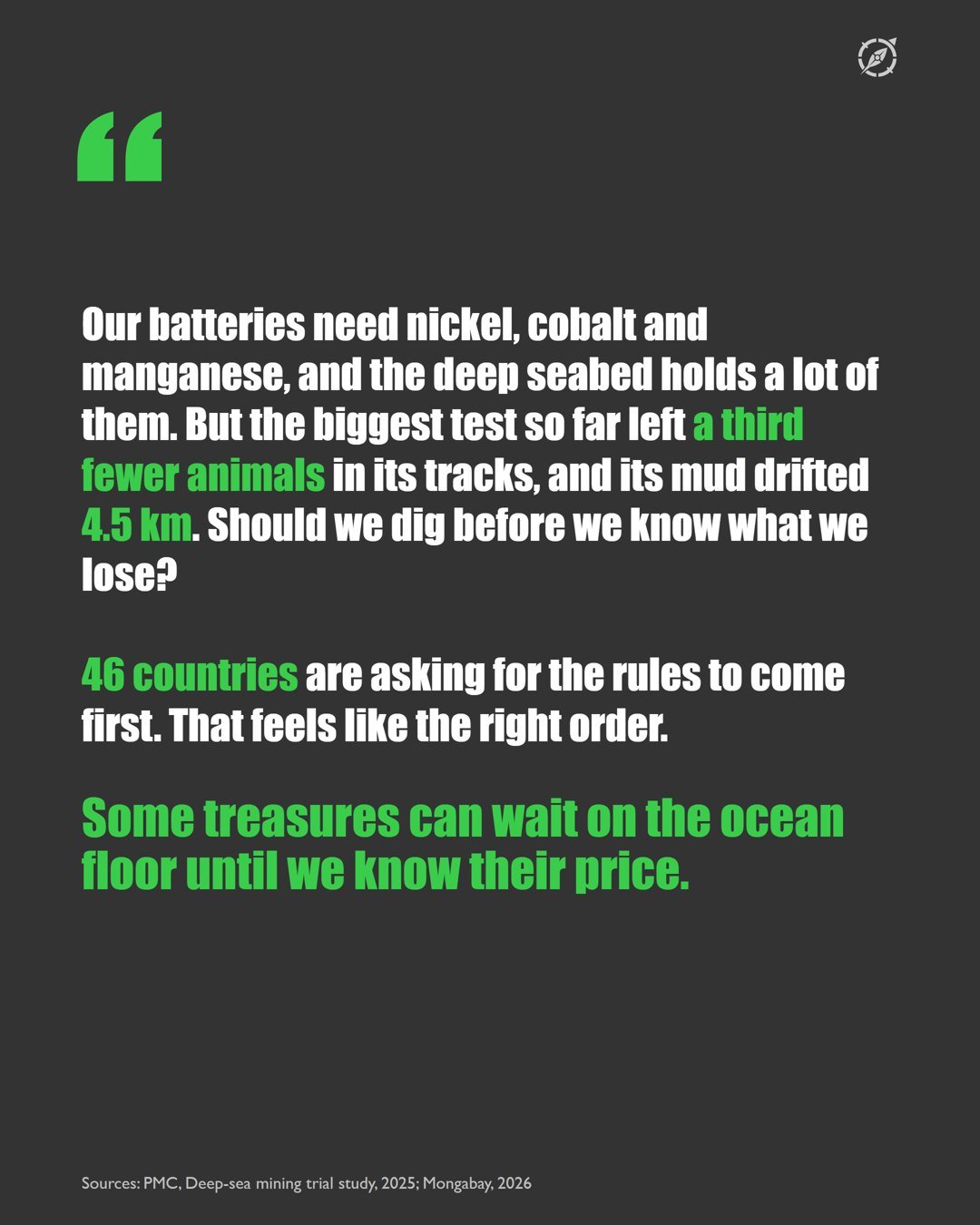
I think the rules should come first, and 46 countries seem to agree.
Some treasures can wait on the ocean floor until we know their price.
Questions
What are polymetallic nodules?
They are metal-rich rocks that lie on the deep seabed. They hold nickel, cobalt, manganese and copper. In the Clarion-Clipperton Zone they lie 4,000 to 6,000 metres down.
Is deep-sea mining allowed today?
Not under the UN route. The ISA has no mining code, so it cannot license a mine. A company is also trying the US route. I found no commercial permit, and TMC itself expects the first one no earlier than Q1 2027.
Why is the UN code taking so long?
The ISA has worked on it for about 10 years. At its March 2026 session, the Council discussed 29 of 32 outstanding issues and still ended without a deal.
Sources
- Clarion-Clipperton Zone geological model, ISA Technical Study 6 (2010)
- Mineral Commodity Summaries 2026, USGS (2026)
- TMC USA files first consolidated deep seabed mining application, The Metals Company (2026)
- NOAA determines TMC USA's application in full compliance, The Metals Company (2026)
- ISA Council 31st session Part I summary, IISD Earth Negotiations Bulletin (Mar 2026)
Show the other 6 sources
- Global commercial framework remained unresolved at the ISA, Benchmark Mineral Intelligence (Aug 2026)
- ISA 32nd session dates, International Seabed Authority (2026)
- Impacts of an industrial deep-sea mining trial on macrofaunal biodiversity, PMC (2025)
- Sediment plume monitoring of a nodule collector test, Gazis et al., Nature Communications, via GEOMAR (2025)
- How many species live in the Clarion-Clipperton Zone, Rabone et al., Current Biology (2023)
- Six African countries now support a precautionary pause, Mongabay (Aug 2026)
Corrections: none so far. Found a mistake? Email me and I will fix it and note it here.