



The oil left in our pans can fly a plane. So why is it not reaching the refinery?
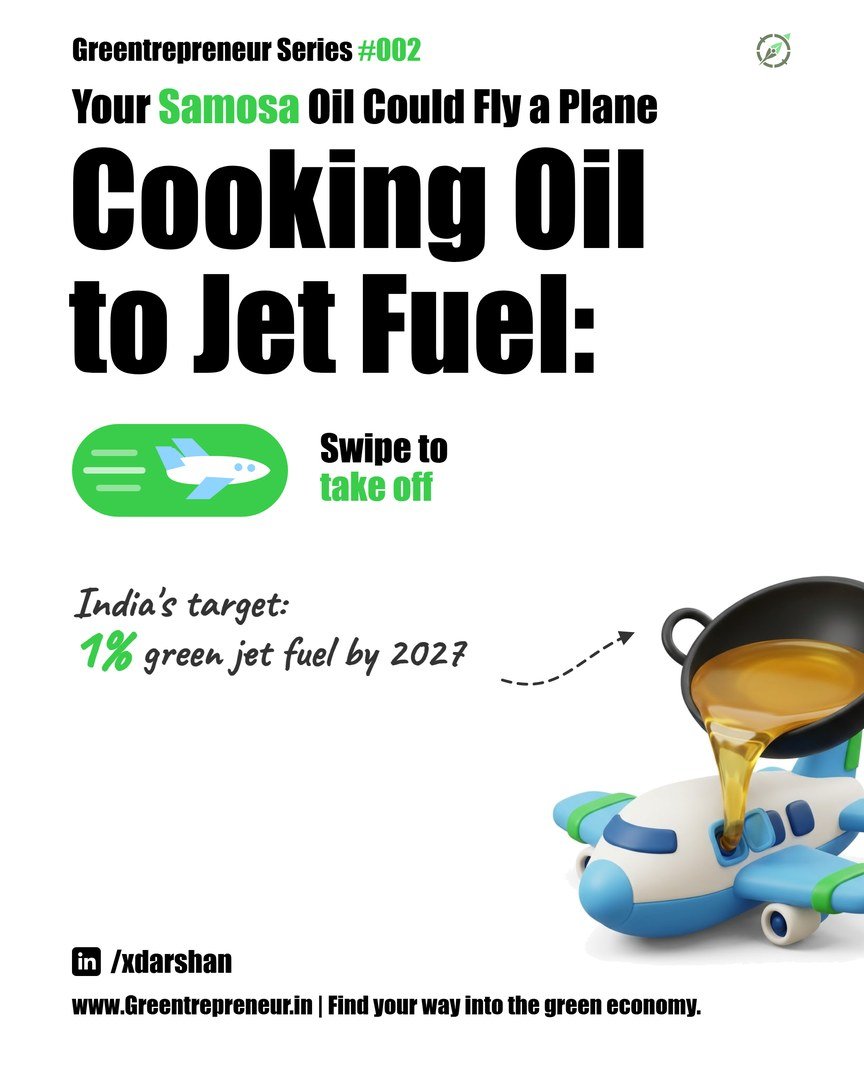
India wants green jet fuel from 2027, and its refineries are building the plants. The hard part is a much simpler job: collecting the oil.
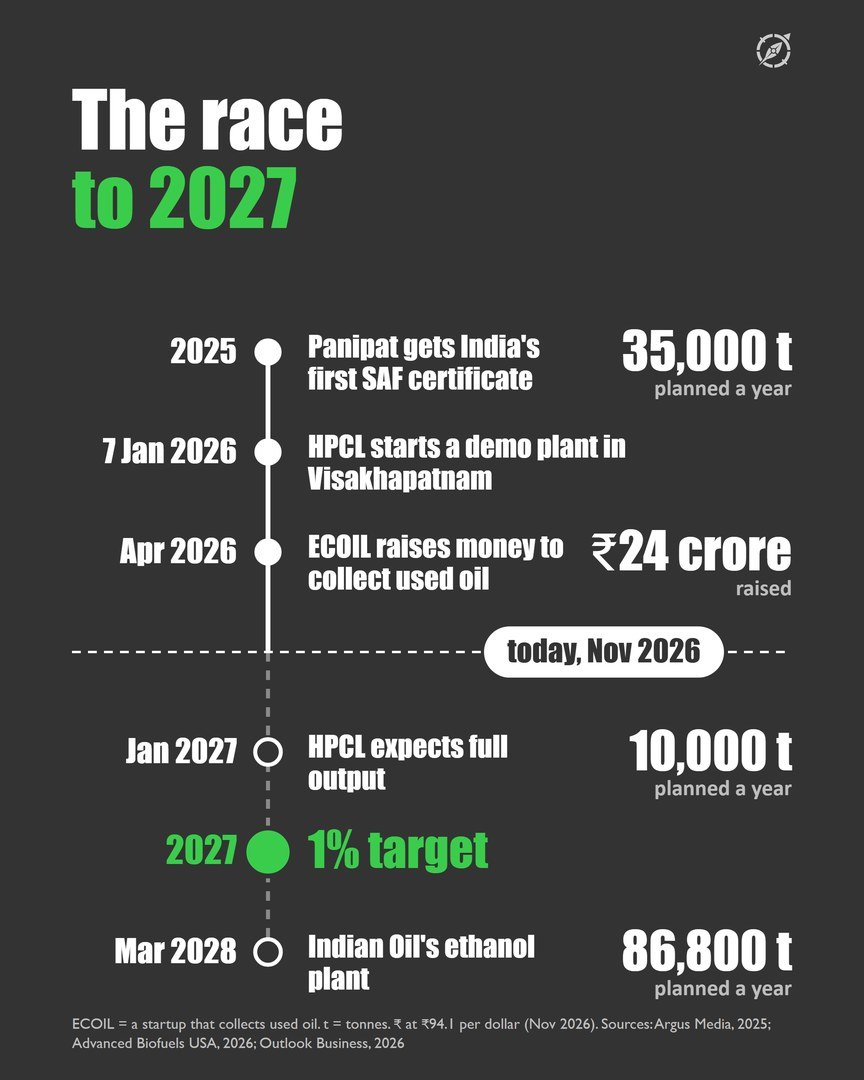
On 7 January 2026, HPCL switched on a small plant in Visakhapatnam. Its job is to turn used cooking oil into jet fuel.
It is only a demonstration plant. But it shows something plain. The oil left in a pan after the samosas can end up in the tank of a plane.
That fuel has a name: sustainable aviation fuel, or SAF. The world made 1.9 million tonnes of it in 2025, about 2.4 billion litres and almost twice the year before. It is still less than 1% of all jet fuel, says the International Air Transport Association (IATA).
India wants more, and its refineries are building plants. Yet the people behind those plants keep saying the same thing. The oil is the problem.
Key numbers
Sources: IATA (Dec 2025); Argus Media (2025); Outlook Business (2025 and 2026); Down To Earth (2026); Advanced Biofuels USA (2026).
How does used cooking oil become jet fuel?
The chain has three steps. Hotels, restaurants and snack makers fry in oil until it is no longer good. A collector takes that oil to a refinery. The refinery turns it into SAF, which is mixed into normal jet fuel.
The climate point is simple. The oil is waste, and it would otherwise go down a drain or into a bin. Using it gives planes a fuel that is not new fossil oil.
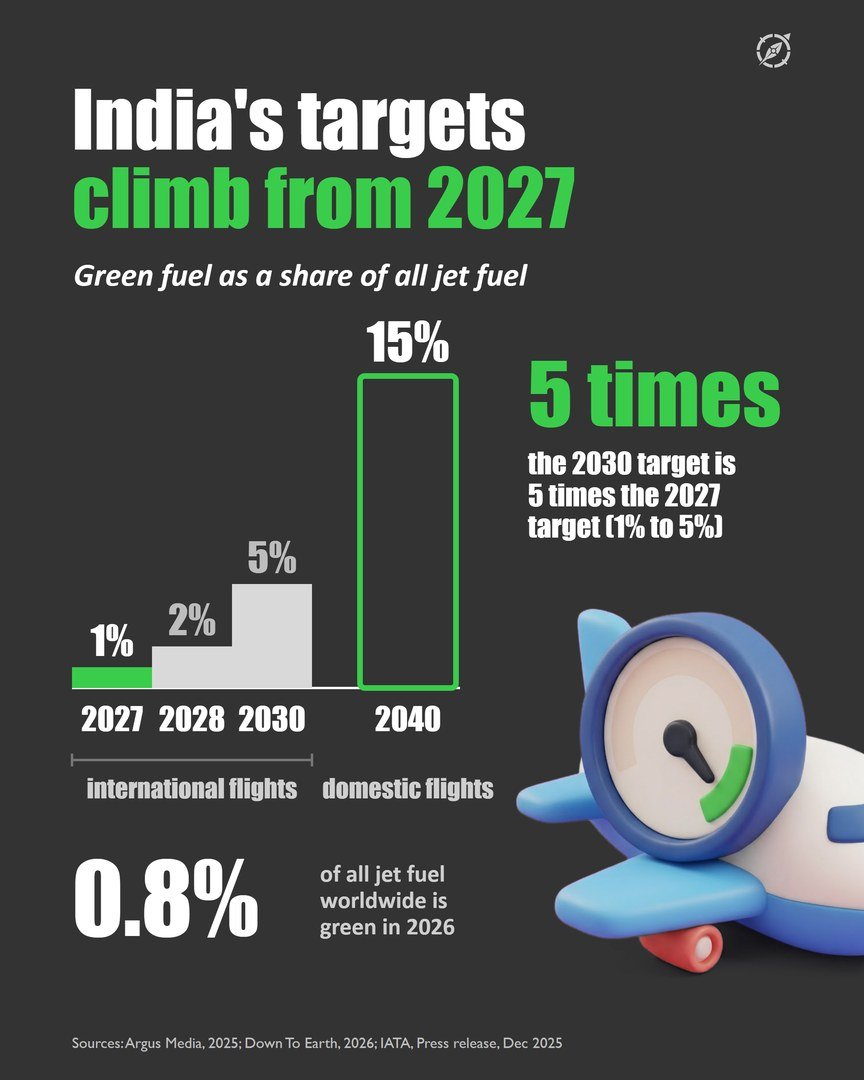
The world market is still small. SAF output rose from 1.0 million tonnes in 2024 to 1.9 in 2025, and IATA expects 2.4 in 2026. Its share of all jet fuel is 0.8% in 2026, up from 0.6% in 2025.
So the rise is fast, but it starts from almost nothing.
Why does green jet fuel cost so much?
It costs about 2 times as much as normal jet fuel. Where the law requires it, the price can be up to 5 times higher.
In 2025 it added about ₹34,000 crore to airlines' fuel bills, says IATA. (I use ₹94.1 to the dollar, the November 2026 rate.)
No airline pays double for fuel unless someone makes it, or helps it. That is why the rules matter as much as the plants.
India has the refineries. It does not yet have the oil supply.
What has India promised?
India has set targets for international flights. They are 1% SAF in 2027, 2% in 2028 and 5% in 2030. For domestic flights, a 15% target for 2040 has been reported.
These are targets for now. They are not yet a law. An airline that plans its fleet and fuel buying for 2027 cannot be sure the rule will exist.
Look at the jump. The 2030 target is 5 times the 2027 target, and the world is at 0.8% today. India is asking for a lot in a short time.
Who is building the plants?
Three projects stand out, and all three sit inside state-run oil companies.
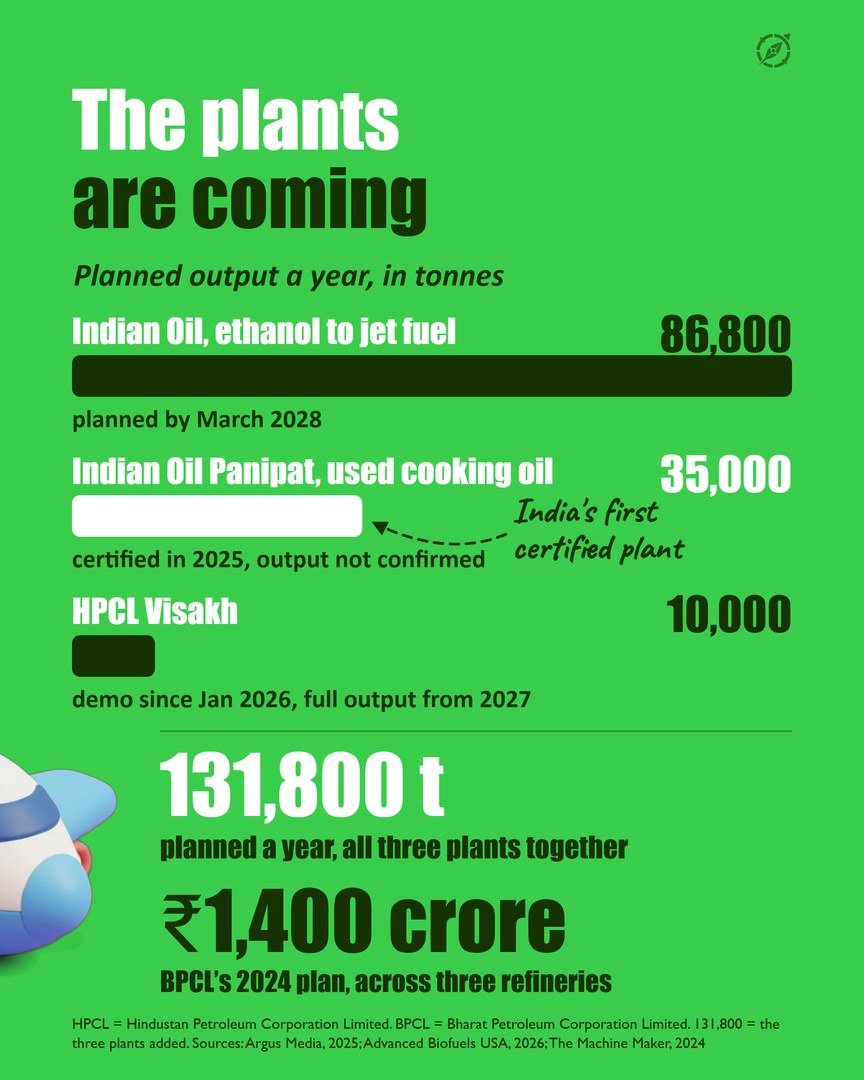
Indian Oil's Panipat refinery plans 35,000 tonnes a year of SAF from used cooking oil. In 2025 it won India's first ISCC CORSIA certificate, which airlines need before they can count the fuel under the global rules.
An Argus report from August 2025 expected output by December that year. I could not confirm that it started, so I write "planned", not "producing".
HPCL's Visakh plant feeds used cooking oil into an existing refinery unit, a hydrocracker. It plans about 10,000 tonnes a year, with full output expected from January 2027, after its own certification.
Indian Oil also plans an ethanol-to-jet-fuel plant of 86,800 tonnes a year, by March 2028. Together that is 131,800 tonnes a year, on paper.
BPCL had its own plan in 2024: ₹1,400 crore across three refineries, for about 100 tonnes of SAF a day. That is an older plan, not today's status.
The story in 10 slides




Where is all the oil?
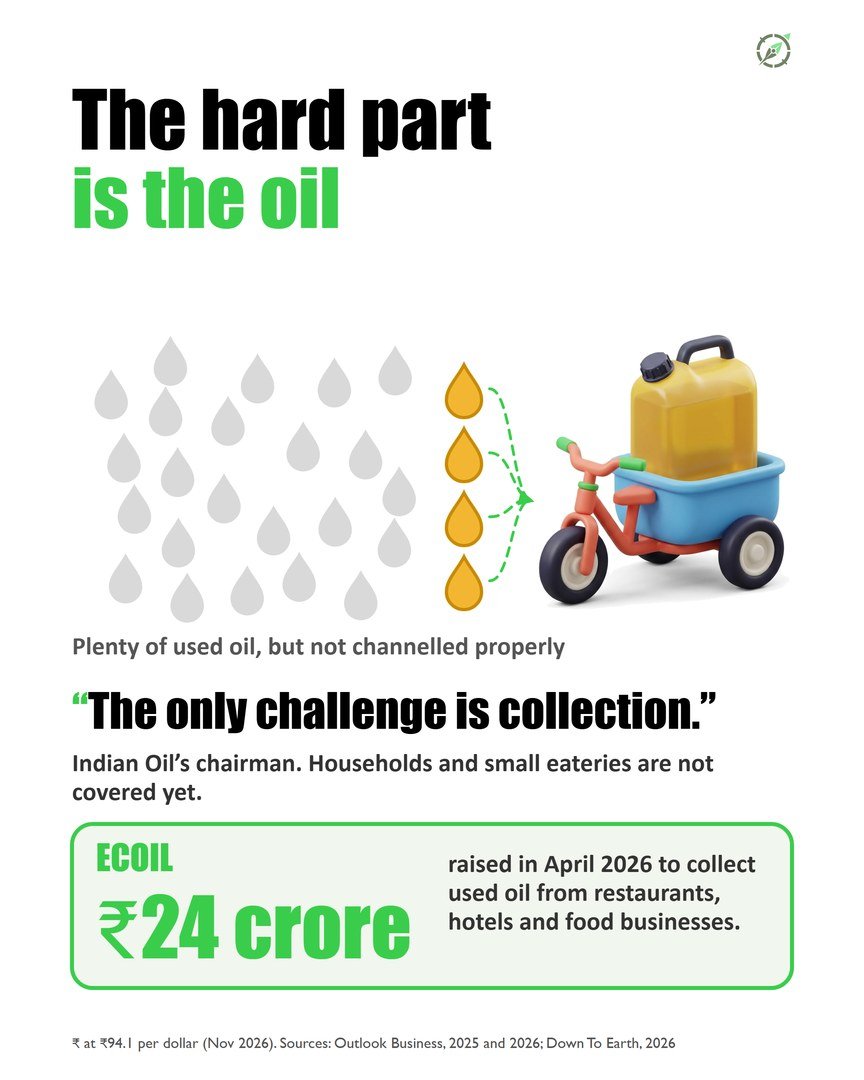
India has plenty of used cooking oil. But it does not reach the plants in a clean, steady stream.
Indian Oil's chairman put it in one line: "The only challenge is collection."
Think about where the oil sits. It is in small amounts, in millions of kitchens, with no single owner. Households and small eateries are not covered yet. A refinery needs tankers of oil, and a kitchen gives it a few litres.
Think of milk before dairies existed: lots of small producers, and nobody to bring it together. The oil exists, but the link between the kitchen and the plant does not.
An industry body, the Sustainable Aviation Fuel Alliance (SAFA), has asked the government to bring used cooking oil into the extended producer responsibility (EPR) framework. In plain words, whoever sells the oil would become responsible for getting it back.
Who is trying to fix the collection?
One startup is trying today. ECOIL raised ₹24 crore (about $2.5 million) in a Series A in April 2026, led by Fundalogical Ventures. It collects used oil from restaurants, hotels and food businesses.
I found no solid figure for how much used oil India makes, or how much of it is collected. The sources I saw disagree, so I leave the number out. That missing number is part of the story.
That is a small sum next to the plants. But it points at the right gap. A refinery cannot go door to door, and a collector can.
How kitchens can become a supply chain
- Collect. Indian Oil's chairman put it in one line: "The only challenge is collection."
- Gather the small. ECOIL raised ₹24 crore in April 2026 to collect used oil from restaurants, hotels and food businesses.
- Reach the homes. Households and small eateries are not covered yet.
- Change the rule. SAFA has asked the government to bring used cooking oil into the EPR framework.
A refinery cannot go door to door, and a collector can.
I think the oil will decide the race more than the refineries will.
From our pan to the clouds, nothing should go to waste.
Questions
What is sustainable aviation fuel?
SAF is jet fuel made from waste or plant sources instead of new fossil oil. It is mixed into normal jet fuel. Used cooking oil is one of the things it can be made from.
Why is SAF so expensive?
IATA says SAF costs about 2 times as much as normal jet fuel. It can reach up to 5 times where the law requires it. In 2025 it added about ₹34,000 crore to airlines' fuel bills.
Is India's SAF target a law?
Not yet. The targets are 1% in 2027, 2% in 2028 and 5% in 2030 for international flights. They are targets for now, not a law.
Sources
- Global SAF production and price premium, IATA (2025)
- India's IOC gets ISCC certification for SAF at Panipat, Argus Media (2025)
- Used cooking oil to produce sustainable aviation fuel: IndianOil, Outlook Business (2025)
- Visakh refinery of HPCL inaugurates SAF demonstration plant, Advanced Biofuels USA (2026)
- From fryer to flight, Down To Earth (2026)
Show the other 2 sources
Corrections: none so far. Found a mistake? Email me and I will fix it and note it here.