


India's cities are heating up. Most of the city is not built yet.
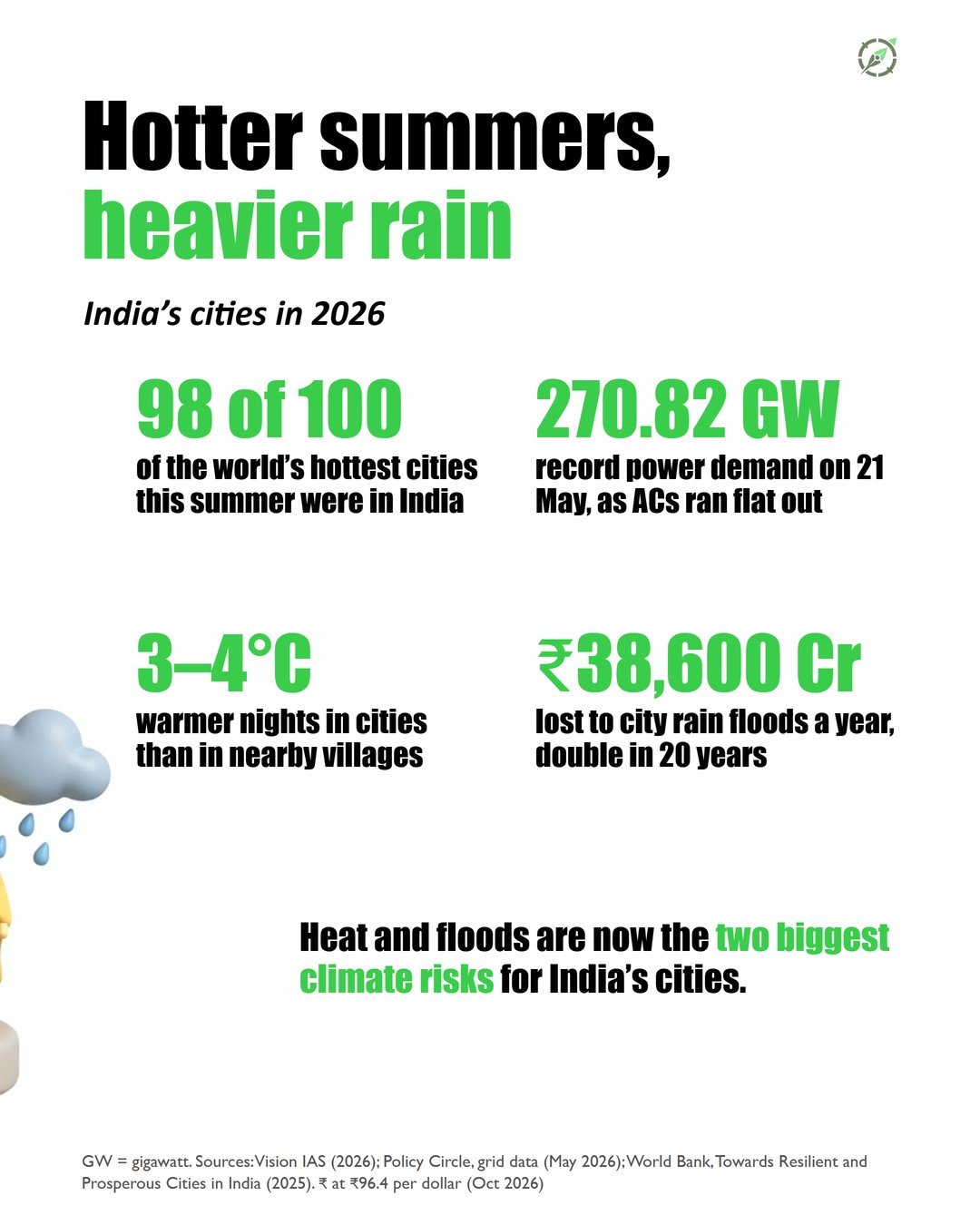
In the 2026 summer, 98 of the world's 100 hottest cities were in India. The fixes are cheap. What is missing is money and plans.
Most of the heat you feel in a city is built into it. Concrete and roads hold the sun all day, and they keep the heat at night.
Key numbers
Sources: Vision IAS (2026); Frontiers in Environmental Health (2026); national heat surveillance via Telangana Today (2026); World Bank, Towards Resilient and Prosperous Cities in India (2025). ₹ at ₹96.4 per dollar.
How hot is it getting?
In the 2026 season, 98 of the world's 100 hottest cities were in India. Daily highs passed 46°C in many of them, from mid-April into May.
India's all-time power peak was 270.82 GW on 21 May 2026. People were running air conditioners and coolers at once.
Cities are warmer than the countryside all year. The World Bank finds city nights run 3 to 4°C warmer than nearby villages, because concrete and roads hold heat.
What does the heat cost?
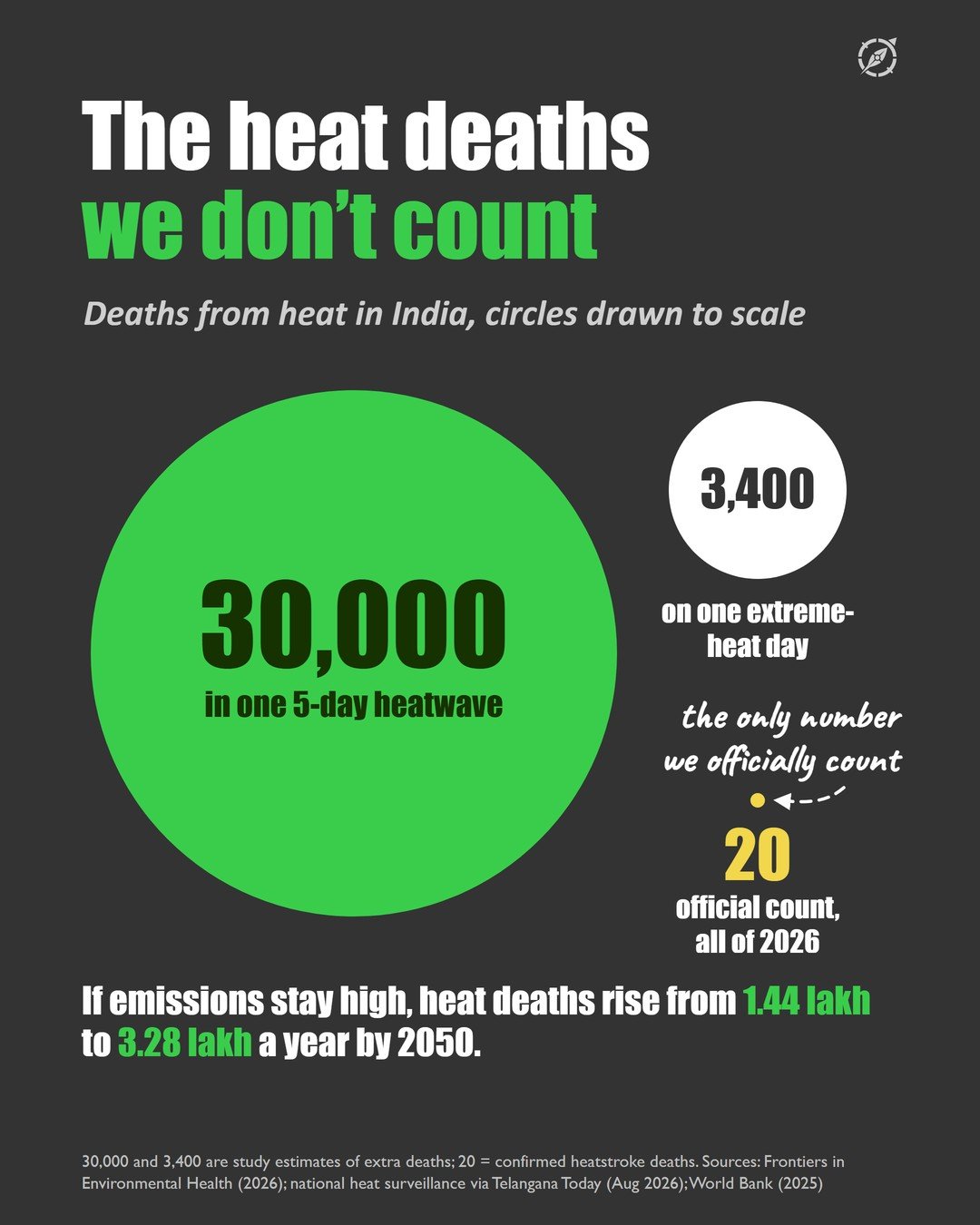
Heat deaths could rise from about 1.44 lakh a year to 3.28 lakh by 2050 if emissions stay high.
A single extreme-heat day in India could bring about 3,400 extra deaths. A five-day heatwave could bring around 30,000. Official counts are far lower, which shows how much is missed. In 2026 the official count of heatstroke deaths was 20.
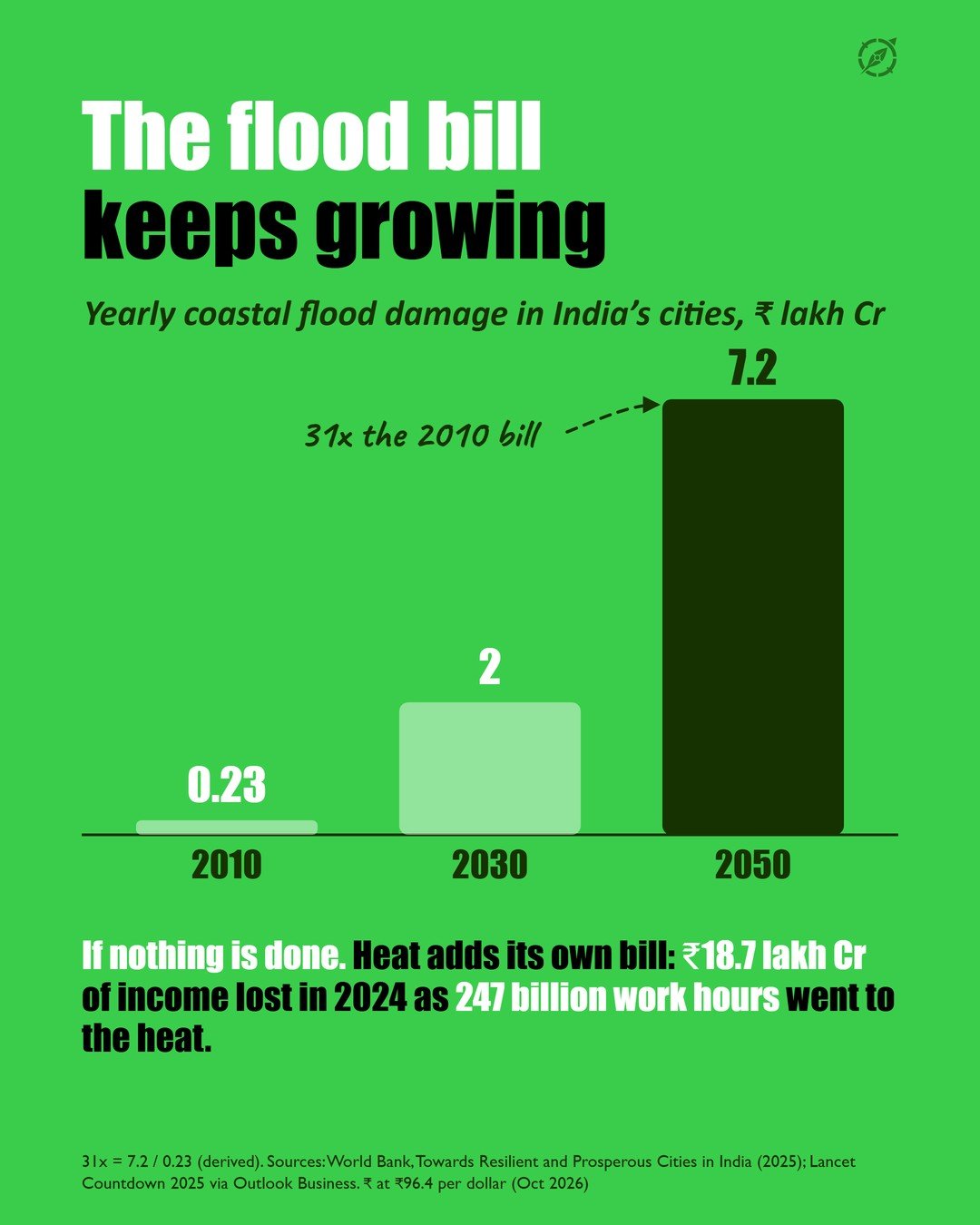
Work is the other cost. India lost about 247 billion work hours to heat in 2024, two-thirds of them in farming and a fifth in construction. That came to about ₹18.7 lakh Cr in lost income.
Five states carry 66% of heat deaths but produce 29% of India's GDP. The burden falls hardest where money is least.
The bill is already counted in lives and in lakh crores of rupees.
Is the flood risk rising too?
Yes. Urban flood damage in India is set to grow. Coastal flood damage in cities could rise from ₹23,100 Cr a year in 2010 to about ₹7.2 lakh Cr by 2050 if nothing is done.
Cities also lose about ₹38,600 Cr a year to rain floods, and that figure has more than doubled in twenty years.
What is the city like in 2050?
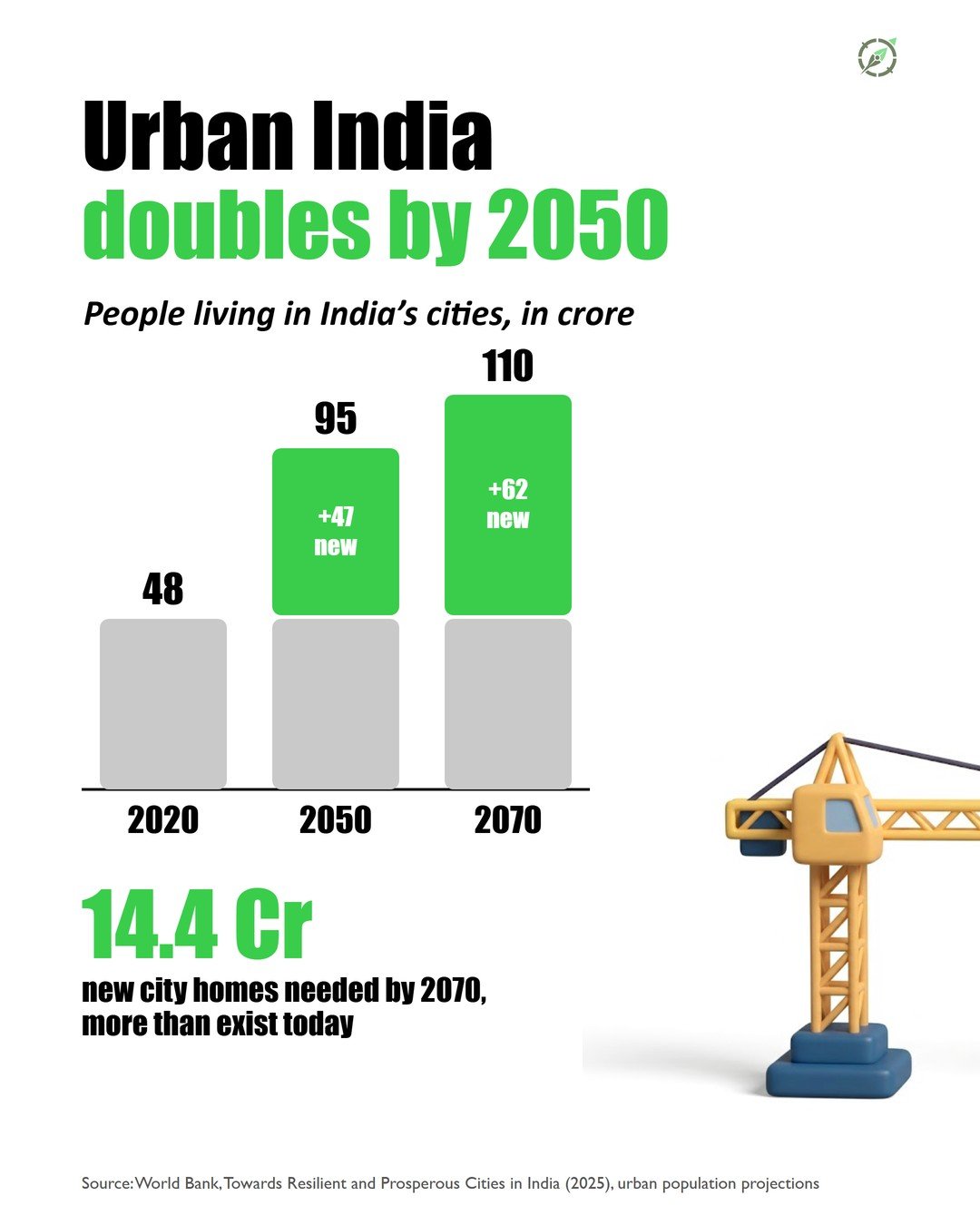
Urban India will have about 95 crore people by 2050, up from 48 crore in 2020. The city has to be built for them.
Cities will need about 14.4 crore new homes between 2022 and 2070. That is more than double today's housing stock. And about 70% of India's new jobs to 2030 are expected in cities.
The story in 10 slides



What works?
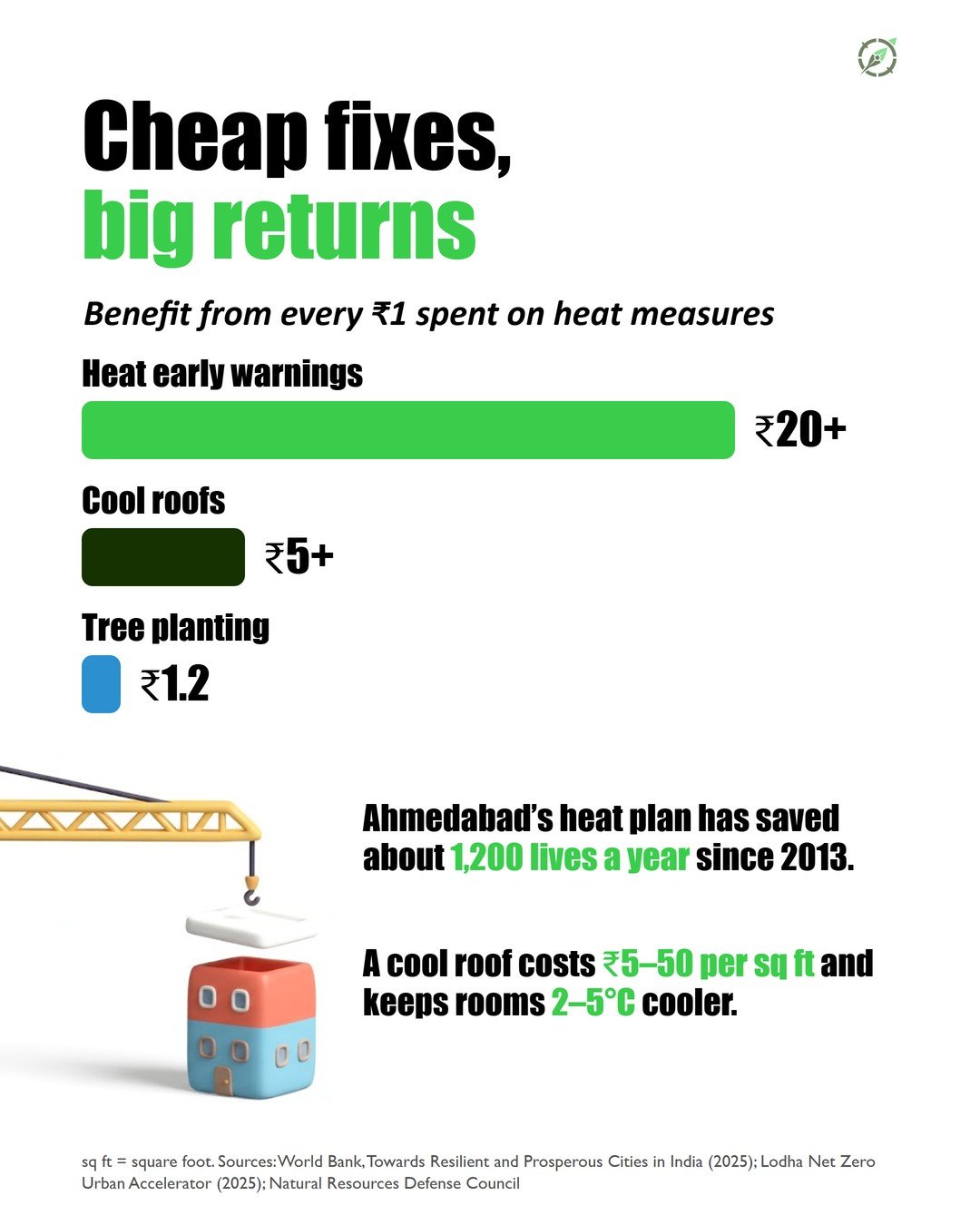
Heat early warnings return more than 20 rupees for every rupee spent. Cool roofs return more than 5 to 1, and tree planting about 1.2 to 1.
Ahmedabad's heat action plan, made after 1,344 people died in 2010, is credited with preventing about 1,200 deaths a year since 2013. Heat measures across cities could save about 1.3 lakh lives a year by 2050.
A cool roof keeps the room below about 2 to 5°C cooler. Lime wash costs ₹5 to ₹10 per square foot. Better white coatings cost ₹20 to ₹50. Telangana's first state policy targets 300 sq km of cool roofs by 2028.
In Chennai, wetland sponge parks can hold 30,000 litres of rainwater per unit, recharging groundwater. Surat built a flood early-warning system for the Tapi river with a city climate trust.
Why is the money not moving?
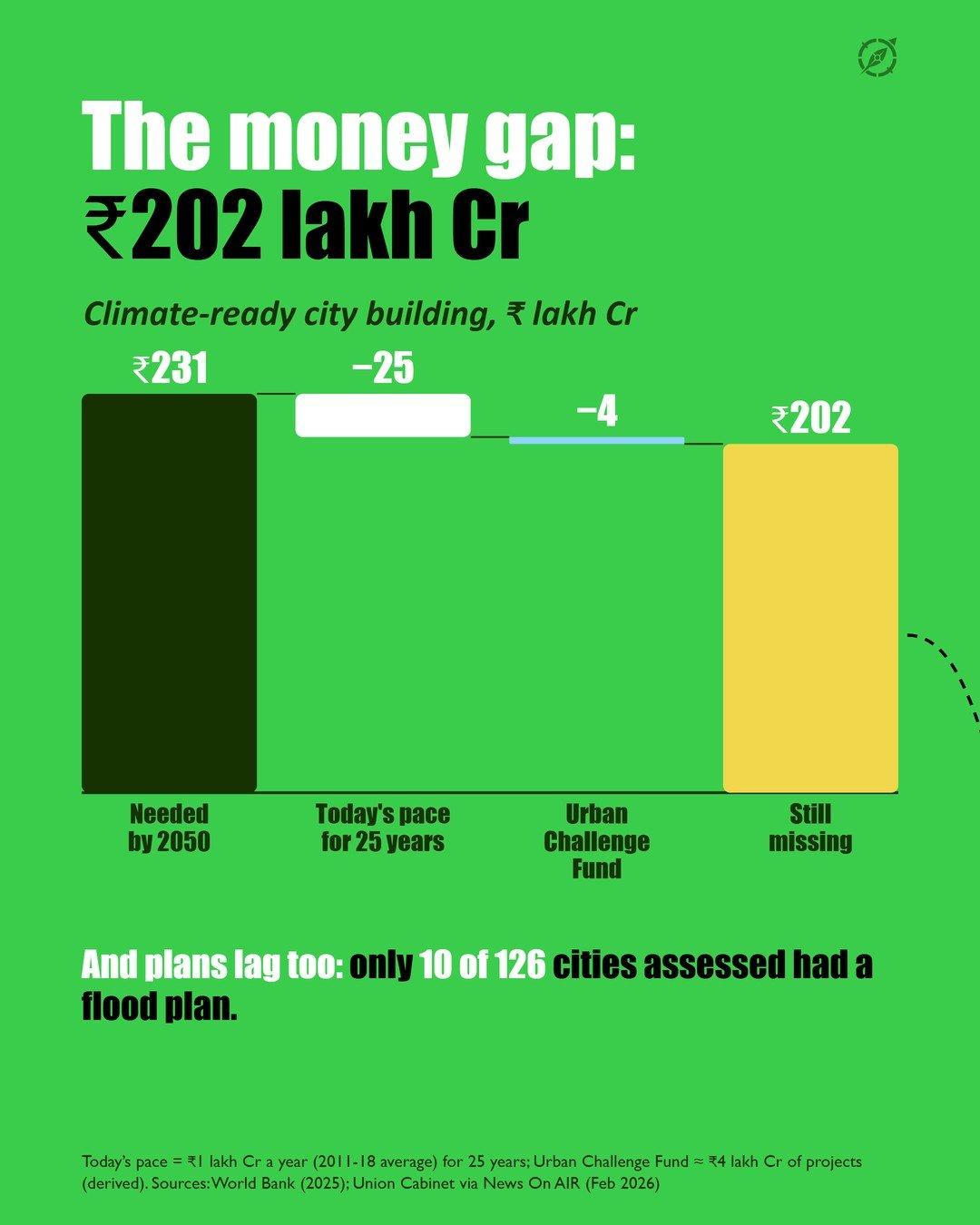
India's cities need about ₹231 lakh Cr for resilient, green infrastructure by 2050. Cities invested about ₹1 lakh Cr a year in the 2011 to 2018 period, around 1% of GDP.
The new Urban Challenge Fund has ₹1 lakh Cr of central money. The Centre pays 25% of each project, and at least half must come from the market, so about ₹4 lakh Cr of projects could follow.
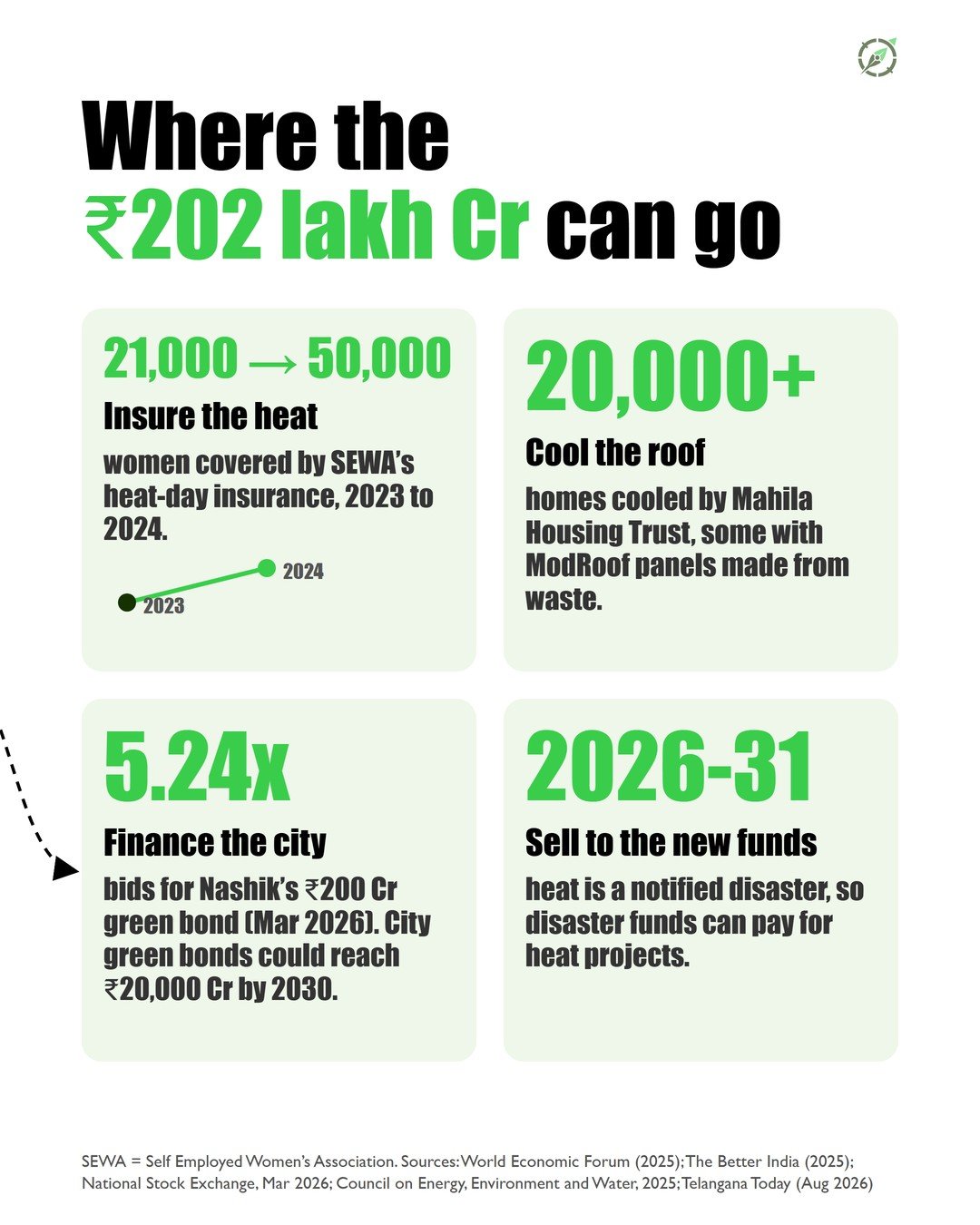
Green municipal bonds are a small start. All of them together raised ₹694 Cr in a decade. Nashik's March 2026 issue drew bids 5.24 times the base amount.
Only 10 of 126 assessed cities had a flood risk study and a flood plan. About 64 cities have a heat action plan, and heatwaves are now a notified disaster, so state and national disaster funds can pay for heat projects from 2026 to 2031.
Who builds it?
Insurance is one route. The Self-Employed Women's Association's heat insurance covered 21,000 women in 2023 and 50,000 in 2024. It pays out automatically when heat crosses a set level.
Cool roofs are another. The Mahila Housing Trust has made more than 20,000 homes cooler, some using roof panels made from waste.
Ahmedabad now adds misting bus stops and heat insurance on top of its plan. Those are the kinds of services a city can buy from firms.
How cities can pay for cooling
- Warn early. Heat early warnings return more than 20 rupees for every rupee spent.
- Cool the roofs. Lime wash costs ₹5 to ₹10 per square foot, and a cool roof keeps the room about 2 to 5°C cooler.
- Tap the new fund. The Urban Challenge Fund has ₹1 lakh Cr of central money. The Centre pays 25% of each project, and at least half must come from the market.
- Insure the workers. SEWA's heat insurance pays out automatically when heat crosses a set level.
Heatwaves are now a notified disaster, so state and national disaster funds can pay for heat projects from 2026 to 2031.
Those are the kinds of services a city can buy from firms.
Cities can be built cool and dry. The plan has to start before the next summer.
Questions
How hot did Indian cities get in 2026?
In the 2026 season, 98 of the world's 100 hottest cities were in India. Daily highs passed 46°C in many of them.
Do heat action plans work?
Ahmedabad's heat action plan is credited with preventing about 1,200 deaths a year since 2013. It was made after 1,344 people died in 2010.
How much money do Indian cities need?
India's cities need about ₹231 lakh Cr for resilient, green infrastructure by 2050. Cities invested about ₹1 lakh Cr a year in the 2011 to 2018 period.
Sources
- World Bank, Towards Resilient and Prosperous Cities in India (2025)
- Frontiers in Environmental Health, heat deaths study (2026)
- Lancet Countdown 2025, via Outlook Business
- Urban Challenge Fund, Cabinet decision via News On AIR (2026)
- CEEW, municipal green bonds (2025)
Show the other 15 sources
- Chennai wetland sponge parks, ICLEI (2025)
- Heatwave 2026, Vision IAS
- India's peak power demand record, Policy Circle (May 2026)
- CSIS, The Heat Tax (2026)
- Heatstroke deaths and national surveillance, Telangana Today (Aug 2026)
- Urban flooding in India, Vajiram and Ravi (2026)
- NSE press release, Nashik green bond (Mar 2026)
- Urban heat action plans, Parliament reply via Ananta IAS (Jul 2026)
- SEWA heat insurance, World Economic Forum
- Mahila Housing Trust cool roofs, The Better India (2025)
- Ahmedabad heat measures, Down To Earth (2025)
- Telangana cool roof policy, iamrenew (2025)
- Surat flood early warning, PreventionWeb
- NRDC, cool roof programmes in Hyderabad
- Cool roof costs, Lodha Net Zero Urban Accelerator (2025)
Corrections: none so far. Found a mistake? Email me and I will fix it and note it here.