

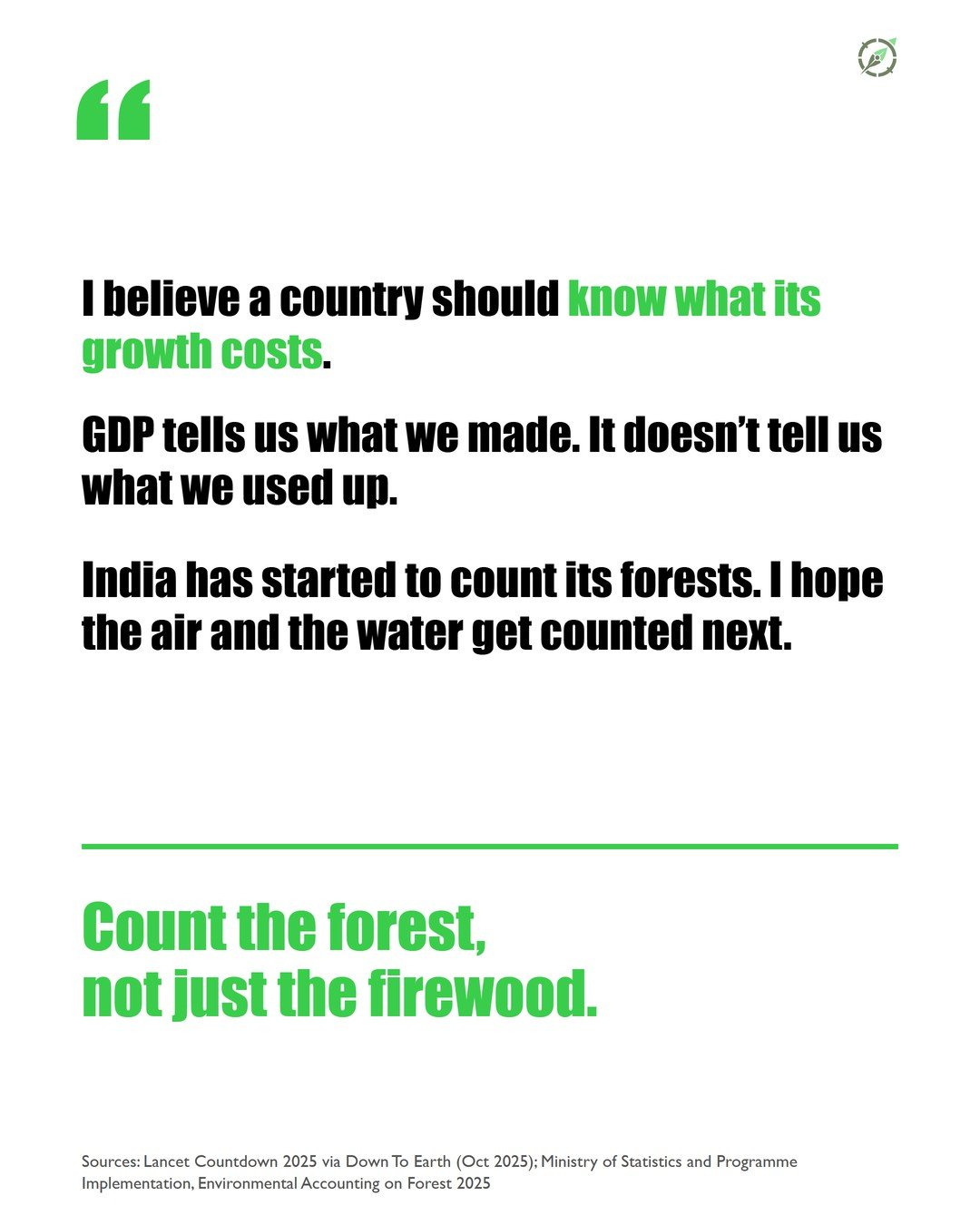
GDP does not count the forests. India is starting to.
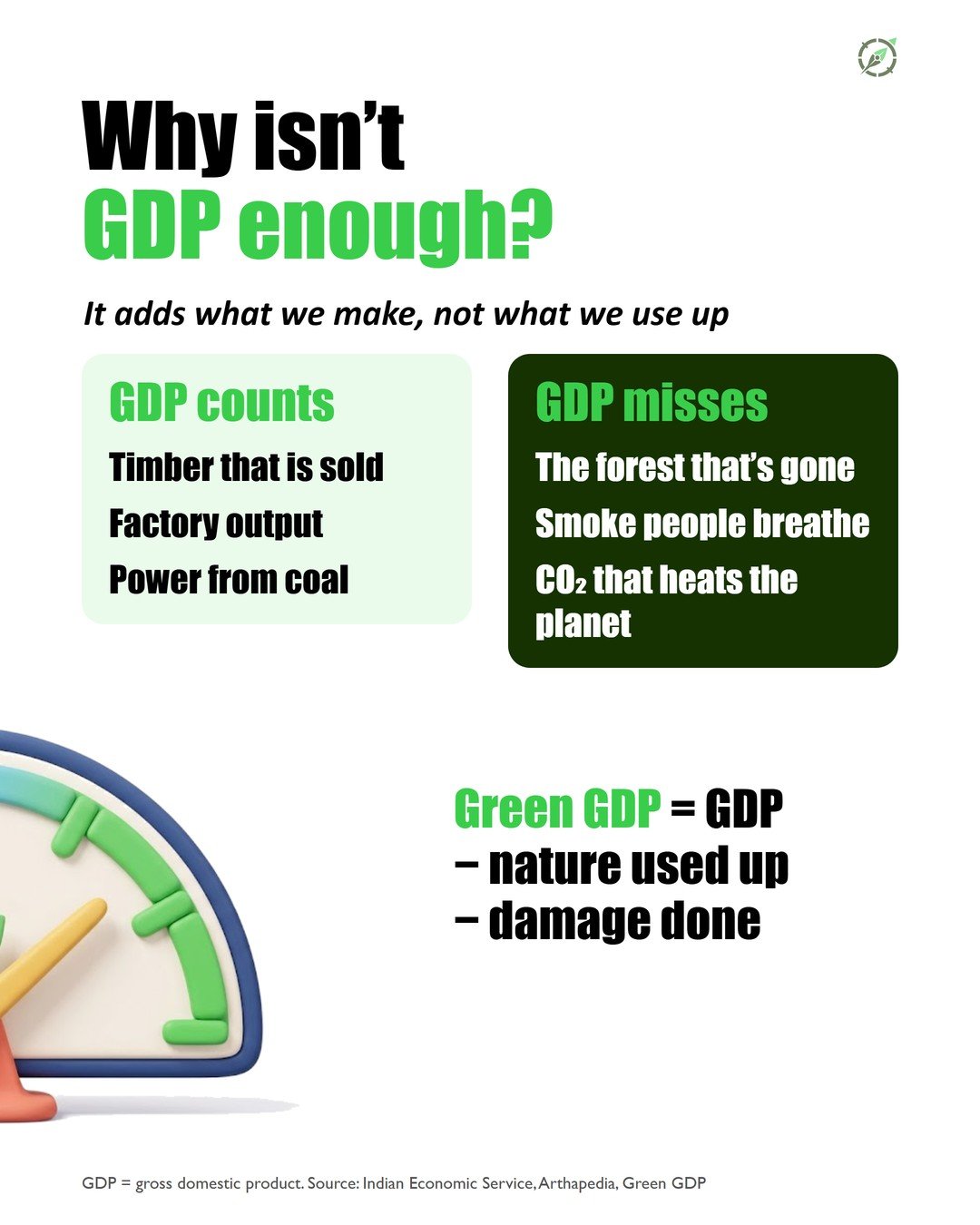
GDP counts what we make, not what we use up to make it. India's first forest accounts now put a value on the carbon that forests hold.
GDP can rise while the air gets worse. The damage shows up later, in hospital beds and lost work, and GDP never subtracts it. Green GDP is an attempt to fix that.
The question is not whether growth is good. It is whether the bill for growth is being counted at all.
Key numbers
Sources: World Bank, adjusted net savings (2021); Lancet Countdown 2025 via Down To Earth; MoSPI, Environmental Accounting on Forest 2025; UN Statistical Commission (2025).
What is Green GDP?
It is GDP minus what growth uses up. That means the wear on machines and buildings, the natural resources burned through, and the damage from pollution.
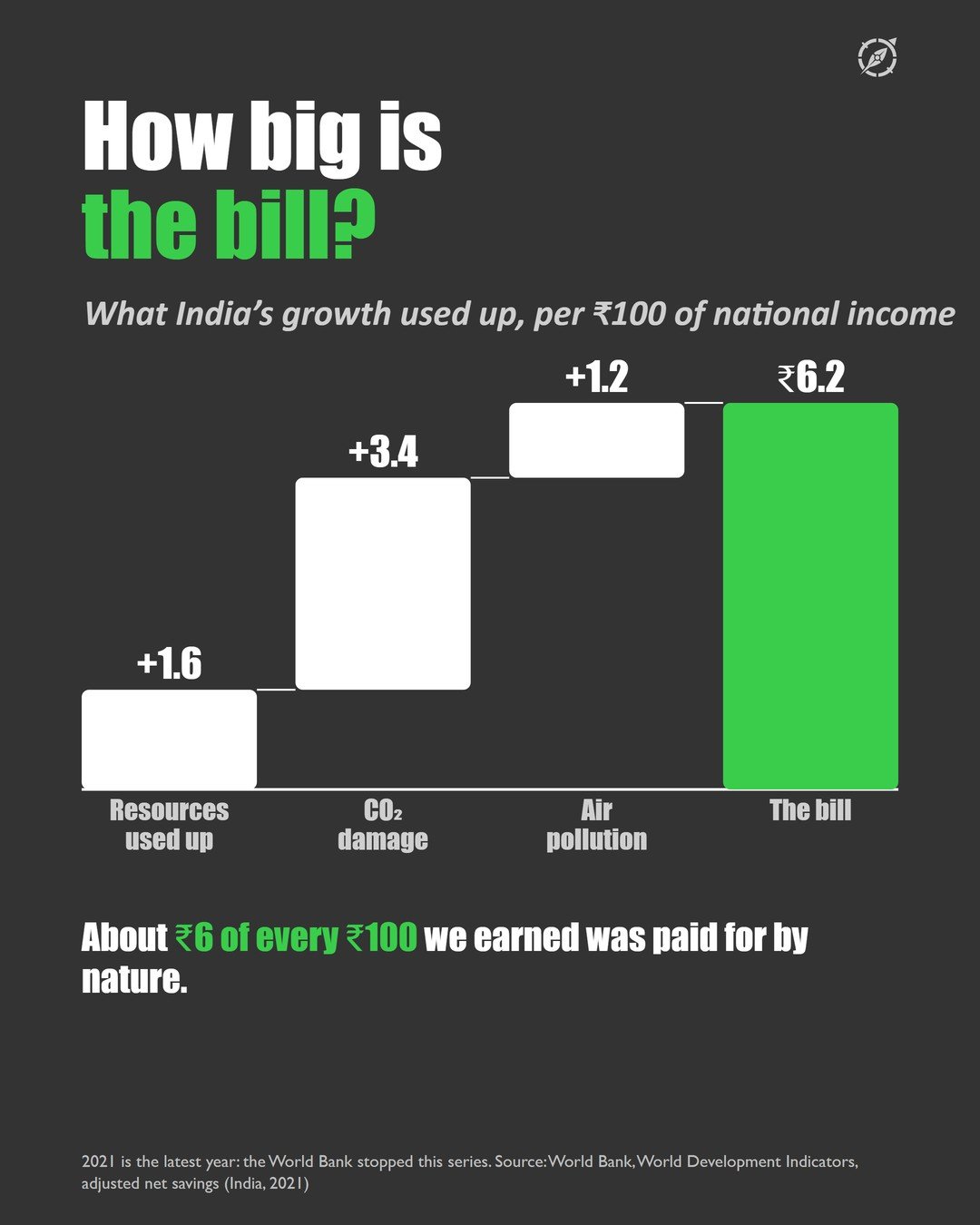
The World Bank's version of the idea subtracts three things: machine wear, resource depletion, and damage from CO₂ and air pollution. Each is measured as a share of national income.
What does GDP miss in India?
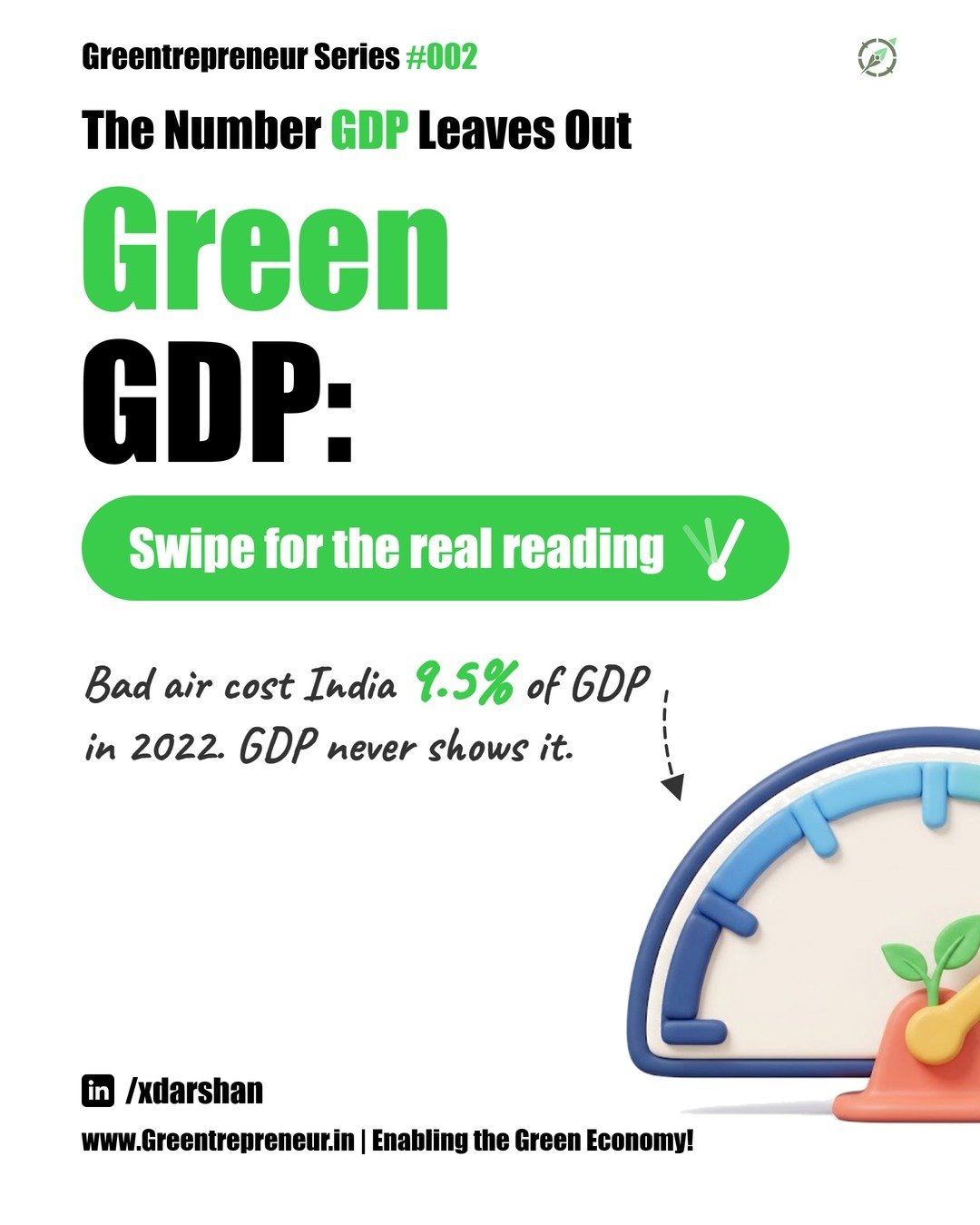
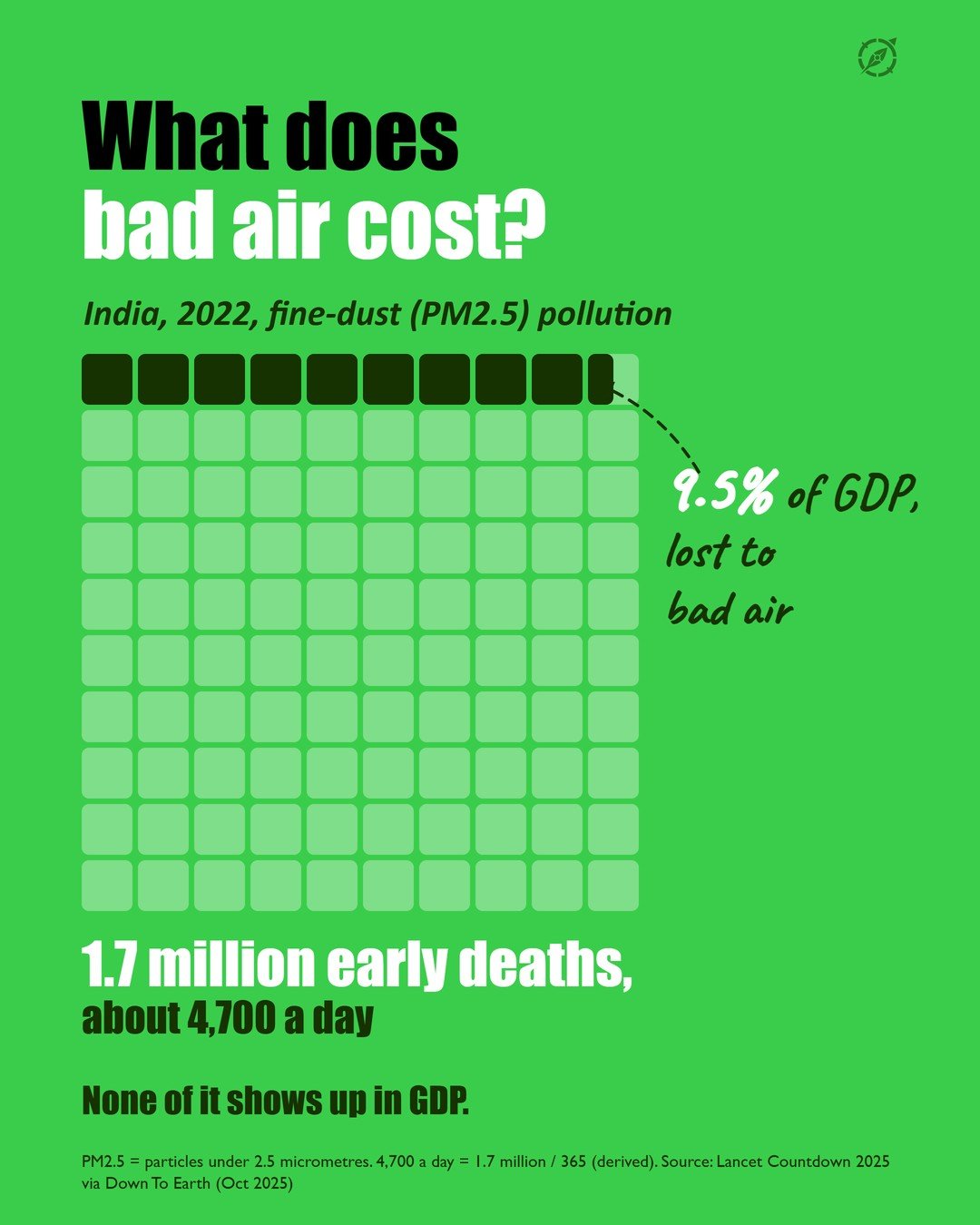
Air pollution cost India 9.5% of GDP in 2022, through about 1.7 million early deaths, according to the Lancet Countdown. That is a cost no GDP figure shows.
In the World Bank's 2021 accounts, CO₂ damage took 3.4% of national income. Resource depletion nearly doubled between 2015 and 2021, from 0.89% to 1.62%. Carbon damage stayed near 3.5% over the same years.
The World Bank series stopped in 2021, so the numbers cannot yet show what happened after that.
Pollution does not stop being a cost because nobody writes it down.
What is a forest worth?
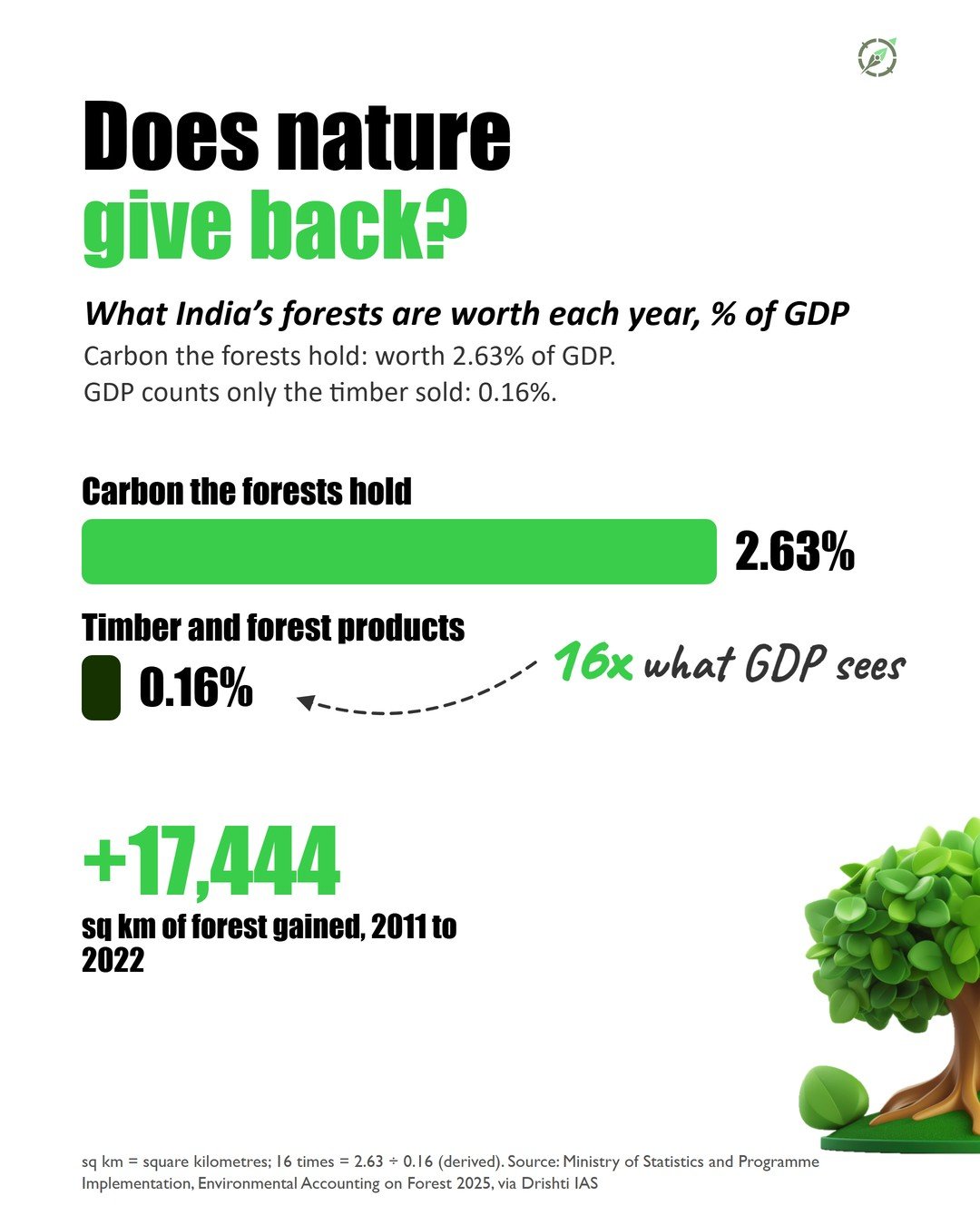
In 2021-22, India's forests were worth 2.63% of GDP each year just by holding carbon. That figure comes from the statistics ministry's first forest accounts, published in September 2025.
Timber and other forest products are only 0.16% of GDP. GDP already sees that part. The carbon held by the forest is worth about 16 times more, and GDP has never counted it.
Forest cover also grew. It rose by 17,444 square kilometres between 2010-11 and 2021-22, to 7.15 lakh square kilometres, or 21.76% of India. Arunachal Pradesh, Uttarakhand and Assam hold the most forest carbon value.
Who else is measuring it?
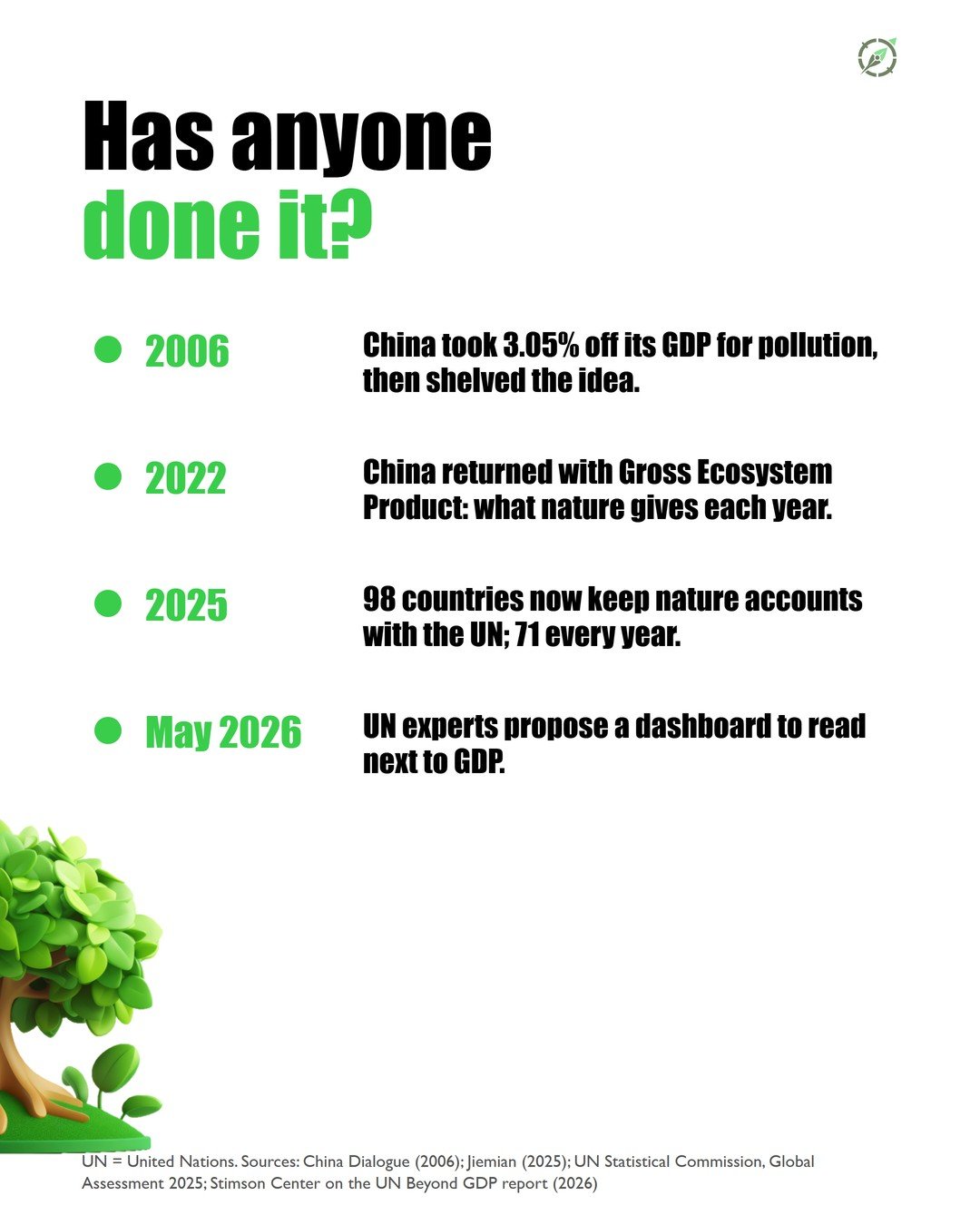
China tried first. Its 2006 green GDP report cut 2004 GDP by 3.05%, counting only 10 of 20 cost types. The country then shelved it. In 2022 it came back with Gross Ecosystem Product, a measure of nature's value, and a national standard followed.
On 7 May 2026, a UN expert group proposed a dashboard to measure progress beyond GDP. 98 countries already compile UN environmental-economic accounts, and 71 of them do it regularly.
Where does India stand?
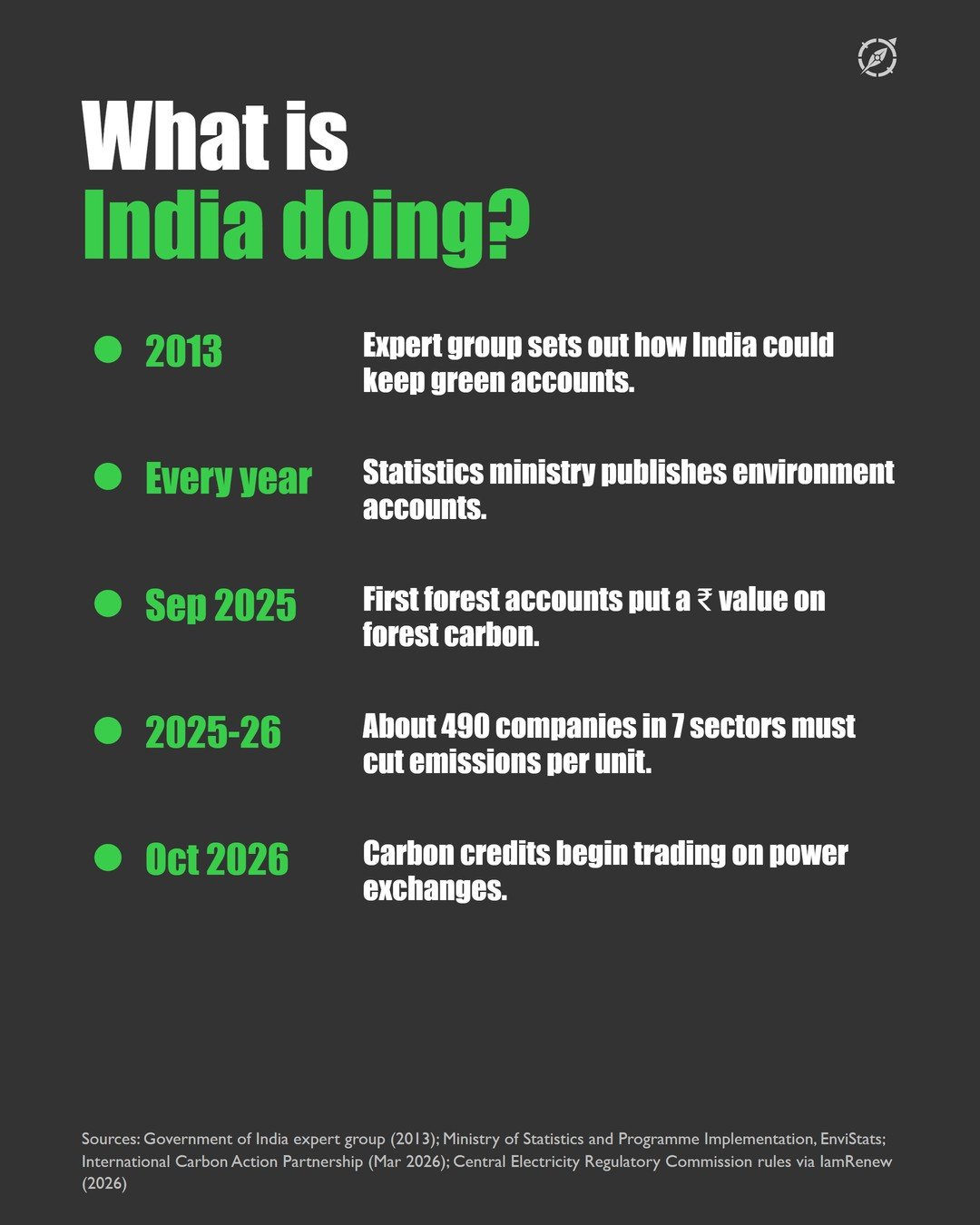
The idea is old in India. A government expert group set out a framework for green national accounts in 2013.
Since then the statistics ministry has published environment accounts every year. The eighth issue came out in 2025, covering forests, water, oceans and minerals.
From FY2025-26, about 490 companies must cut their emission intensity under India's carbon market. Carbon credit certificates are due to start trading on power exchanges in October 2026.
The story in 10 slides
Where does business come in?
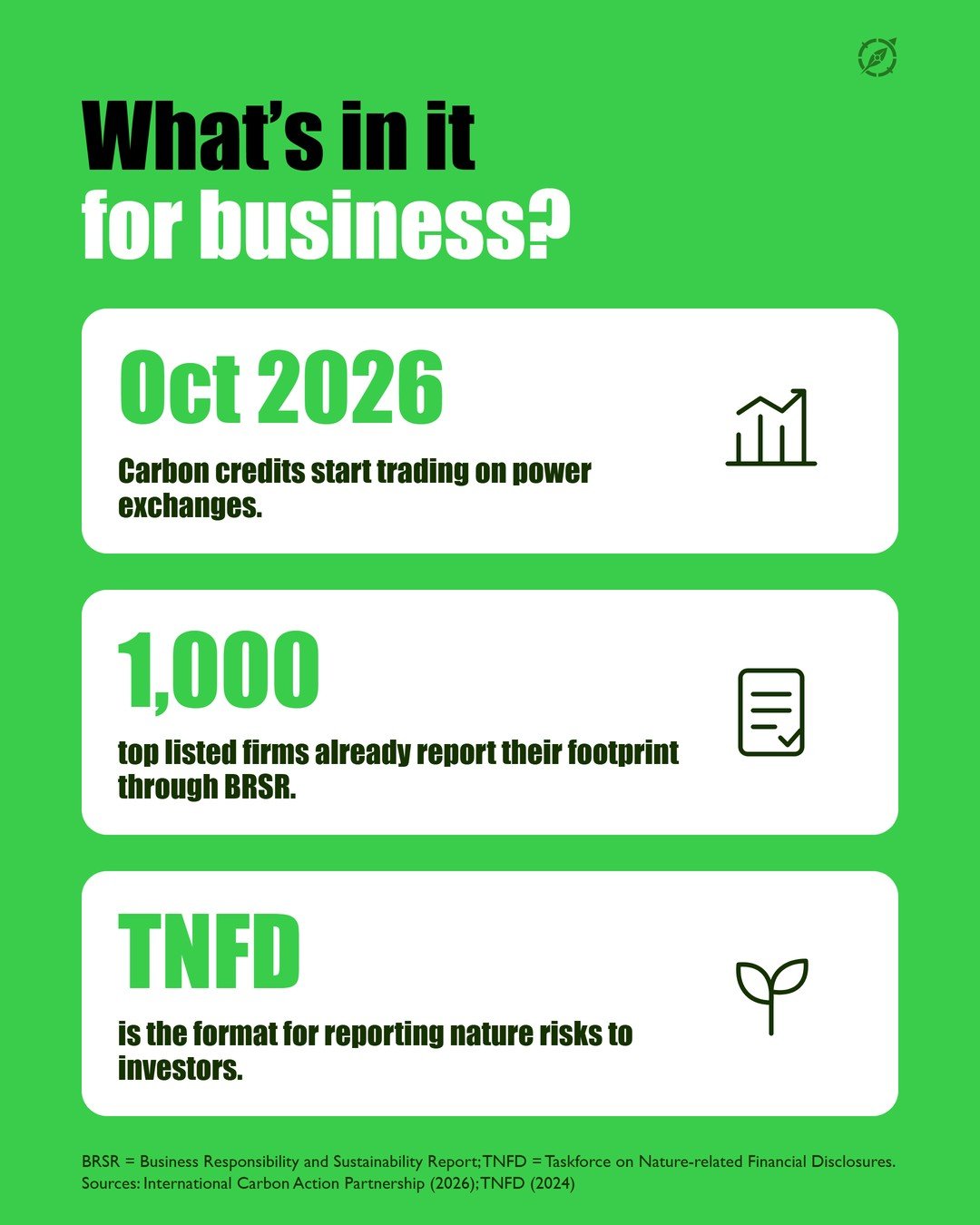
Firms that beat their carbon target earn credits they can sell. Cleaner growth becomes revenue, and the market gives the number a price.
Listed companies already file sustainability reports. The TNFD says the Indian rules overlap closely with its nature-reporting framework. About the top 1,000 listed companies file these reports, so the data is already being collected.
How business can take part
- Cut emissions. From FY2025-26, about 490 companies must cut their emission intensity under India's carbon market.
- Earn credits. Firms that beat their carbon target earn credits they can sell.
- Trade the credits. Carbon credit certificates are due to start trading on power exchanges in October 2026.
- Keep reporting. Listed companies already file sustainability reports, and the TNFD says the Indian rules overlap closely with its nature-reporting framework.
About the top 1,000 listed companies file these reports, so the data is already being collected.
About the top 1,000 listed companies file these reports, so the data is already being collected.
A country that counts its forests can start paying for them.
Questions
What is Green GDP?
It is GDP minus what growth uses up. That means the wear on machines and buildings, the natural resources burned through, and the damage from pollution.
What is a forest worth in India?
In 2021-22, India's forests were worth 2.63% of GDP each year just by holding carbon. Timber and other forest products are only 0.16% of GDP.
Is India the first country to try this?
No. China tried first, with a green GDP report in 2006, then shelved it. In 2022 it came back with Gross Ecosystem Product.
Sources
- IES Arthapedia, Green GDP
- World Bank WDI, adjusted net savings definitions
- Lancet Countdown 2025, via Down To Earth
- World Bank WDI, India adjusted net savings series
- MoSPI, Environmental Accounting on Forest 2025, via Drishti IAS
Show the other 9 sources
- UN Statistical Commission, Global Assessment 2025
- Stimson, on the UN expert group report (2026)
- MoSPI EnviStats FAQ (2025)
- ICAP, India's carbon credit trading scheme
- TNFD on Indian nature-related reporting
- China Dialogue, China's first green GDP report
- Gross ecosystem product (overview)
- Green national accounts in India, expert group framework (2013)
- CERC carbon credit trading rules, IamRenew
Corrections: none so far. Found a mistake? Email me and I will fix it and note it here.