

India buys 88.7% of its crude abroad. What does a war far away cost us?
India imports most of its oil, gas and cooking fuel. When a strait 33 km wide closed in 2026, the bill at home followed within weeks.
Most Indians never see the oil they use. They see the petrol price, the LPG cylinder and the electricity bill. All three move with wars they had no part in.
Key numbers
Sources: Petroleum Planning and Analysis Cell; CareEdge Ratings (Mar 2026); ICRA and Elara via Reuters (Mar 2026). ₹ at ₹96.4 per dollar.
How dependent is India?
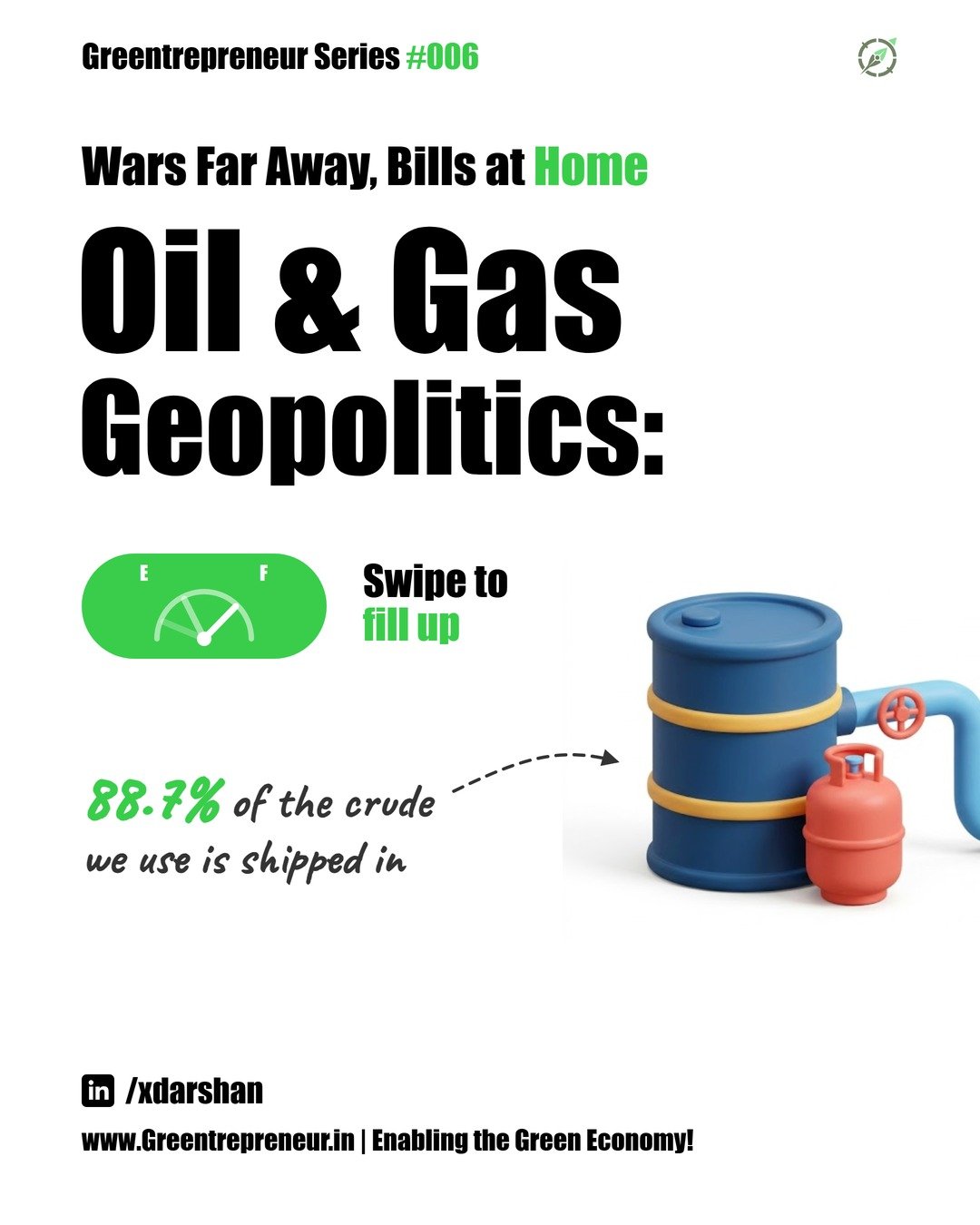
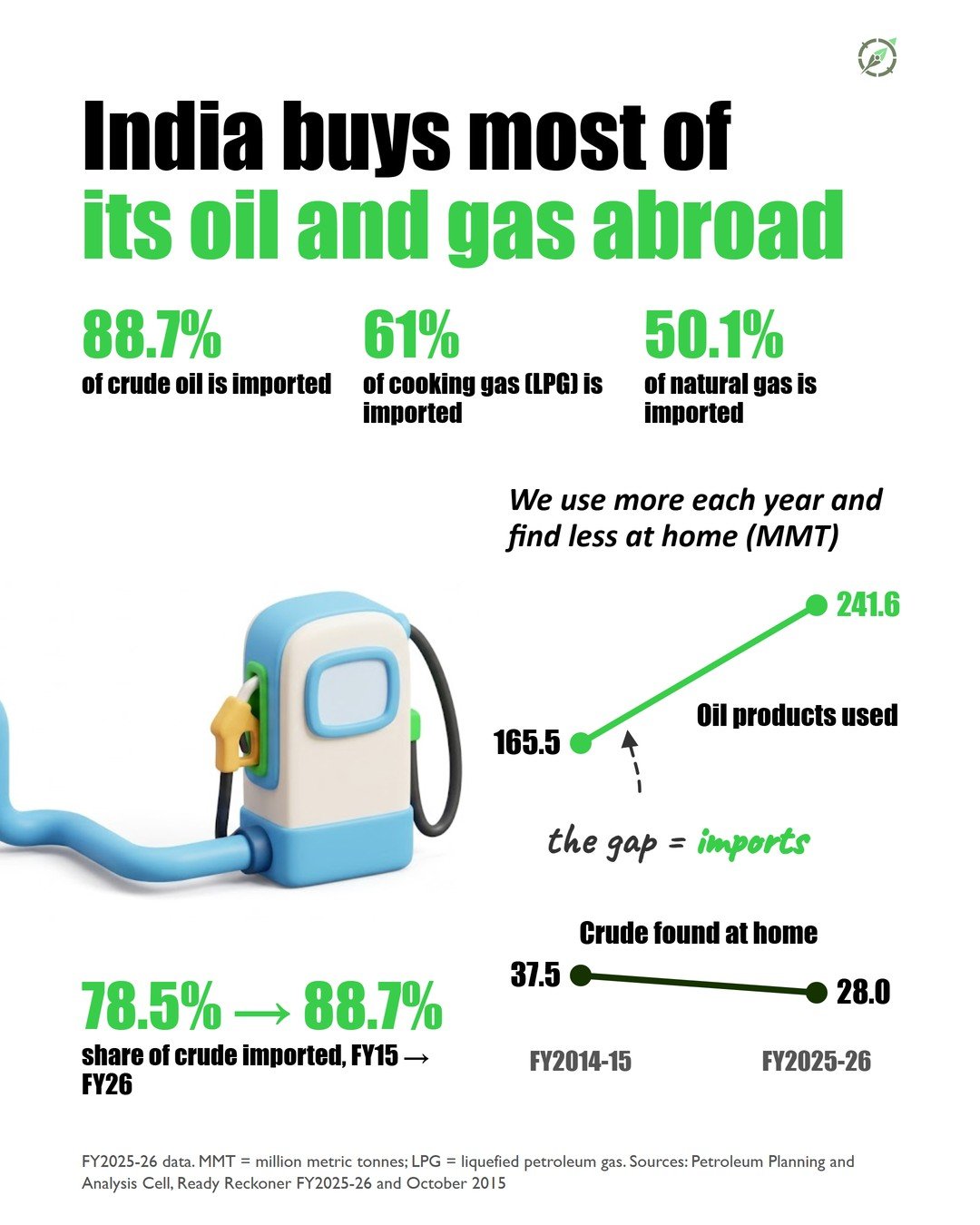
India imported 88.7% of its crude oil in FY2025-26. It also imported 61% of its cooking gas and half of its natural gas.
The shift is long. Crude imports were 78.5% of use in FY2015. Since then India has used more oil, from 165.5 to 241.6 million tonnes, and found less, from 37.5 to 28.0 million tonnes.
Where does the oil come from?
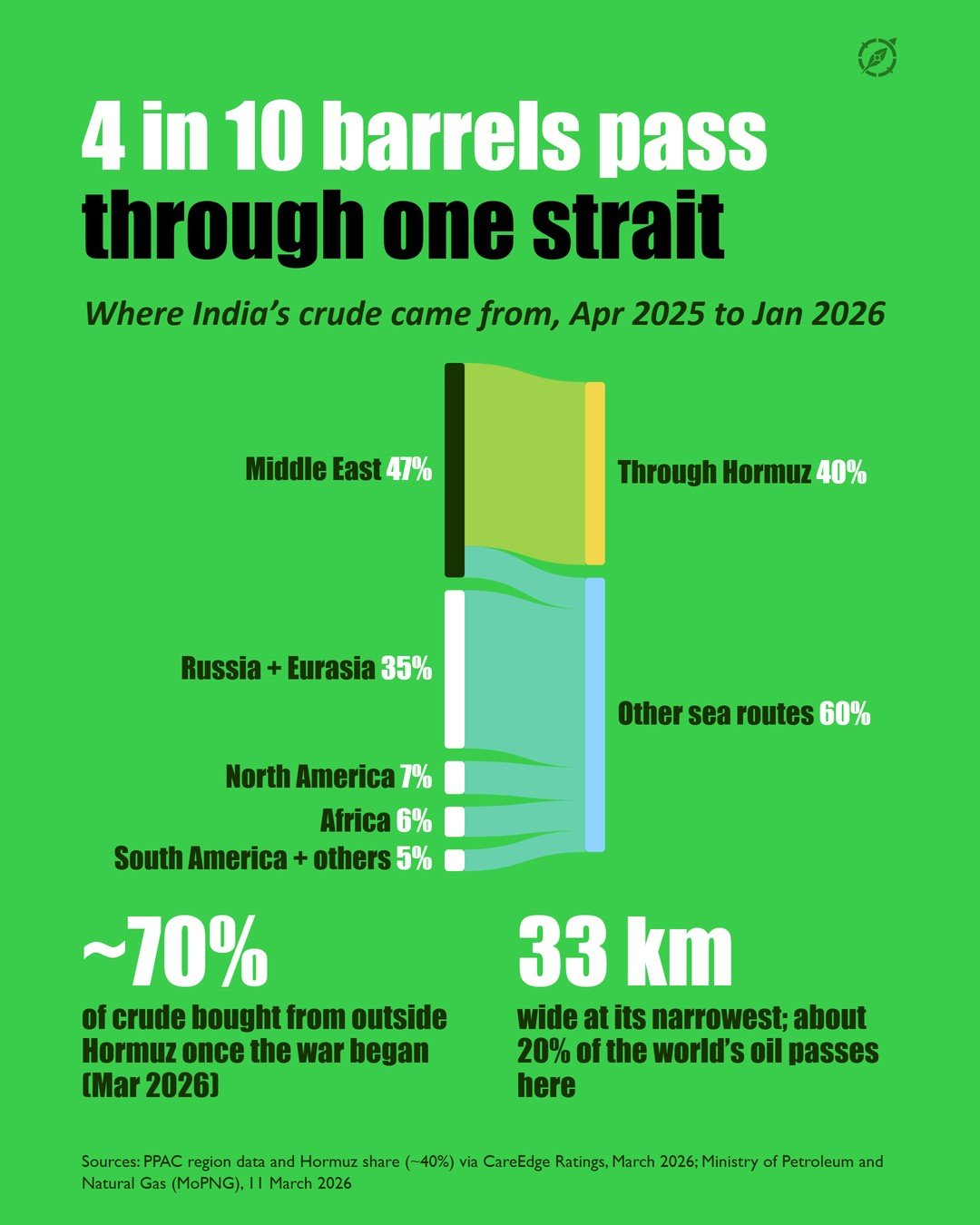
Before the war, about 40% of India's crude came through the Strait of Hormuz. The strait is 33 km wide at its narrowest. About 20% of the world's oil passes through it.
After the war began, India moved about 70% of its crude to routes outside the strait. It now buys from 41 countries, up from 27. Russia was the largest single supplier in June 2026, at 53.5%.
The fastest way to lose a war is to depend on one door, and India used to have only one.
Is this new?
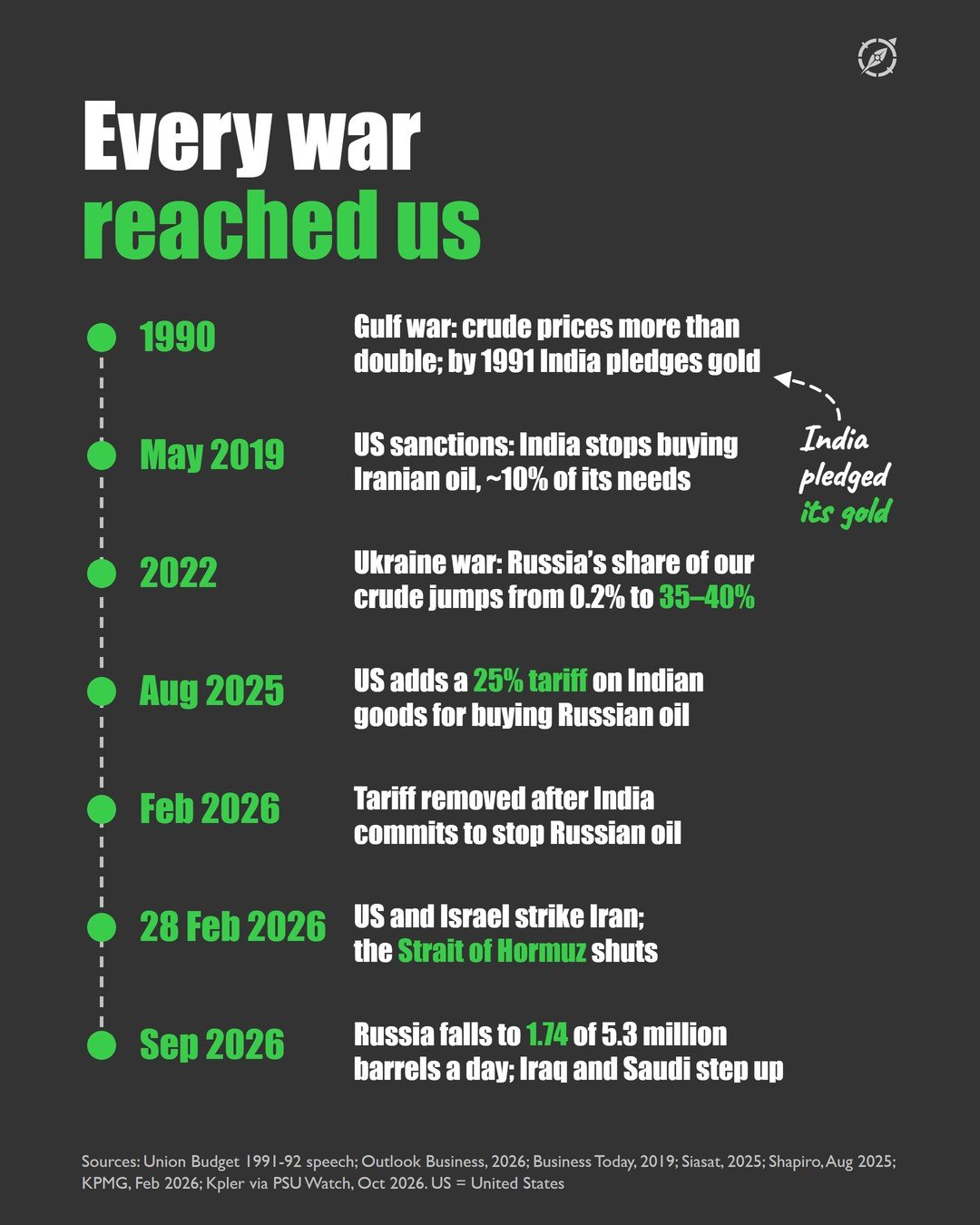
No. In 1990 and 1991, the Gulf war more than doubled crude prices. India had foreign exchange for about three weeks of imports and pledged gold to cover the gap.
In 2022, Russia's share of India's crude went from 0.2% to 35 to 40%. In August 2025 the US added a 25% tariff for that trade. It was removed on 7 February 2026, after India committed to stop.
In May 2019 India stopped buying Iranian oil, about 10% of its needs, after US sanctions. Each shock taught the same lesson, and each time the answer was partial.
What did 2026 cost?
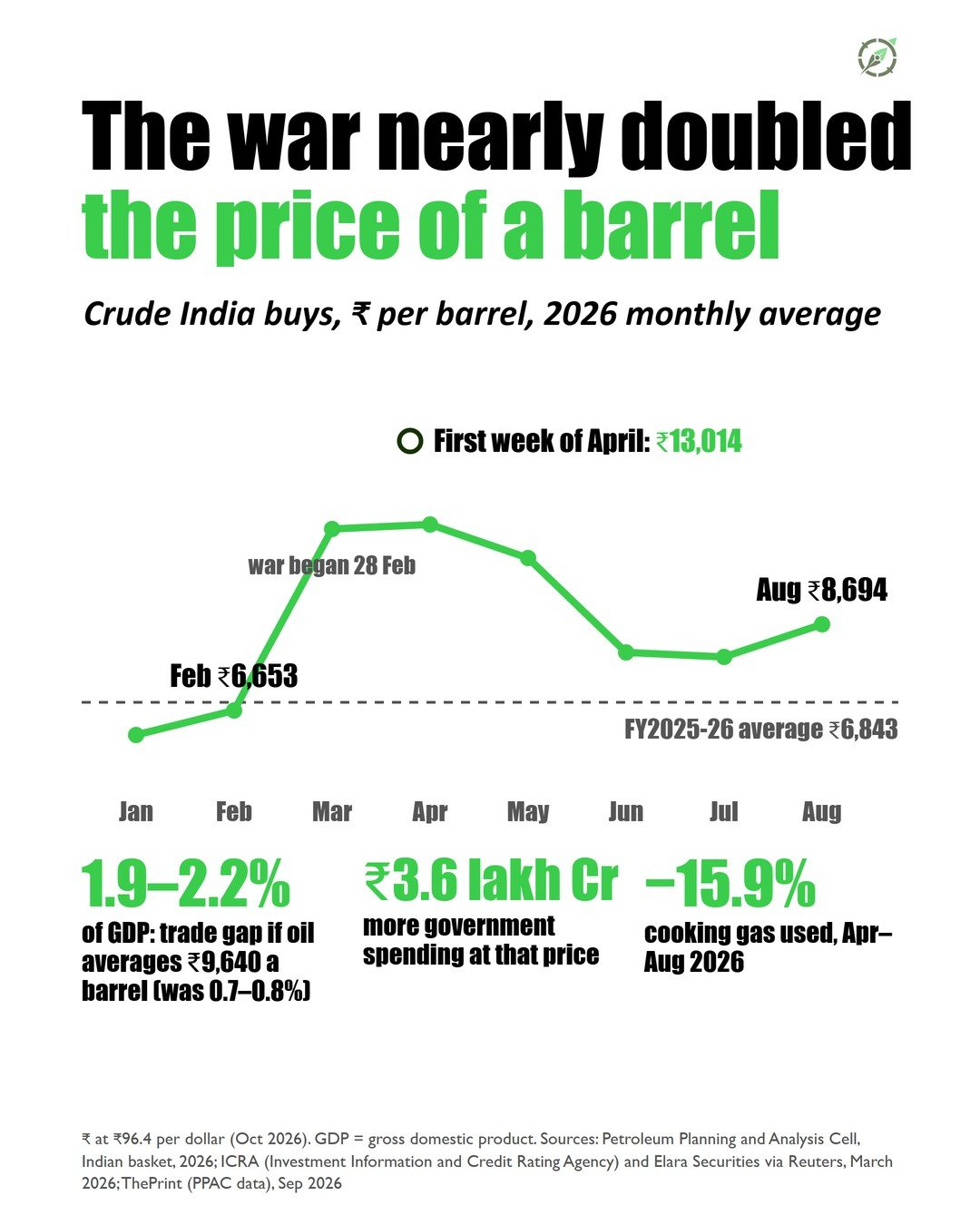
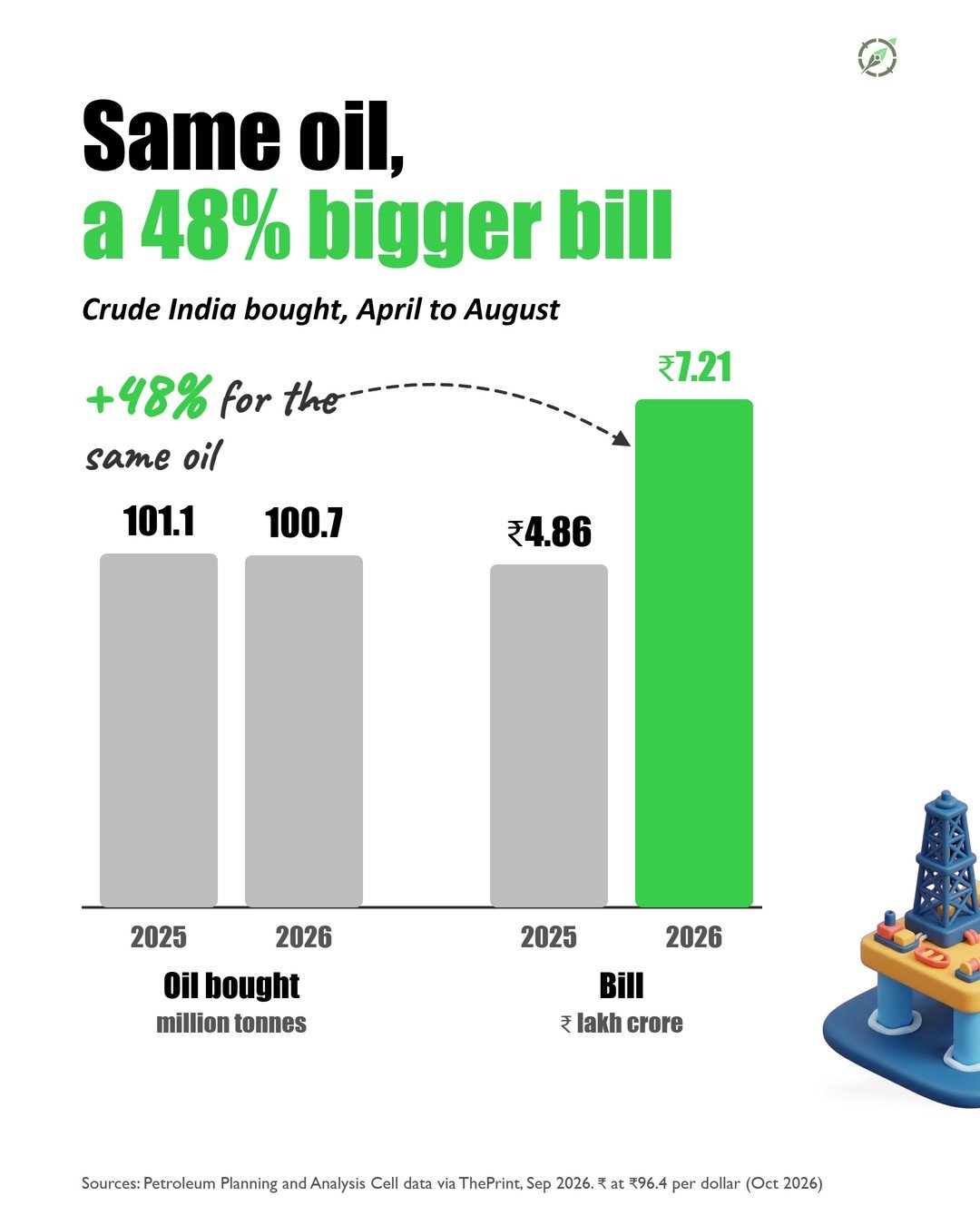
The Indian basket crude price rose from about ₹6,653 a barrel in February to ₹13,014 in early April. Brent was near USD 106 in late September.
Every $10 rise in oil widens India's trade gap by about 0.4% of GDP. That is why an oil shock is a national problem, not just a petrol problem.
Cooking gas use fell 15.9% in April to August 2026, as about 5 lakh homes switched to piped gas. Induction cooktop sales on Amazon India rose 30 times in March 2026.
The story in 10 slides

How is India cutting the risk?
Four ways. More suppliers, bigger reserves, more drilling, and replacing oil.
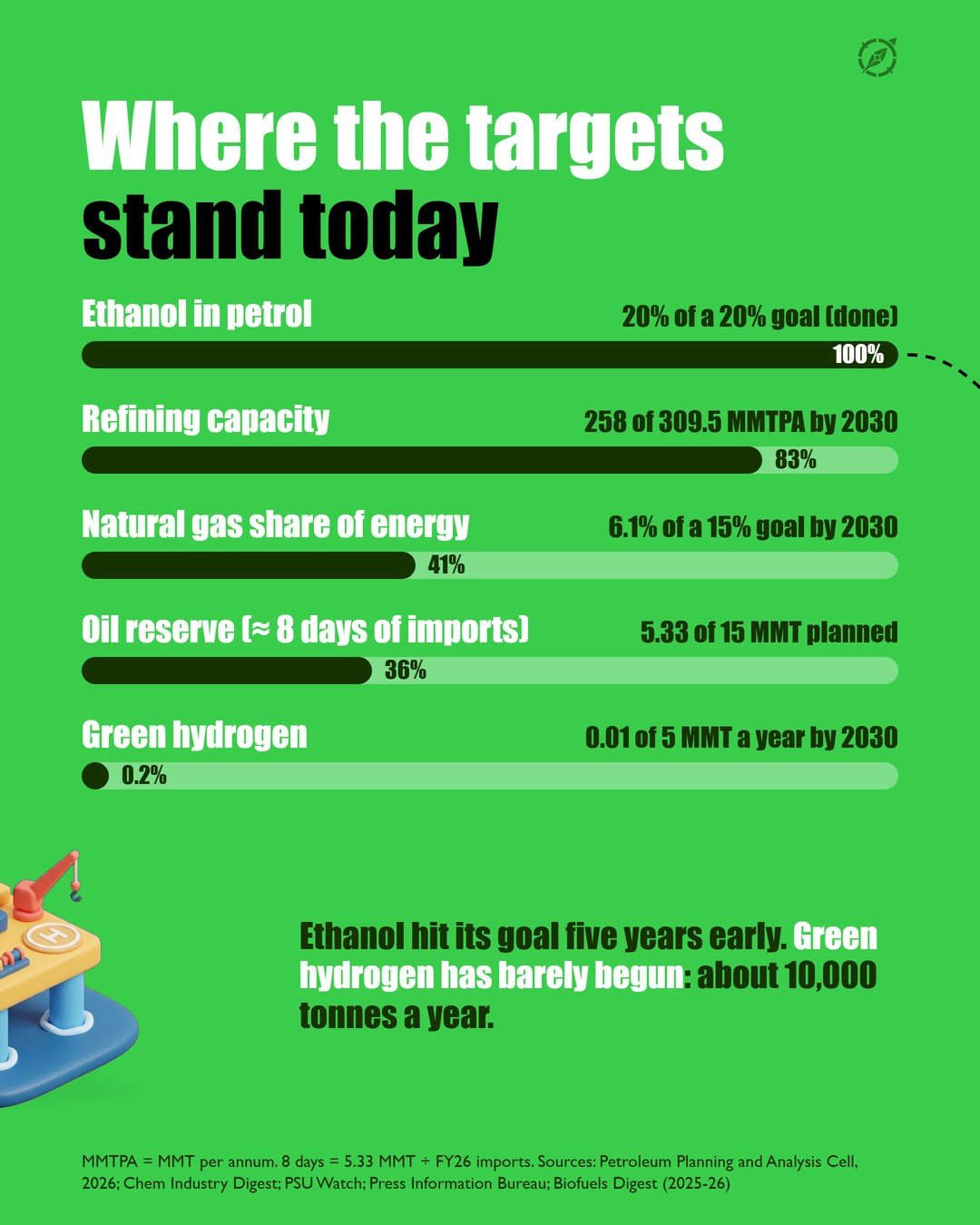
India's strategic reserve holds 5.33 million tonnes, roughly eight days of imports. The plan is to reach 15 million tonnes, and ONGC is adding 1.75 million tonnes.
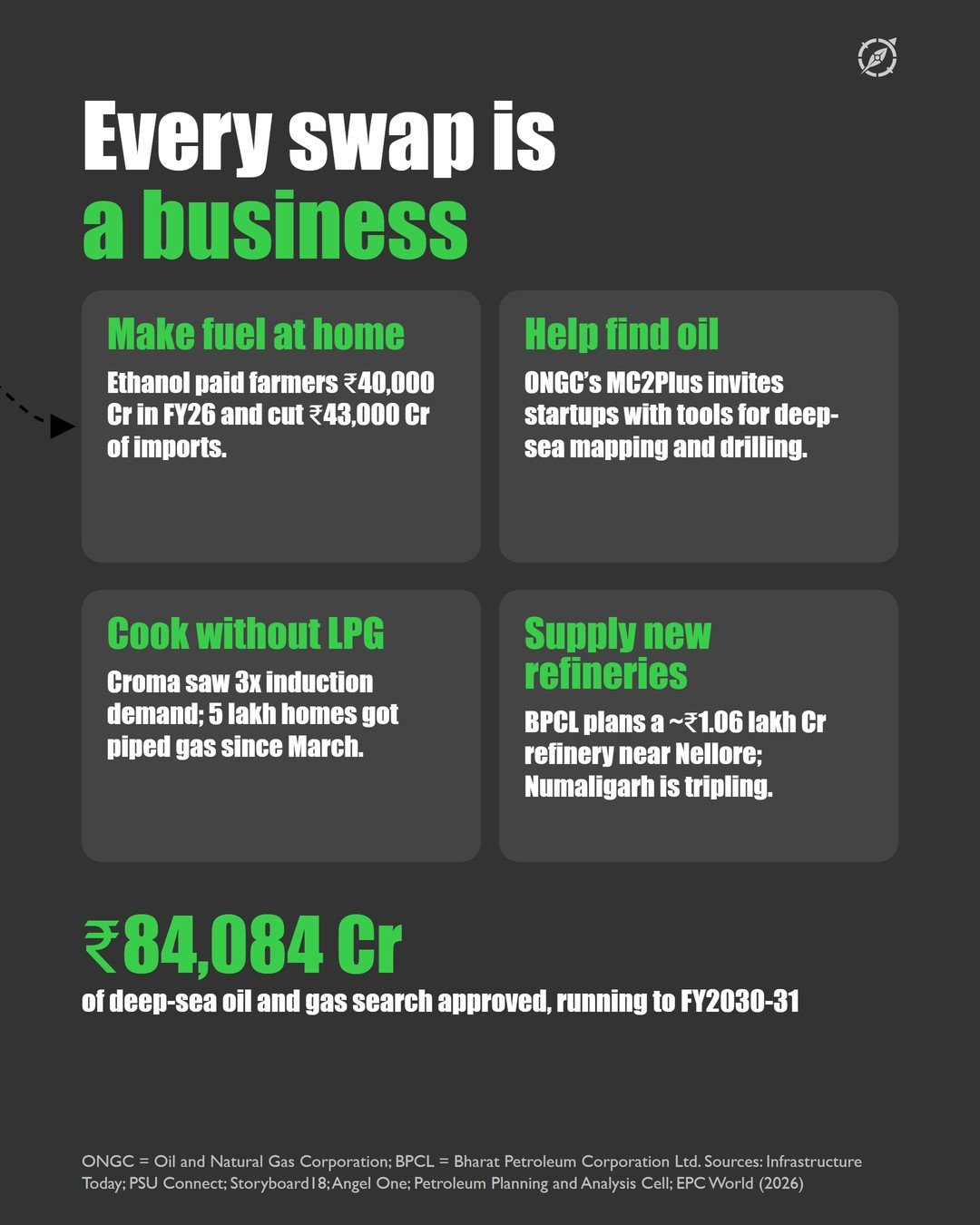
Ethanol is the replacement that is already working. India reached E20, 20% ethanol in petrol. The programme saved ₹1.44 lakh Cr of imports over ten years and paid farmers ₹40,000 Cr in FY26. E21 is planned for 2027 and E25 for 2029.
Gas and hydrogen are slower. Natural gas is 6.1% of India's energy against a 15% goal, and green hydrogen made one year is about 0.01 million tonnes against a 5 million tonne goal for 2030.
Where does business come in?
Ethanol distilleries, deep-sea exploration tools and refinery builders all have work. The government's ₹84,084 Cr Samudra Manthan plan searches deep-sea oil and gas to FY2030-31.
ONGC has invited 30 startups into its MC2Plus programme, for deep-sea mapping and drilling tools. Induction cooktop makers such as TTK Prestige have seen demand rise, with capacity use going from 70% to 100%.
How India is cutting the risk
- More suppliers. India now buys crude from 41 countries, up from 27.
- Bigger reserves. The strategic reserve holds 5.33 million tonnes, and the plan is to reach 15 million tonnes.
- More drilling. The ₹84,084 Cr Samudra Manthan plan searches deep-sea oil and gas to FY2030-31.
- Replace oil. India reached E20, which is 20% ethanol in petrol, and E25 is planned for 2029.
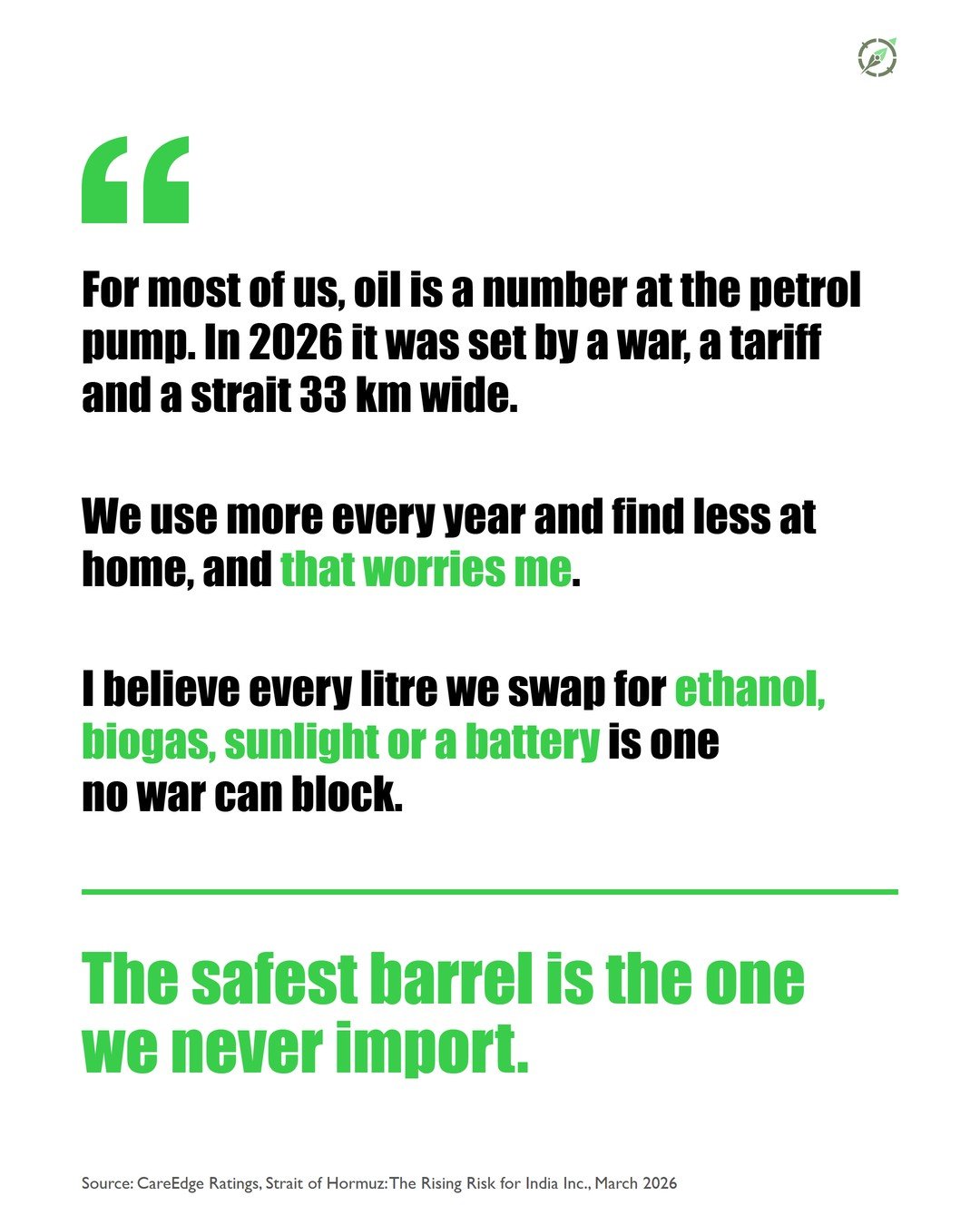
Supply can be spread out, but only replacing oil removes the risk for good.
Induction cooktop makers such as TTK Prestige have seen demand rise, with capacity use going from 70% to 100%.
Supply can be spread out. Only replacing oil removes the risk for good.
Questions
How much of its oil does India import?
India imported 88.7% of its crude oil in FY2025-26. It also imported 61% of its cooking gas and half of its natural gas.
Why does the Strait of Hormuz matter to India?
Before the war, about 40% of India's crude came through it. The strait is 33 km wide at its narrowest.
What does an oil shock do to India's economy?
Every $10 rise in oil widens India's trade gap by about 0.4% of GDP. That is why an oil shock is a national problem.
Sources
- PPAC Ready Reckoner FY2025-26
- PPAC Abridged Ready Reckoner (2015)
- CareEdge, the Strait of Hormuz and India (2026)
- Petroleum ministry, crude sourcing, via NewsOnAir (Mar 2026)
- Union Budget 1991-92 speech
Show the other 16 sources
- ISPRL strategic reserve, PSU Watch (2026)
- Kpler data, via Outlook Business (Jun 2026)
- India stops Iranian oil imports, Business Today (2019)
- Russian oil share, via Siasat (PTI)
- KPMG, US removes tariffs on Indian imports (Feb 2026)
- US and Israel strike Iran, Egyptian Streets (Feb 2026)
- Brent crude near USD 106, Telangana Today (Sep 2026)
- Explainer on oil prices and India, TimesLive (Mar 2026)
- LPG consumption falls, ThePrint (2026)
- Induction cooktop rush, Business Today (Mar 2026)
- Cabinet approves Samudra Manthan, EPC World (2026)
- Ethanol blending programme, Infrastructure Today (2026)
- IEA on India gas pricing, Outlook Business (2026)
- Green hydrogen output, Biofuels Digest (2026)
- ONGC MC2Plus, PSU Connect (2026)
- Electric cooking appliance stocks, Storyboard18 (2026)
Corrections: none so far. Found a mistake? Email me and I will fix it and note it here.