

Oil will not be the only fuel of the future
There will not be one fuel of the future. Each fuel wins its own job, from batteries for scooters to hydrogen for steel.
Ask what replaces oil and most people name one fuel. The honest answer has several parts, and each one is moving at a different speed.
Key numbers
Sources: International Energy Agency, World Energy Outlook 2025 and Global EV Outlook 2026; Mercom India (2026); IMARC (2026); Powerline (2026).
Where does the world's energy come from today?
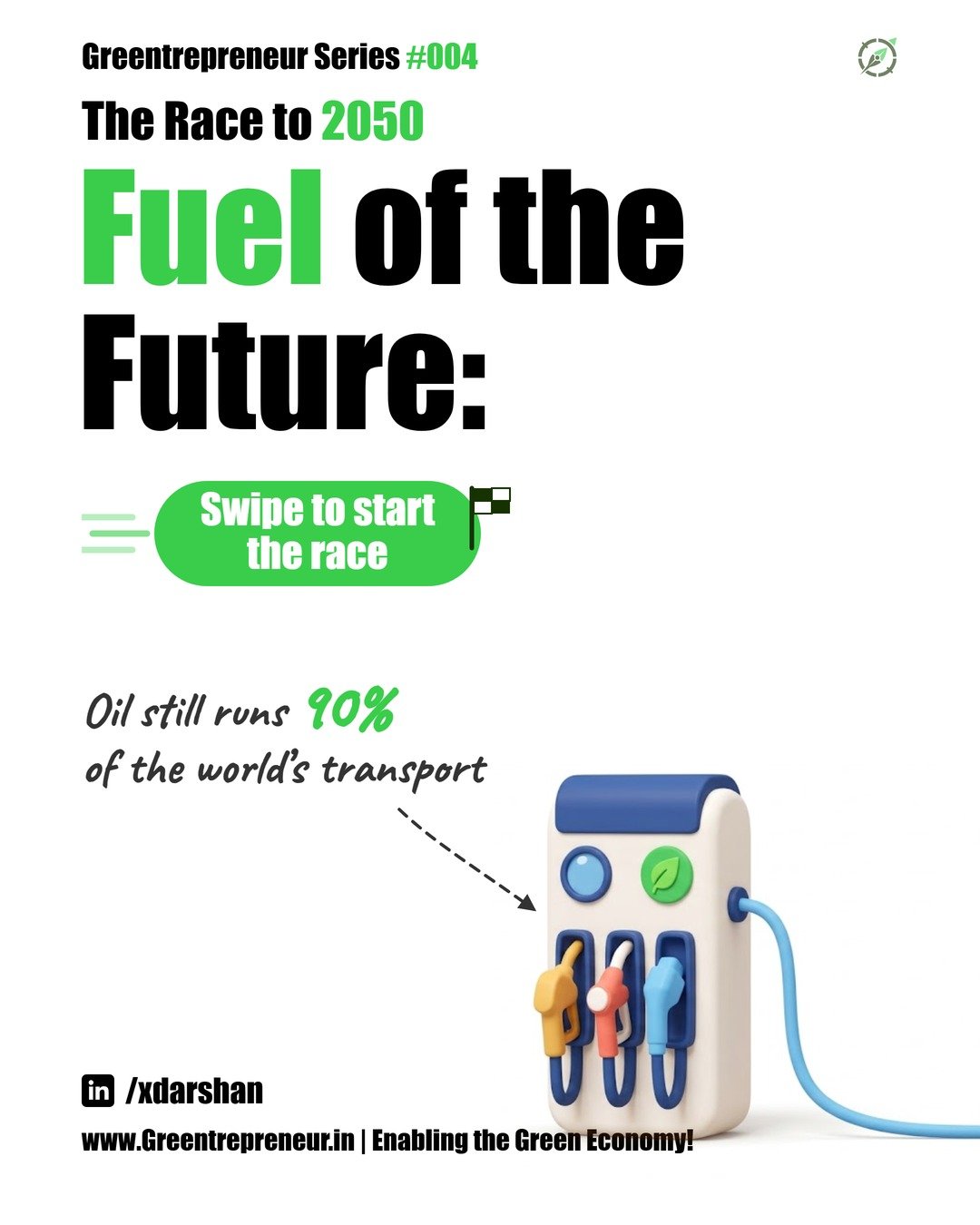
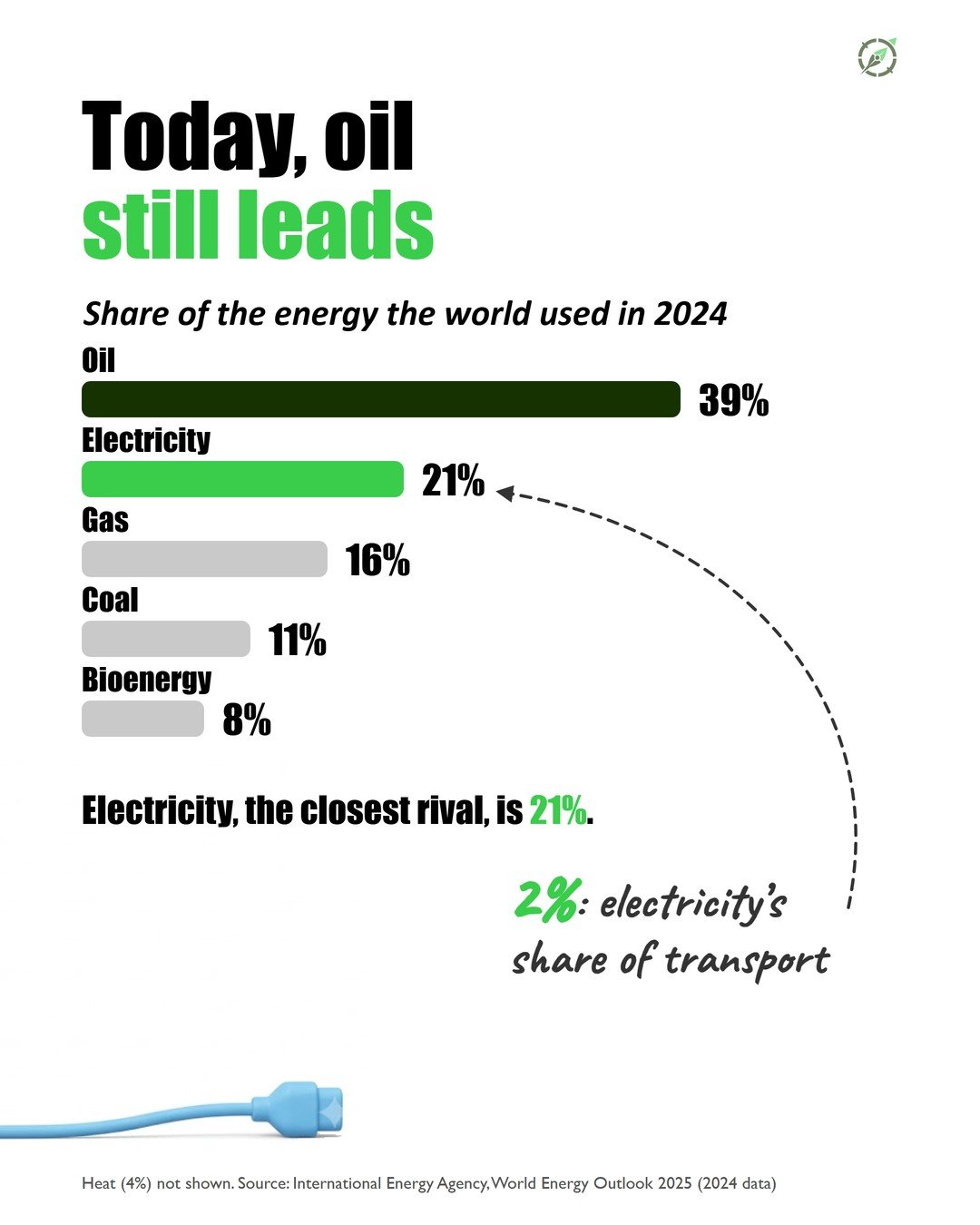
Oil still supplies 39% of the world's final energy use. In transport the share is 90%. Electricity supplies about 21%, gas 16%, coal 11% and bioenergy 8%.
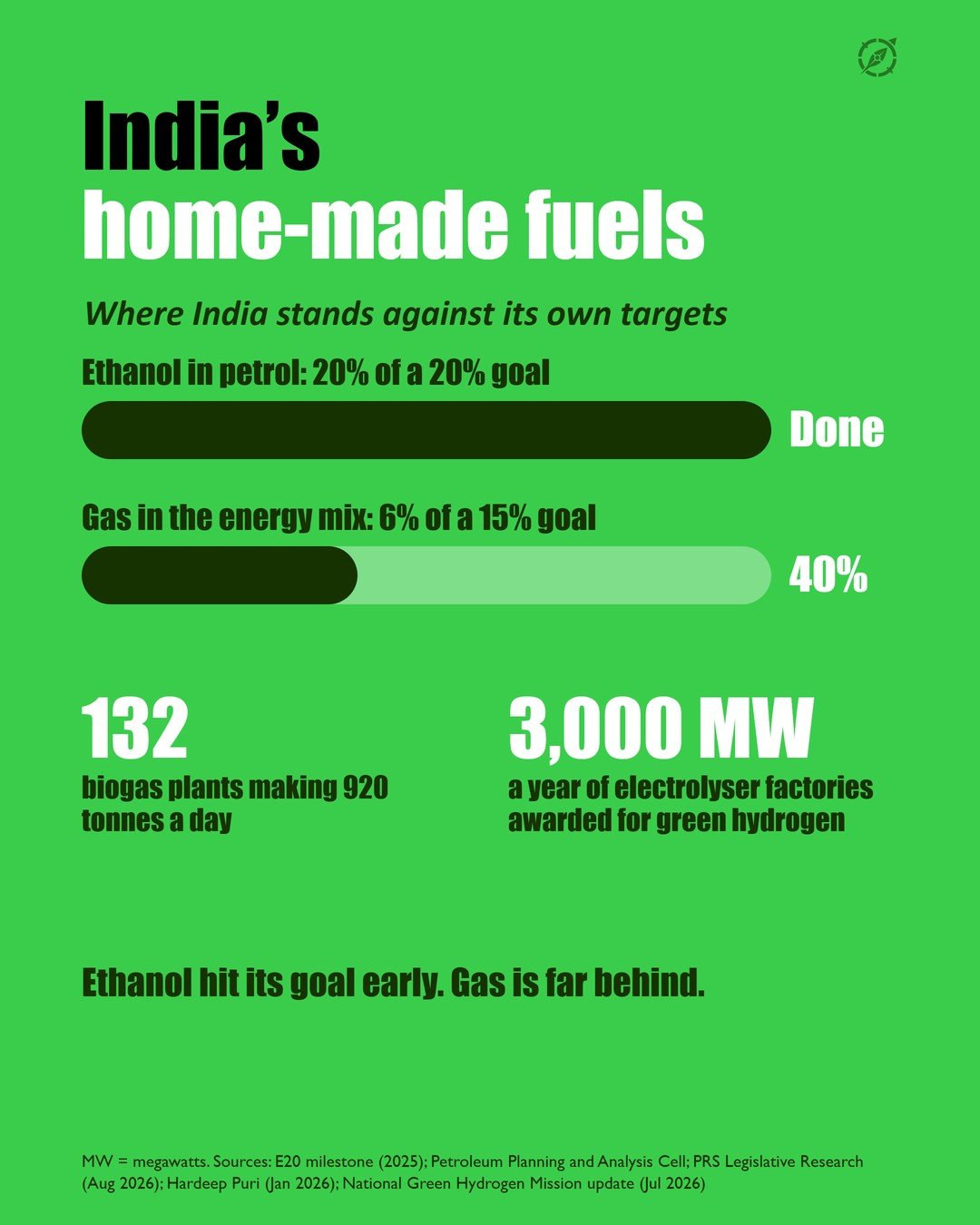
India's gas is a smaller part of the mix. It is about 6%, against a 15% target for 2030. Parliament's committee has flagged the gap.
Are electric vehicles really moving?
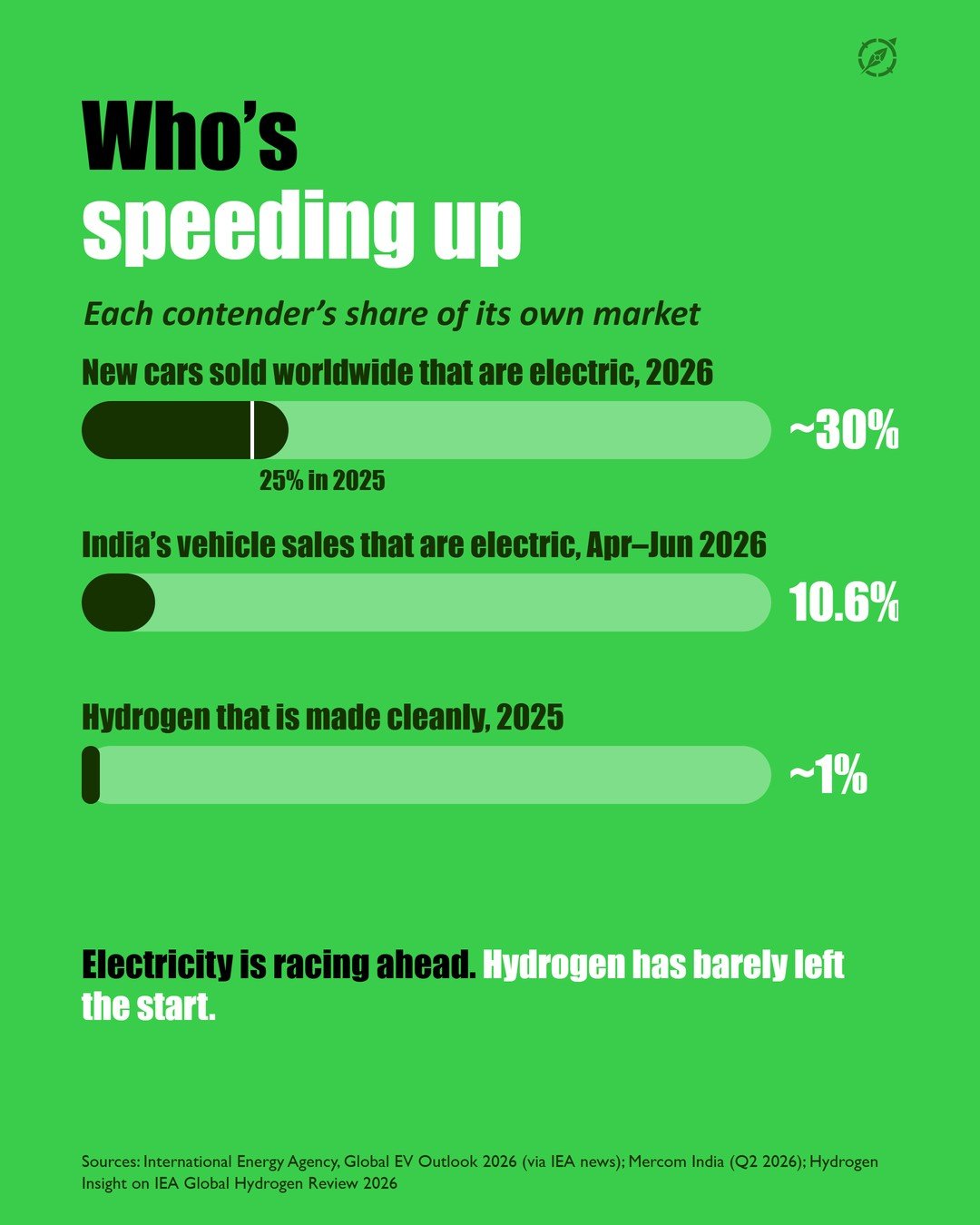
Yes. About 30% of new cars sold worldwide in 2026 are expected to be electric, up from 25% in 2025.
In India, EVs were 10.6% of vehicle sales in April to June 2026. Most of them are scooters and three-wheelers. Electric cars were 7.4% of car registrations in August 2026, and India sold about 2.55 million EVs in FY2025-26.
Electricity is the fastest mover, and it is already on the road.
What about hydrogen and ammonia?
Hydrogen is still tiny. About 1% of the world's hydrogen is low-emission, and 2025 was the first year above that line.
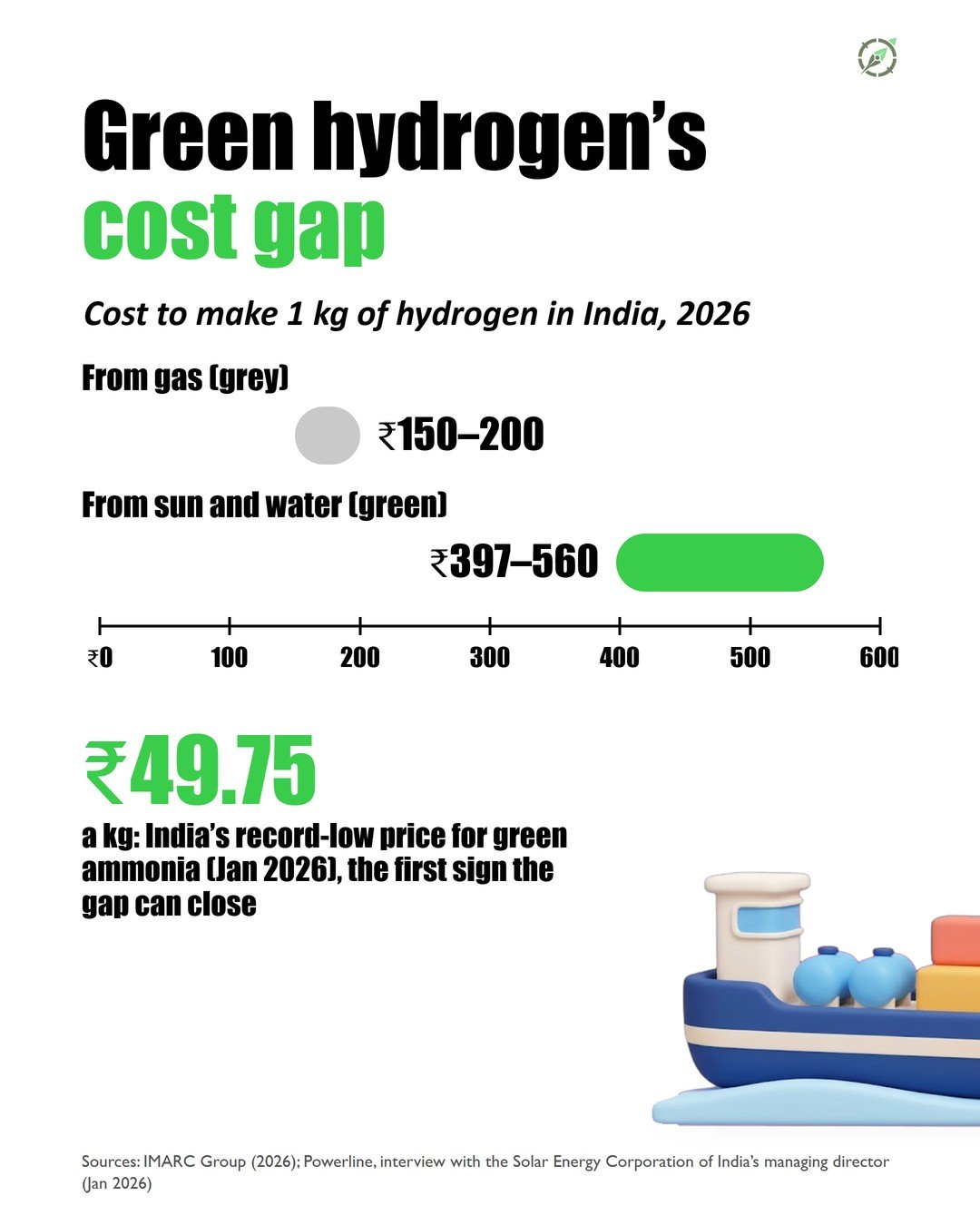
Green hydrogen costs ₹397 to ₹560 per kg in India in 2026. Grey hydrogen from gas costs ₹150 to ₹200. The gap is the problem.
The record low for green ammonia so far is ₹49.75 per kg, found in a government auction in January 2026. That is India's first sign that the cost gap may close.
Capacity is building. Electrolyser manufacturing of 3,000 MW a year has been awarded under the National Green Hydrogen Mission, which targets 5 million tonnes of green hydrogen by 2030.
The story in 10 slides
What is the bridge?
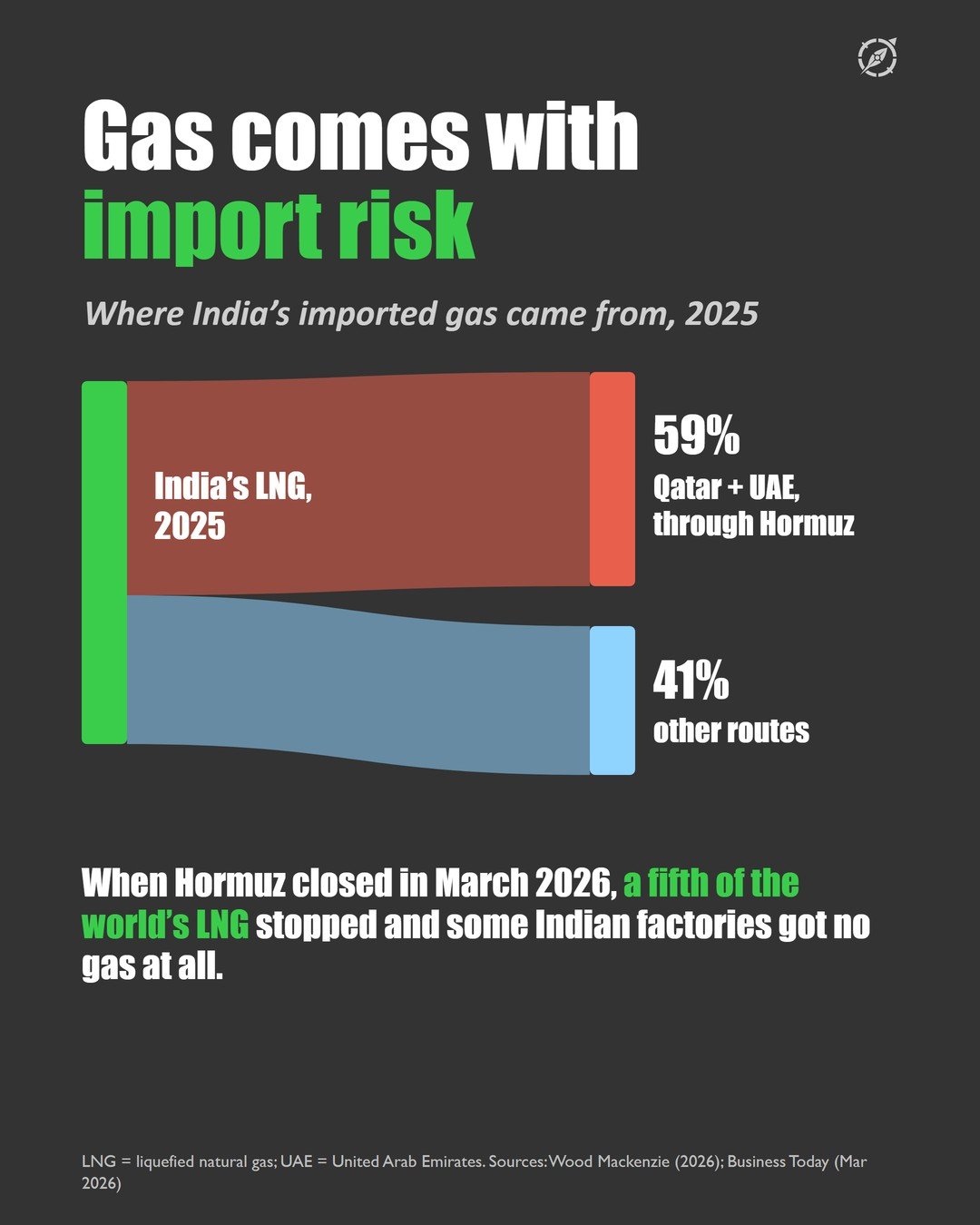
Gas is the bridge for trucks and factories. The 2026 Hormuz closure showed the risk: a supply that can stop overnight.
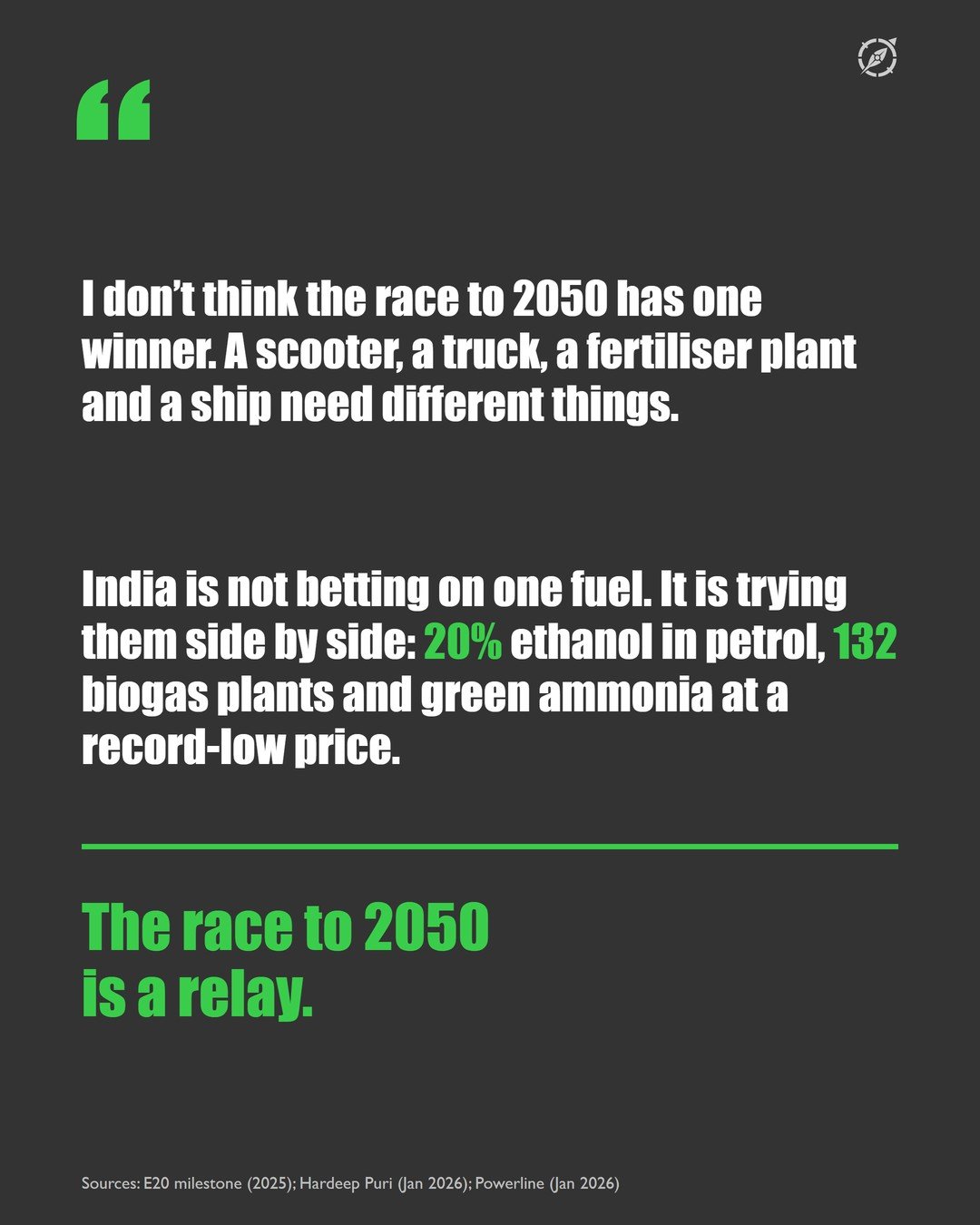
Biofuels are the other bridge. India has reached 20% ethanol in petrol, ahead of schedule. The country also has 132 compressed biogas plants running, making about 920 tonnes a day.
Ships have a fuel question of their own. An IMO vote on a net-zero framework for shipping has been moved to December 2026.
What does 2050 look like?
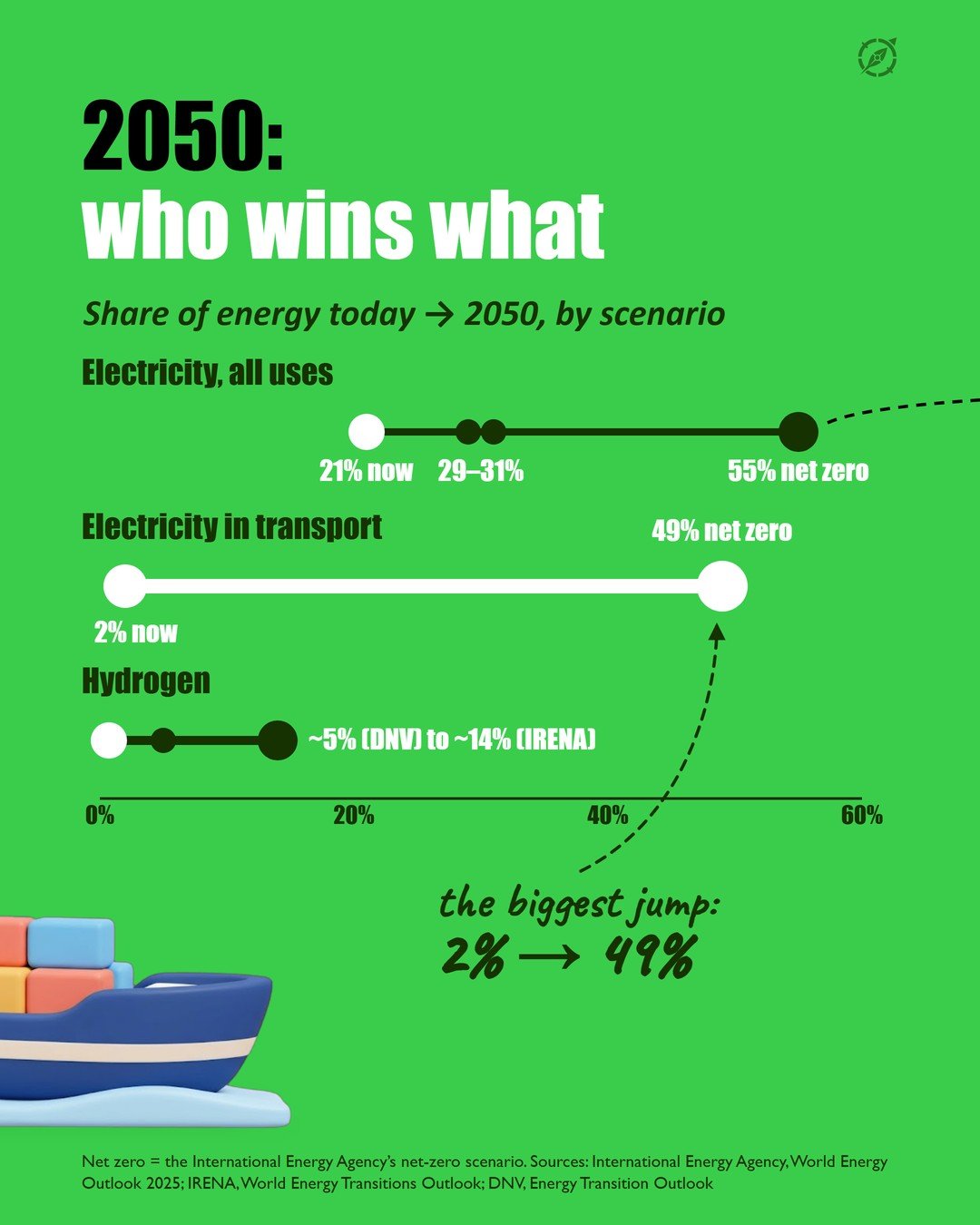
The IEA sees electricity rising from 21% of world final energy to between 29% and 55% by 2050, depending on policy. Under net zero, about half of transport energy would be electricity.
Hydrogen's share depends on the forecast. IRENA's 1.5°C path has about 14%. DNV expects only a few per cent. That gap is one of the biggest open questions in the energy transition.
Who is building it in India?
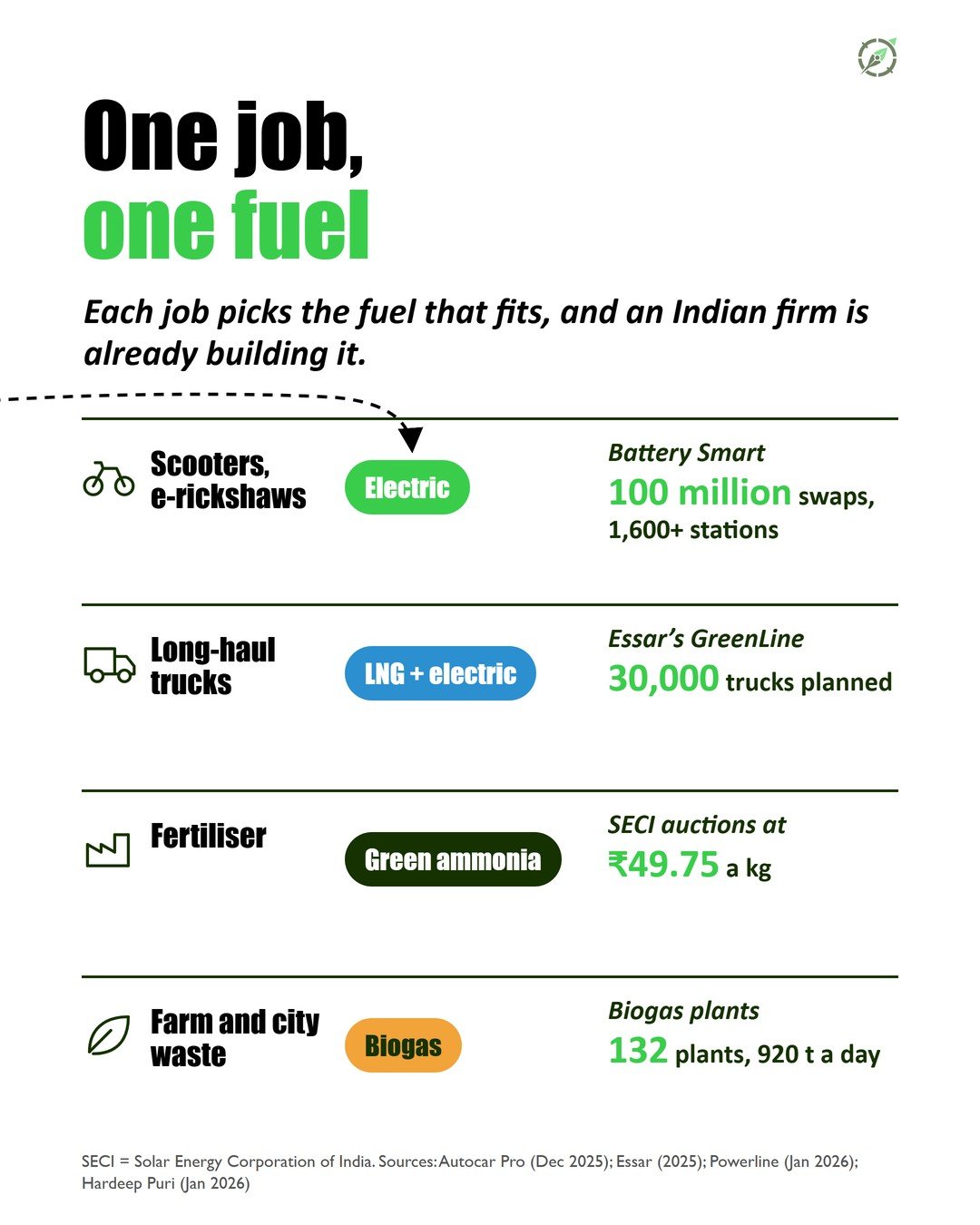
Battery Smart has run more than 100 million battery swaps, with over 1,600 stations in more than 70 cities. Essar's GreenLine plan targets 30,000 clean trucks, using LNG for long haul and electric for short routes.
Fertiliser makers are the early buyers of green ammonia. SECI auctions have given them a price to plan around.
What each fuel needs to win
- Electricity needs charging. Battery Smart has run more than 100 million battery swaps, with over 1,600 stations in more than 70 cities.
- Hydrogen needs lower cost. Green hydrogen costs ₹397 to ₹560 per kg in India in 2026, against ₹150 to ₹200 for grey hydrogen.
- Ammonia needs buyers. Fertiliser makers are the early buyers, and SECI auctions have given them a price to plan around.
- Bridges need supply. Biofuels and gas fill the gap, with 20% ethanol in petrol and 132 compressed biogas plants running.
Essar's GreenLine plan shows the mix, with LNG for long haul and electric for short routes.
SECI auctions have given them a price to plan around.
Each fuel gets its own job. The question is which job each one gets first.
Questions
How much of the world's energy still comes from oil?
Oil supplies 39% of the world's final energy use. In transport the share is 90%.
Are electric vehicles really moving in India?
Yes. EVs were 10.6% of vehicle sales in April to June 2026, and most of them are scooters and three-wheelers.
Why is green hydrogen still tiny?
About 1% of the world's hydrogen is low-emission. The cost gap with grey hydrogen is the problem.
Sources
- IEA, World Energy Outlook 2025
- PRS, natural gas supply and distribution (Aug 2026)
- IEA Global EV Outlook 2026, via Engineering News (May 2026)
- Mercom India, EV share of vehicle sales Q2 2026
- Autocar Pro, electric car registrations (Aug 2026)
Show the other 10 sources
- IESA, EV sales FY2025-26
- IEA Global Hydrogen Review 2026, via Hydrogen Insight
- IMARC, green hydrogen projects in India (2026)
- Powerline, SECI green ammonia interview (Jan 2026)
- Green hydrogen capacity awards, Bioenergy Times (Jul 2026)
- gCaptain, shipping fuel transition (2026)
- India reaches E20 ethanol target (2025)
- 132 CBG plants, Hardeep Singh Puri statement (Jan 2026)
- Battery Smart, via Autocar Pro (2025)
- Essar GreenLine plan, Outlook Business (2025)
Corrections: none so far. Found a mistake? Email me and I will fix it and note it here.