

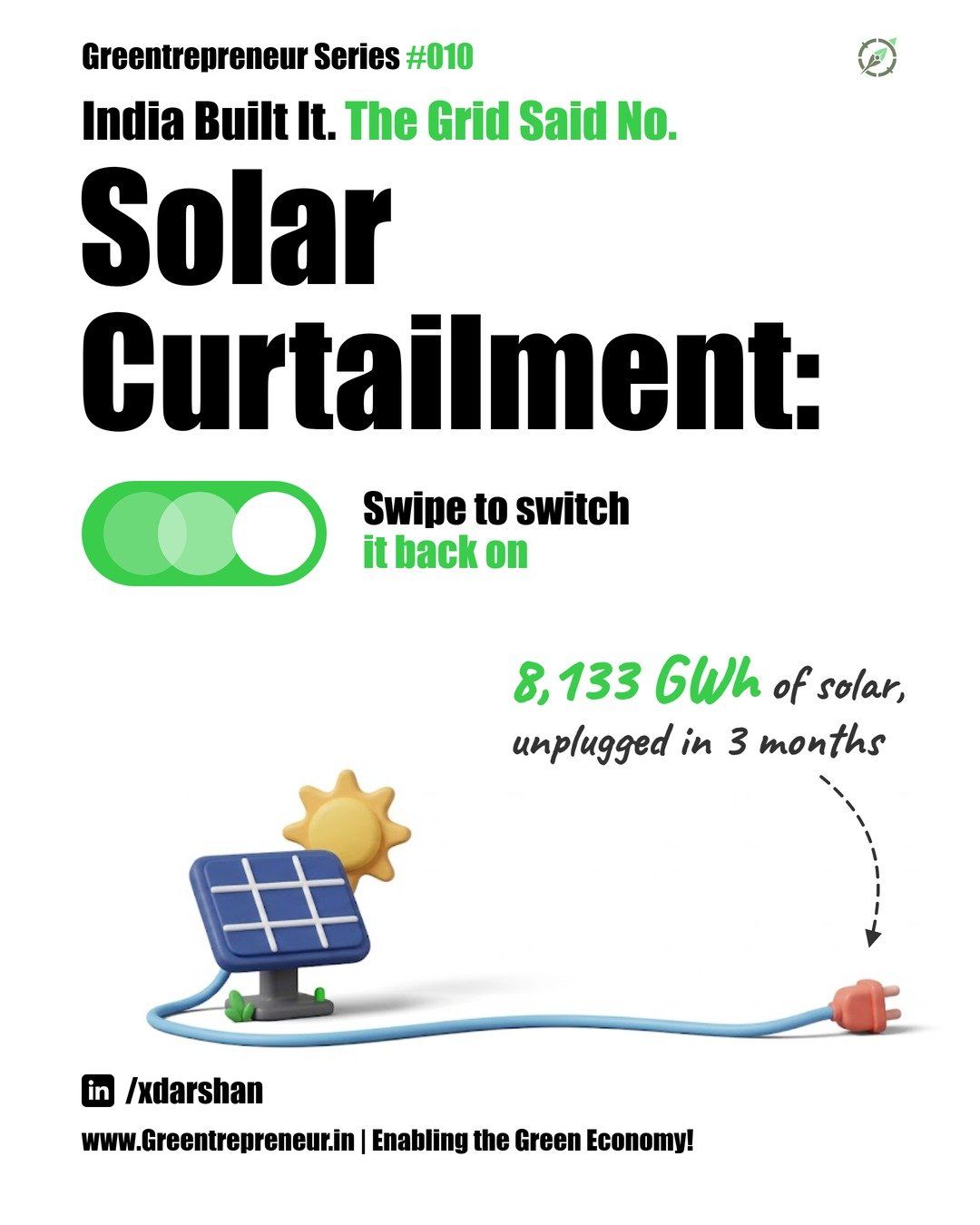
India switched off 8,133 GWh of solar. The wires are the problem.
From April to June 2026, India told solar plants to stop sending power. The panels were ready. The lines were not.
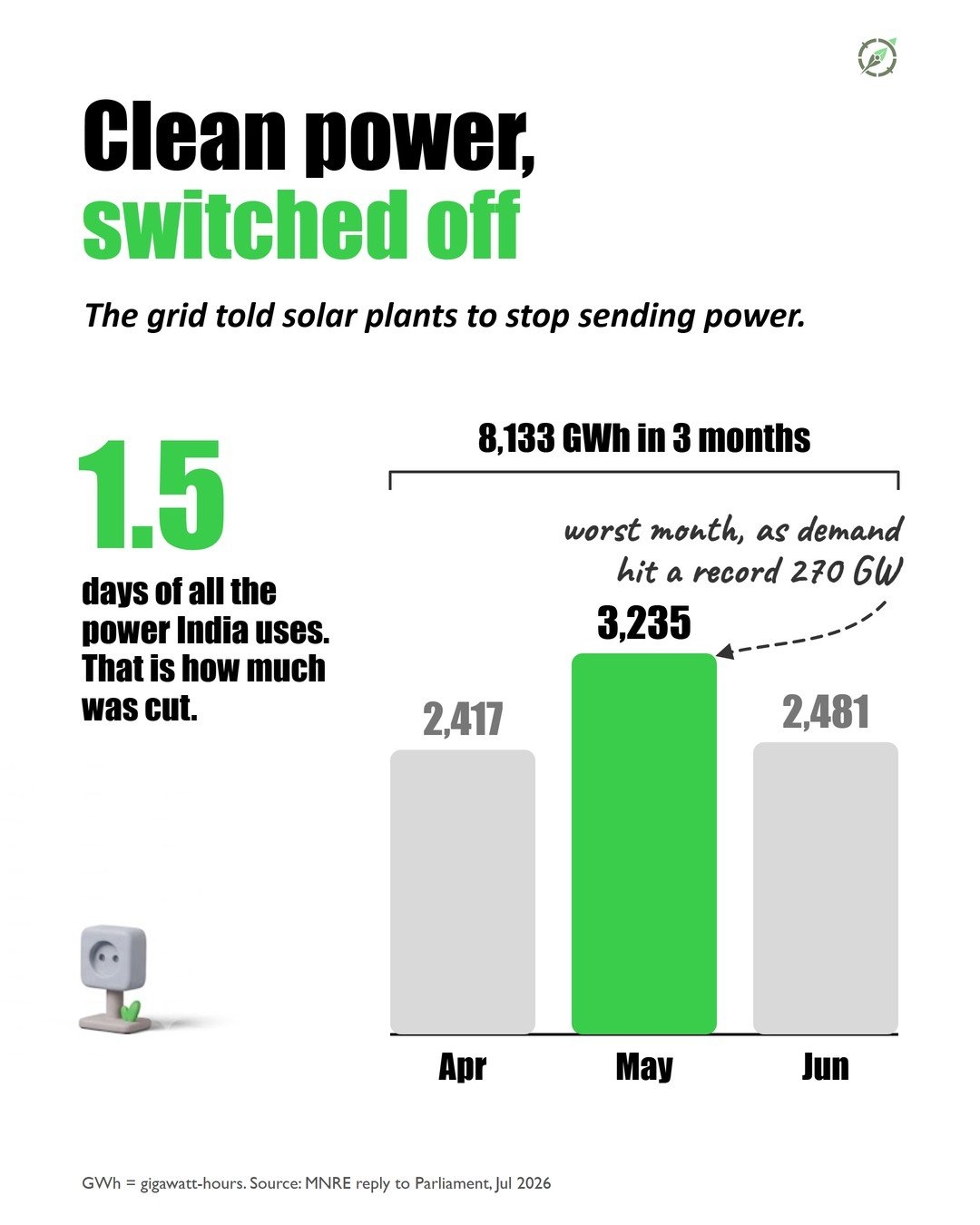
In May 2026, India switched off 3,235 GWh of solar power. It was the worst month of the three.
I first read this as a glitch. It is not one. It is a traffic jam.
Across April, May and June, the total came to 8,133 GWh. That is enough solar power to run 1.4 million homes, according to Business Today.
Key numbers
Sources: MNRE reply to Parliament (Jul 2026); ICRA via Business Today (Jul 2026); Ember (Jun 2026); Rubix Data Sciences via pv magazine India (Oct 2026).
What is curtailment?
Curtailment is when the grid tells a power plant to hold back the electricity it could make, even when the sun is shining. The plant is built and ready. It is simply not allowed to send the power out.
The official reason is grid security. The government told Parliament the cut was needed to keep the grid stable during the months of highest demand.
Why can't the power get out?
Solar power has to leave the farm, climb onto big lines, and reach the cities. If the lines are full, the power has nowhere to go.
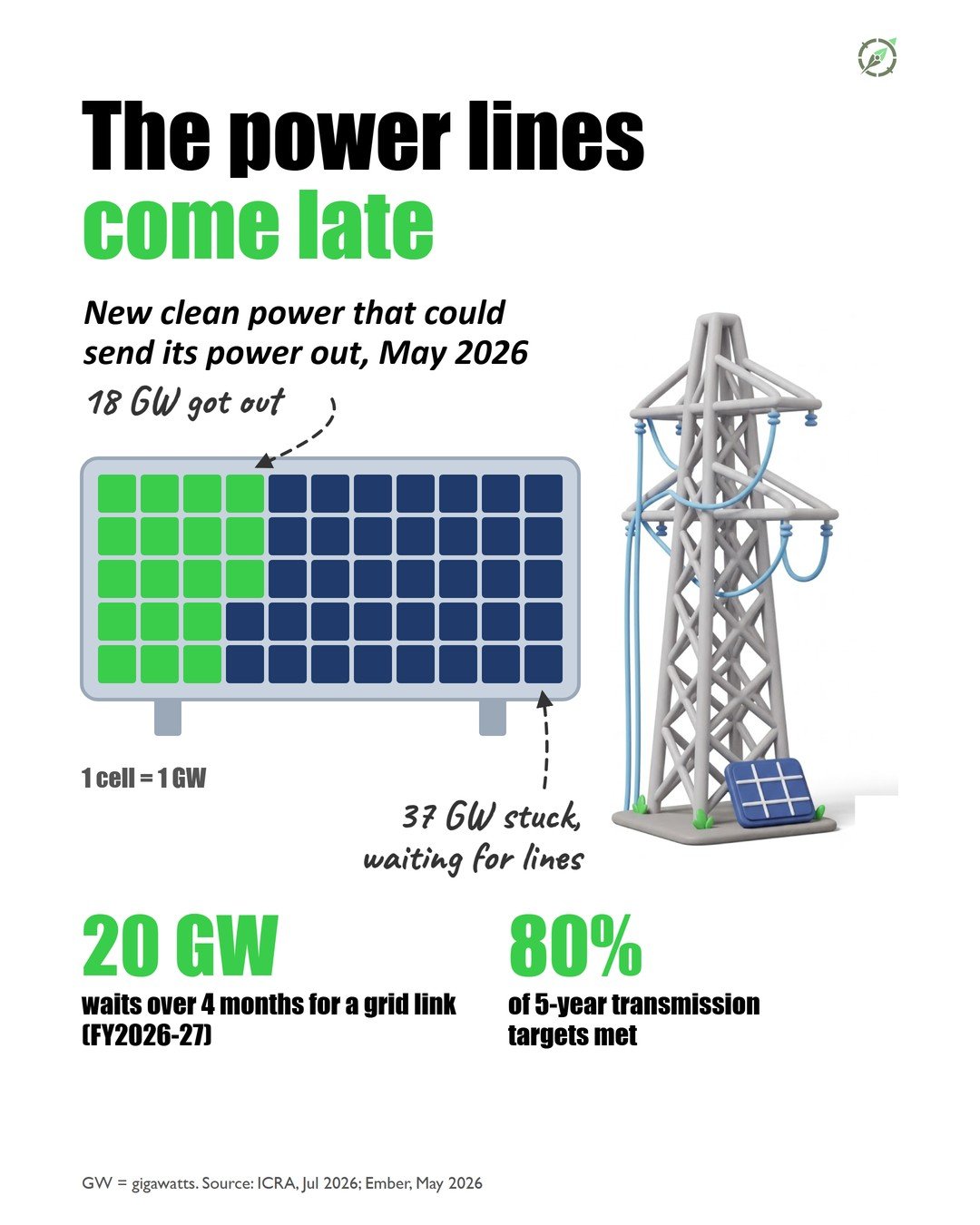
India added 44 GW of solar in FY2026, a record year. Panels can go up in months. The lines take longer.
ICRA found that only 33% of new clean power could send its power out in May 2026. The rest was waiting. Ember counted about 20 GW of clean power facing connection delays of more than four months.
Transmission losses are part of the same story. Ember counted 300 GWh of renewable power lost to transmission limits in the first quarter of 2026 alone.
The panels were built in a year. The wires to carry their power are not there yet.
Why not run less coal instead?
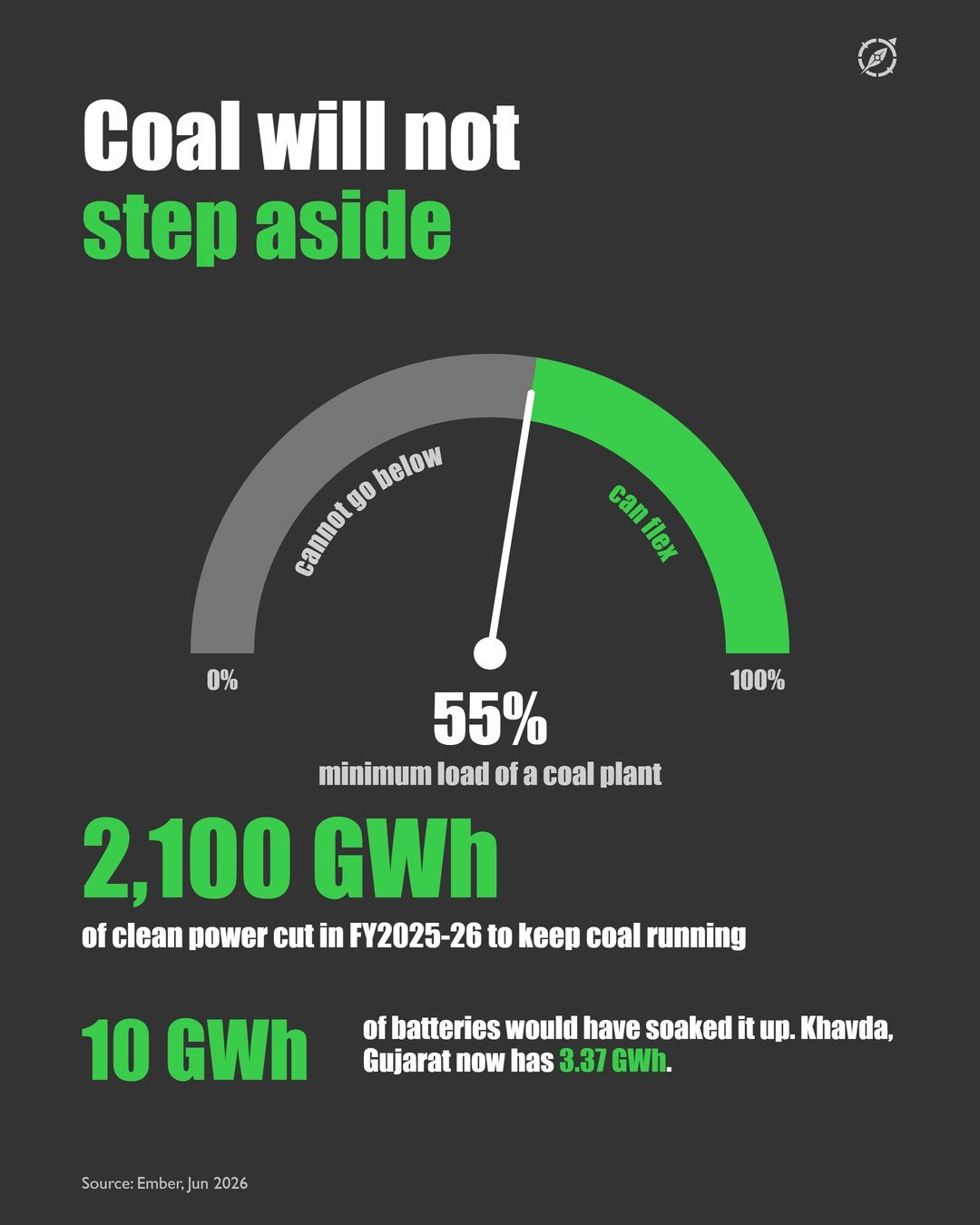
Coal plants cannot switch off like a fan. They must keep a minimum load so they stay ready.
So when the grid is full, the cut falls on clean power. In FY2025-26, 2,100 GWh of clean power was cut to keep coal running, according to Ember.
By April 2026, coal sat at minimum load in more than half of the midday periods, according to Ember. That is the inflexibility the grid has to work around.
I think that is the uncomfortable part. A system built around coal does not make room for solar on its own.
Who pays for the wasted sun?
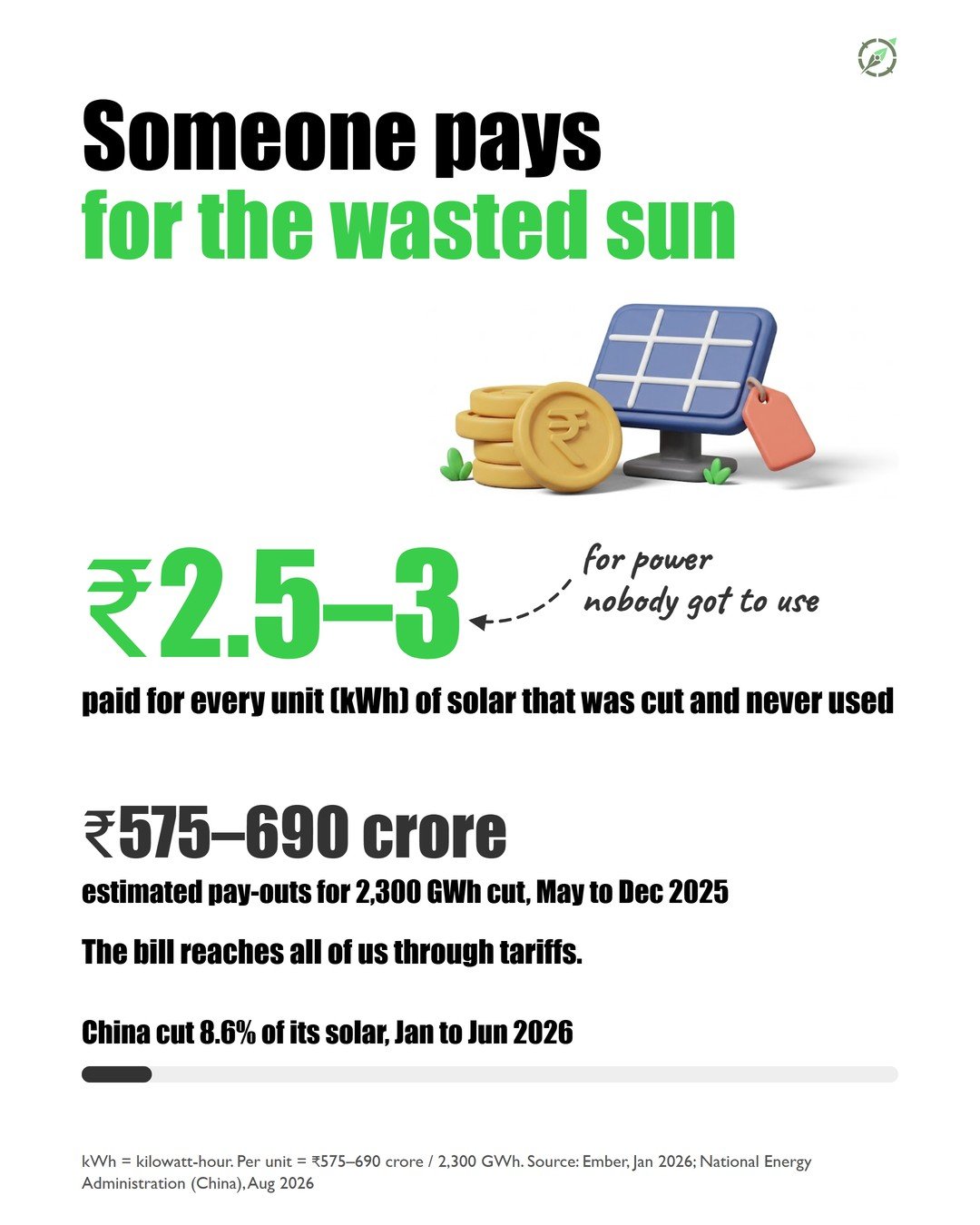
Developers do, first. In Rajasthan, the industry reported losses of up to ₹250 crore ($26 million) from solar cuts in a 2025 report.
A state regulator has also allowed one developer ₹1.11 crore ($0.12 million) as compensation for lost generation.
I read that as a sign the cut has a bill. Someone still has to pay it, and the question is who.
The story in 10 slides

How is the fix being built?
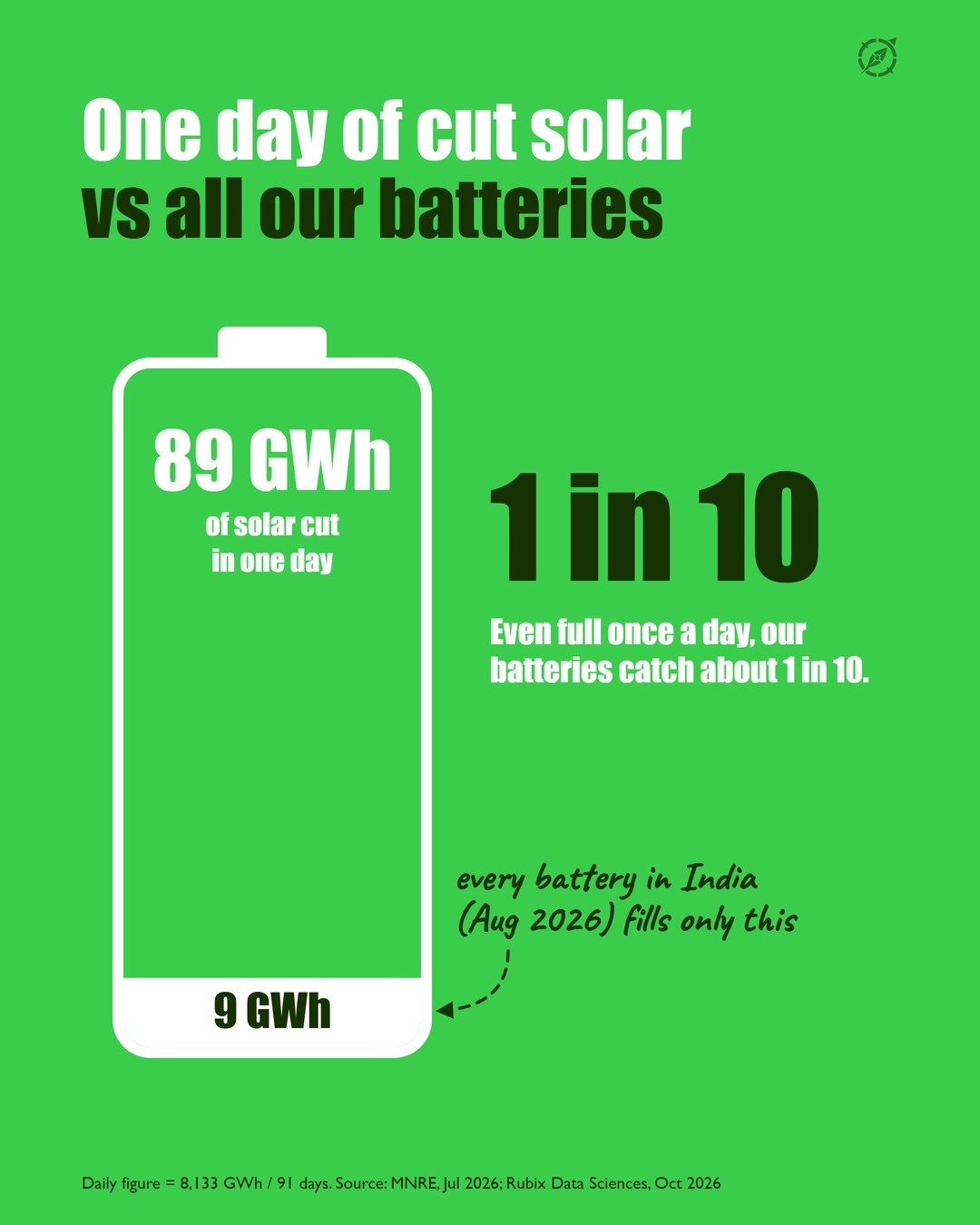
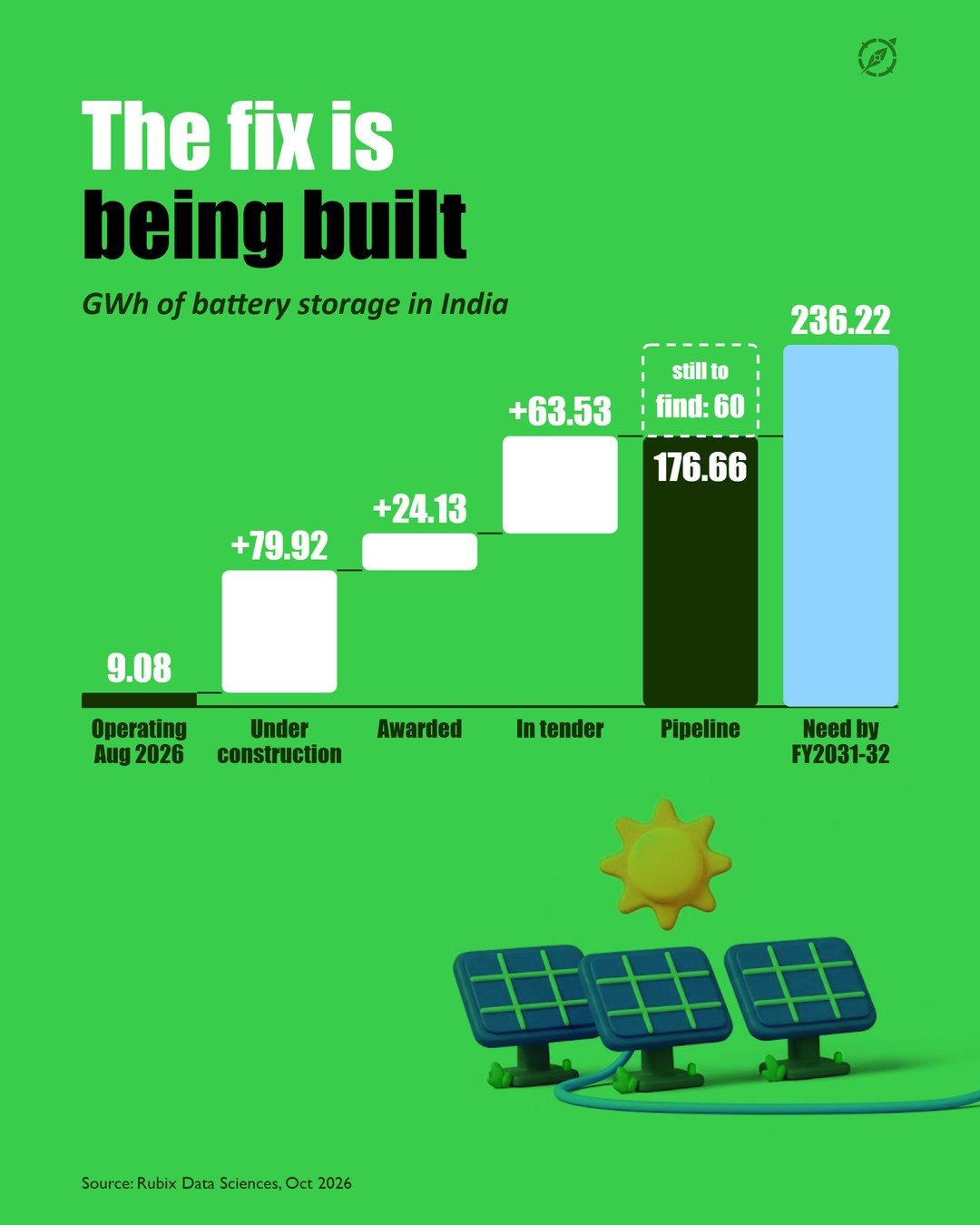
The fix is batteries, and India has very few. The batteries running in August 2026 held about 9 GWh. One day of cut solar is about 89 GWh.
Ember says India needs about 10 GWh of storage now, not later. By FY2031-32 it will need about 236 GWh, according to Rubix Data Sciences.
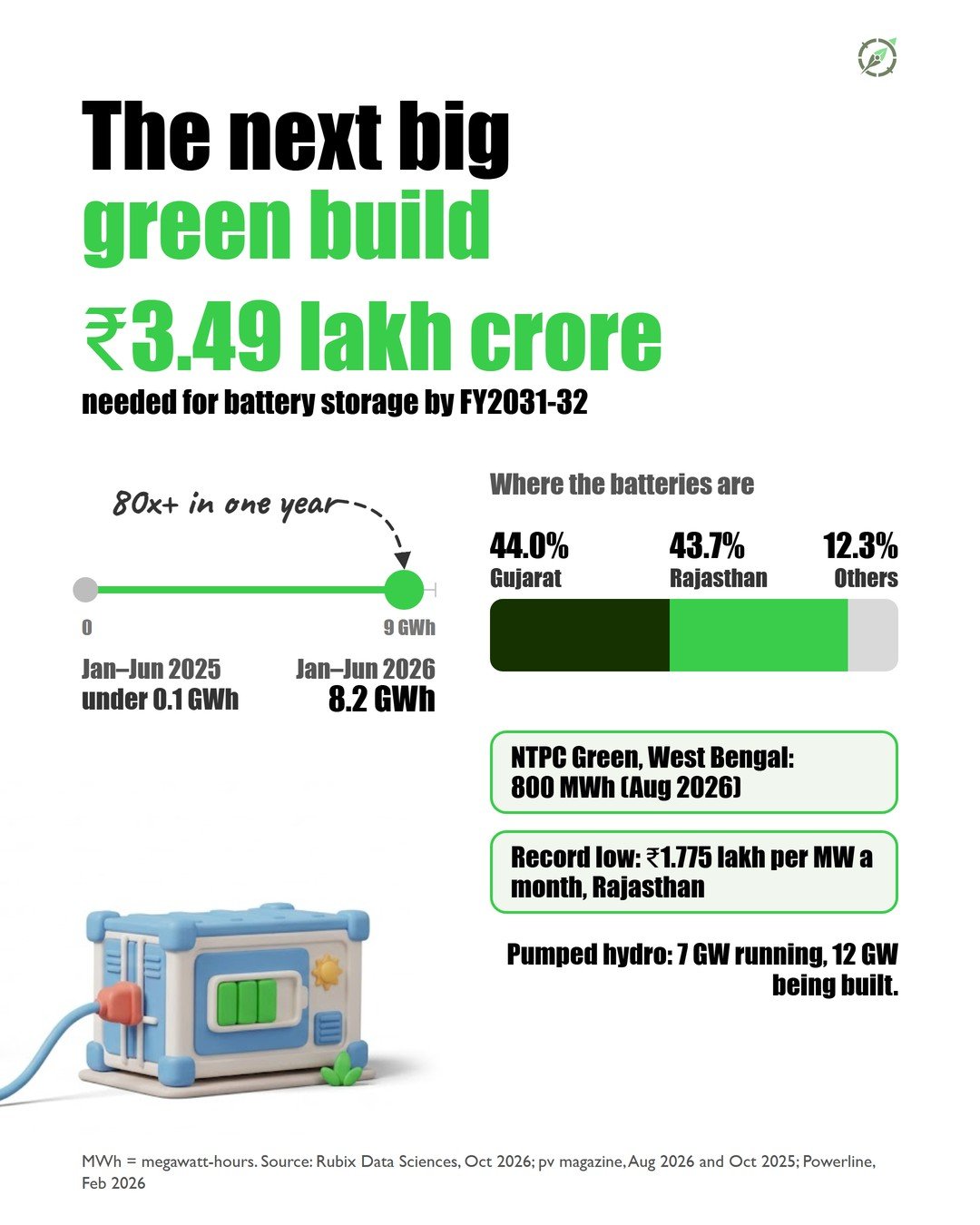
NTPC Green Energy won a 200 MW, 800 MWh battery project in West Bengal in August 2026. That is one step, not the whole staircase.
Transmission is the other half. The lines that carry clean power are the bottleneck, and the grid builders are the ones who can widen it.
What happens next?
Watch the monthly figures from the power ministry. If the cut shrinks while solar keeps growing, the wires are catching up.
My verdict: India built the panels first. Keeping their power is the job now, and it will take more than panels.
How the fix is being built
- Batteries. Ember says India needs about 10 GWh of storage now, and by FY2031-32 it will need about 236 GWh, according to Rubix Data Sciences.
- Wider lines. The lines that carry clean power are the bottleneck, and the grid builders are the ones who can widen it.
- Real projects. NTPC Green Energy won a 200 MW, 800 MWh battery project in West Bengal in August 2026.
- Monthly checks. Watch the monthly figures from the power ministry to see if the wires are catching up.
Panels can go up in months, but the lines and batteries take longer.
I read that as a sign the cut has a bill.
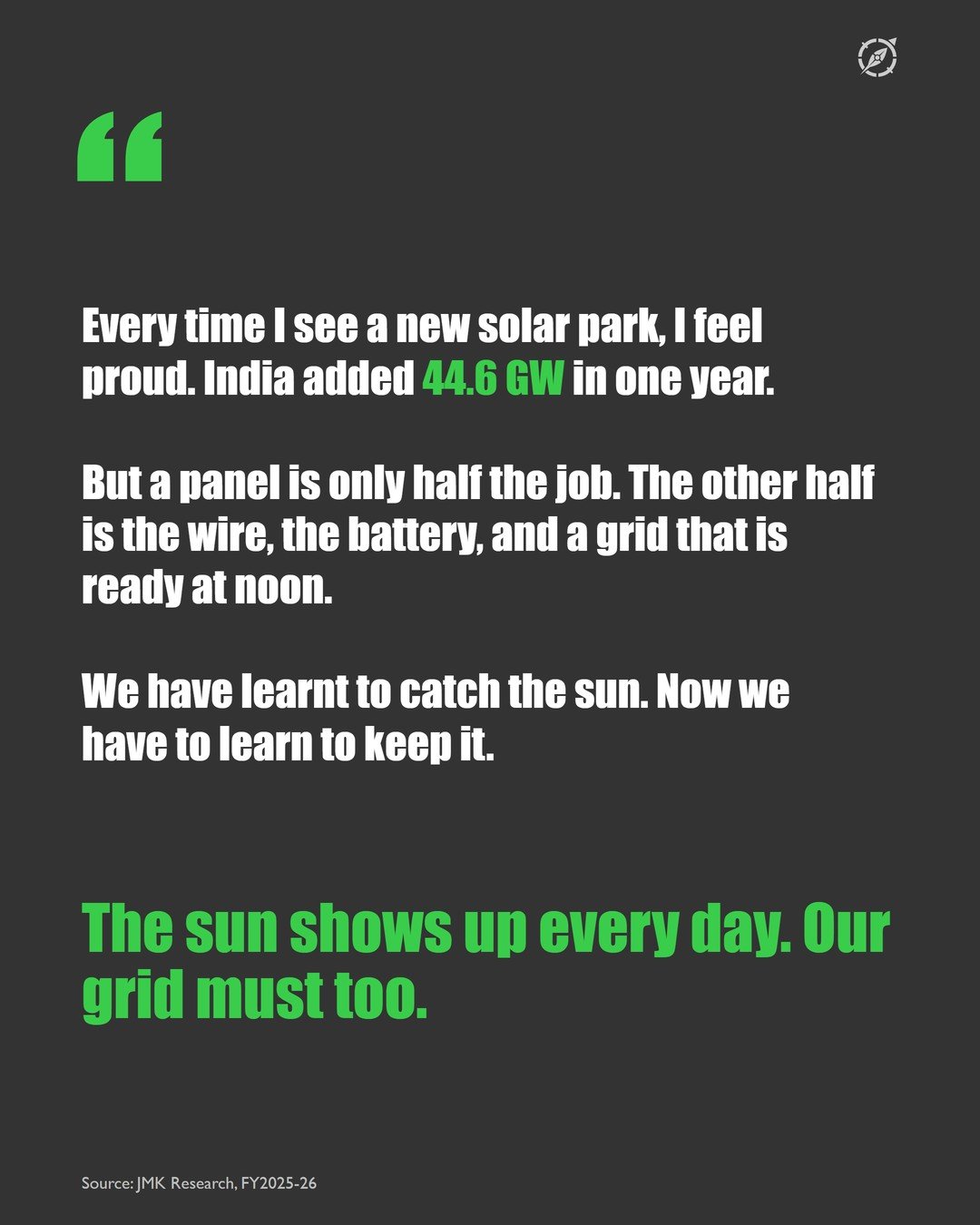
We have learnt to catch the sun. Now we have to learn to keep it.
Questions
What is curtailment?
It is when the grid tells a power plant to hold back the electricity it could make, even when the sun is shining. The plant is built and ready, but not allowed to send the power out.
Why can't the solar power get out?
Solar power has to leave the farm, climb onto big lines and reach the cities. If the lines are full, the power has nowhere to go.
Why not run less coal instead?
Coal plants cannot switch off like a fan. They must keep a minimum load so they stay ready, so the cut falls on clean power.
Sources
- ICRA view on grid curtailment, Business Today (Jul 2026)
- Ember, transmission losses Q1 2026
- India needs 10 GWh of battery storage now (Ember), Ember (2026)
- MNRE reply to Parliament, via Carbon Copy (2026)
- Grid bottleneck, 1.4 million homes, Business Today (Jul 2026)
Show the other 8 sources
- Ember on connection delays, Business Today (May 2026)
- Clean power cut to keep coal running, FY2025-26 (Ember), Power Peak Digest (Jun 2026)
- Rajasthan solar cut losses, Down To Earth (2025)
- Compensation for lost generation, Mercom India (2026)
- Storage need and battery running, Rubix Data Sciences via pv magazine India (Oct 2026)
- NTPC Green Energy battery win, pv magazine India (Aug 2026)
- Global solar additions, pv magazine (Jun 2026)
- USD to INR history, used at ₹96.5 per US$ (Jul 2026)
Corrections: none so far. Found a mistake? Email me and I will fix it and note it here.